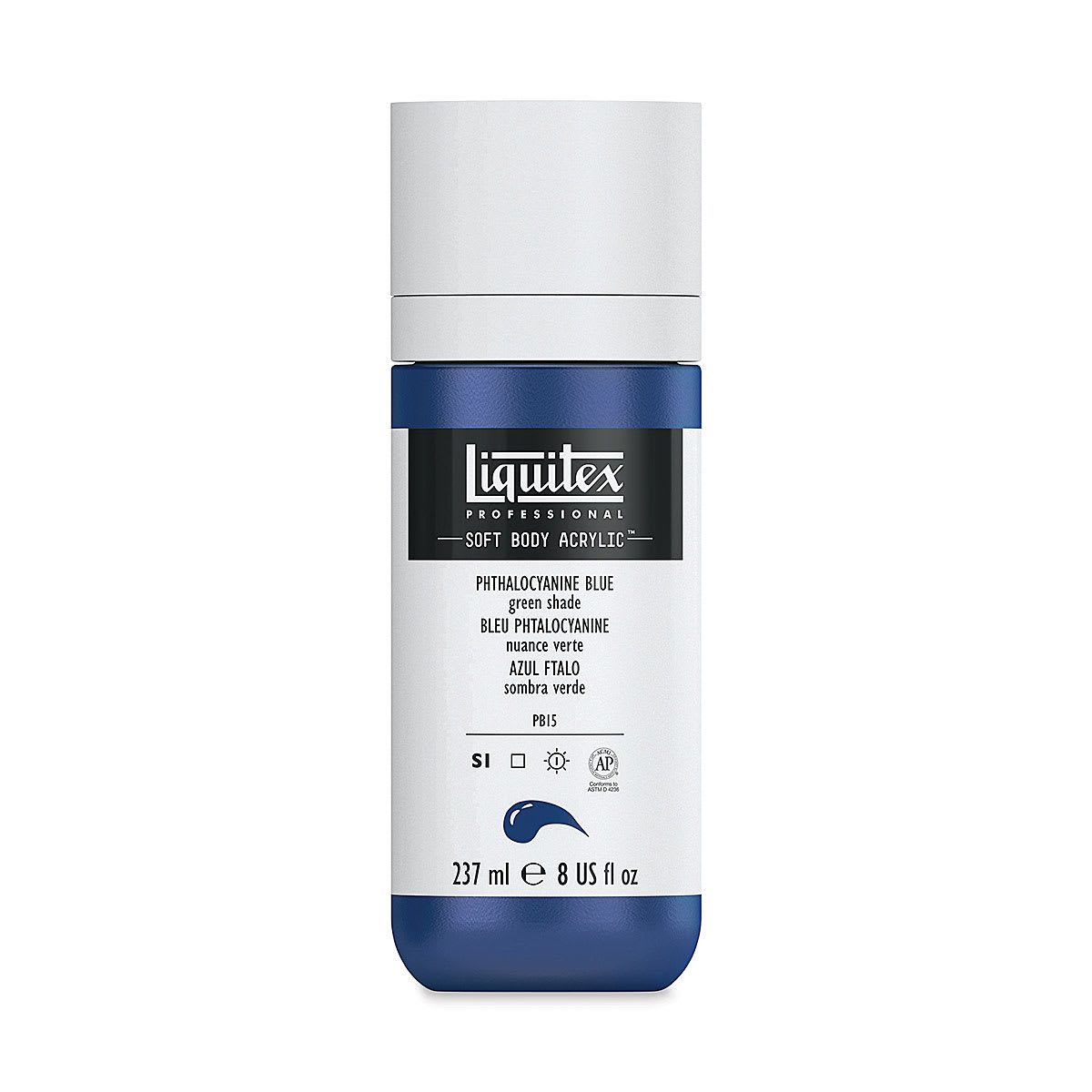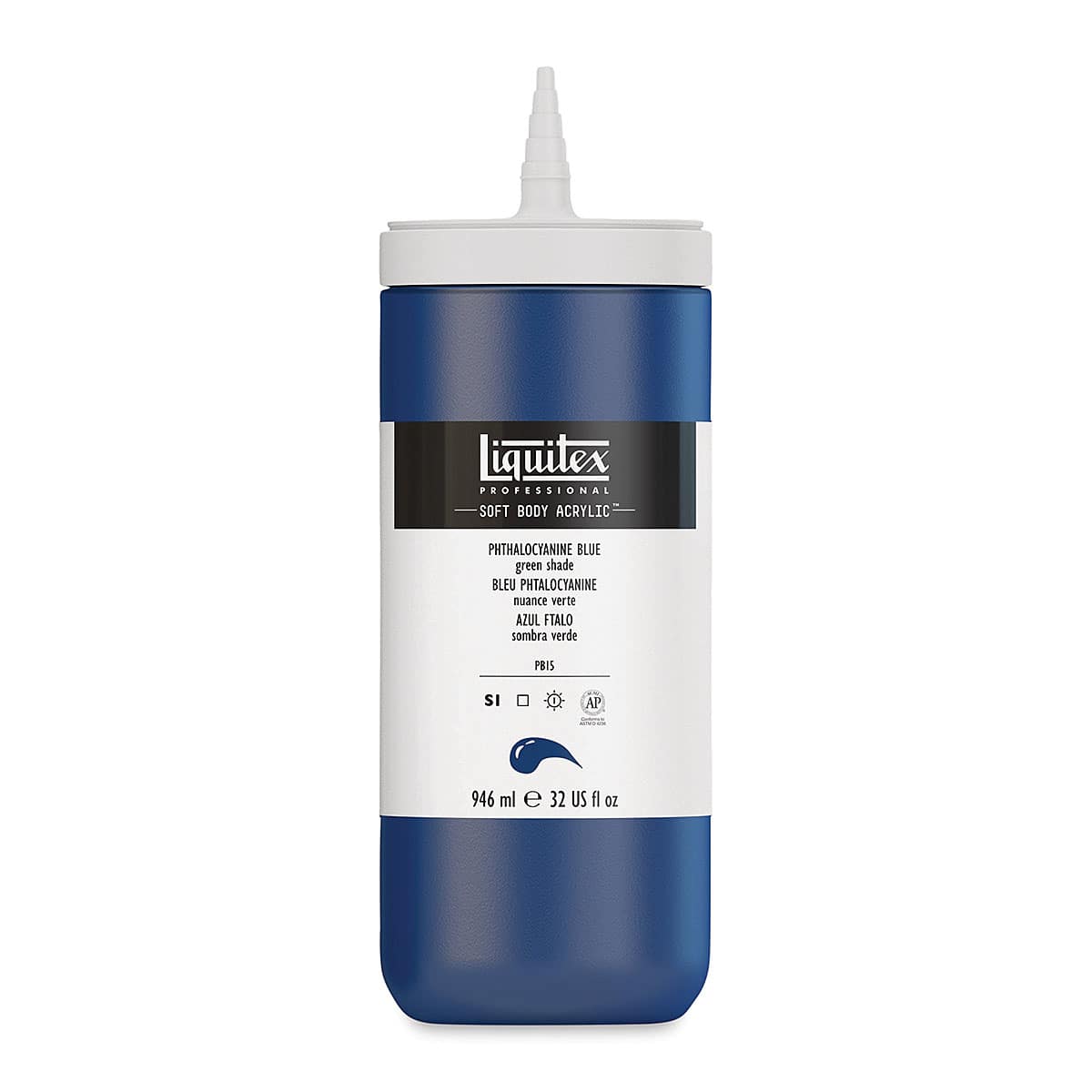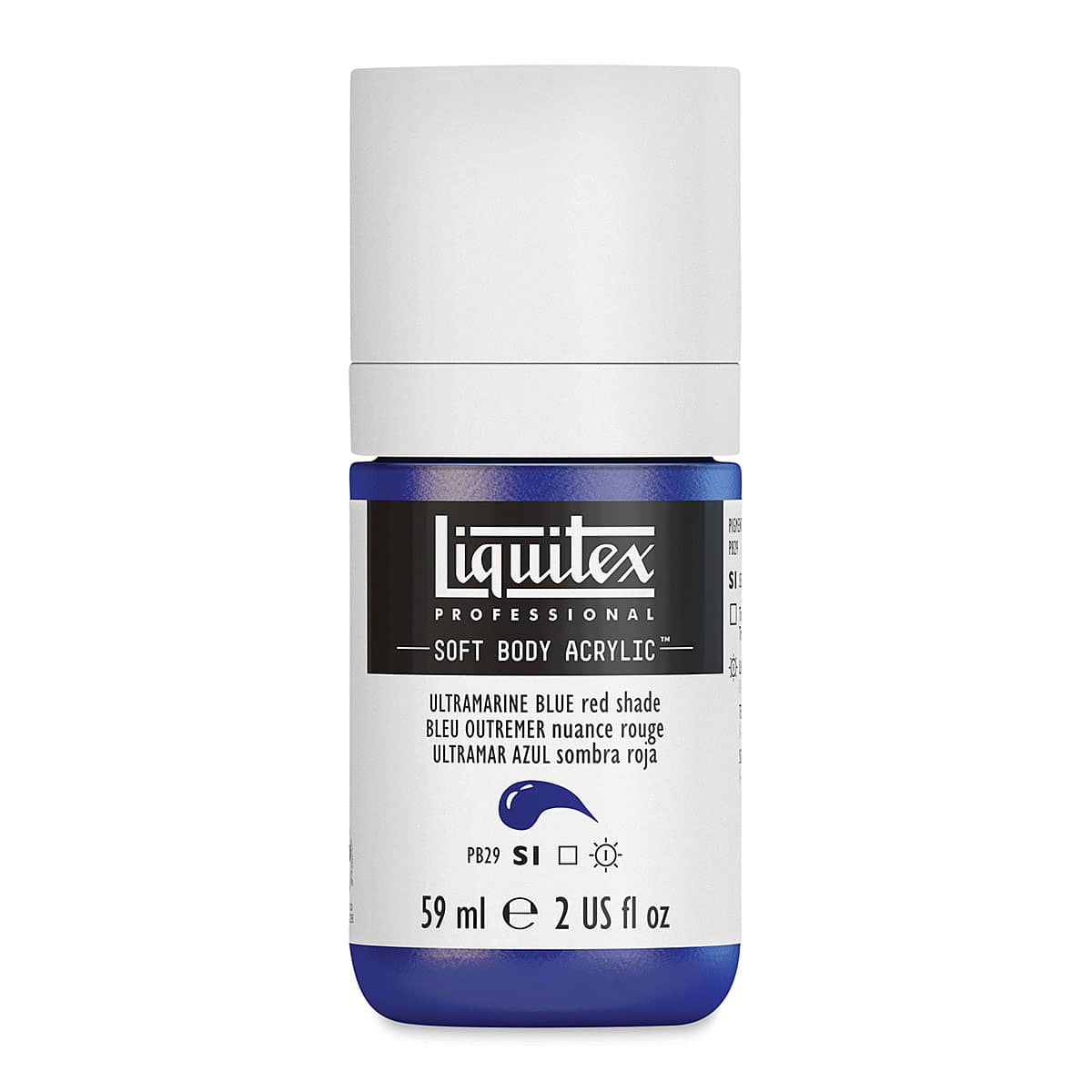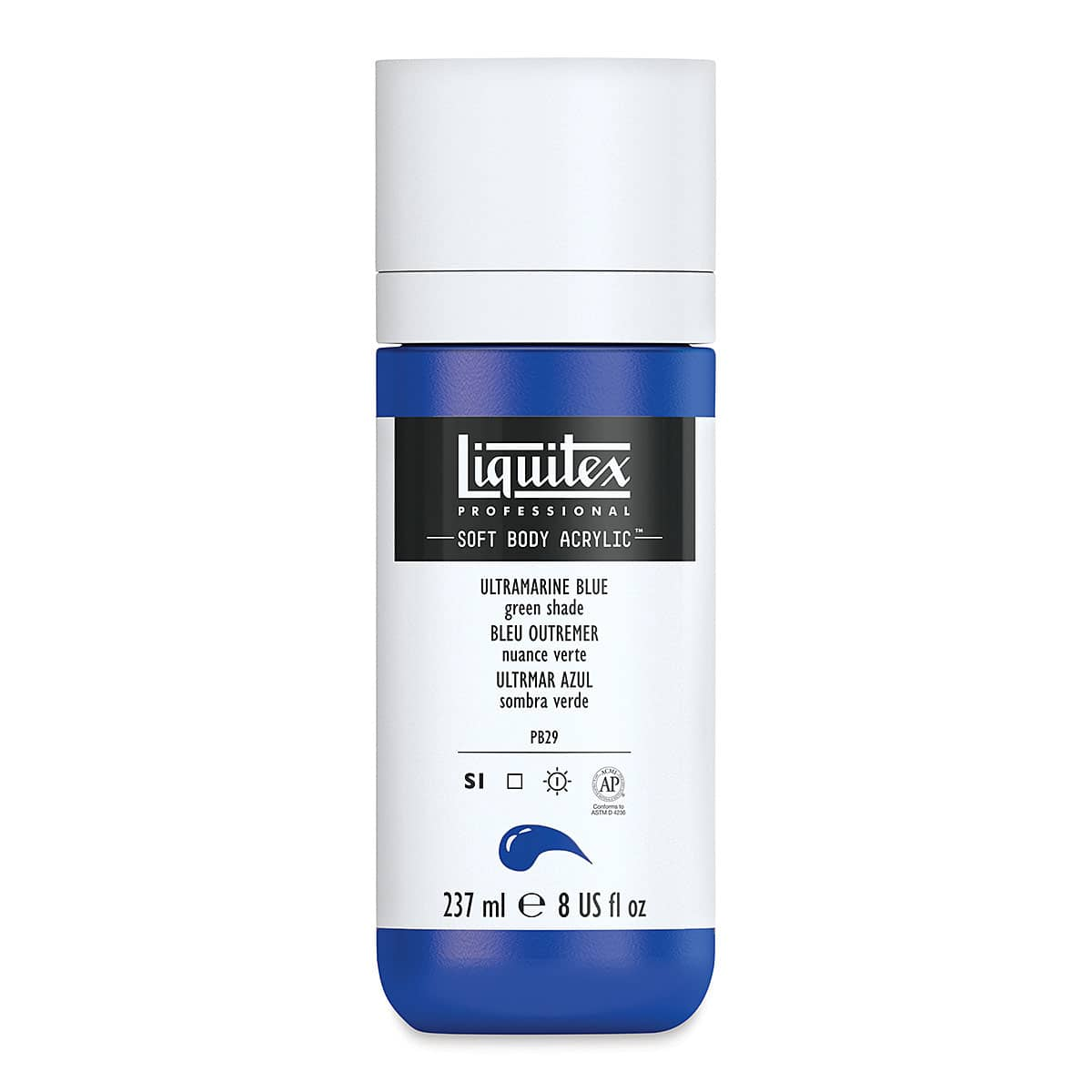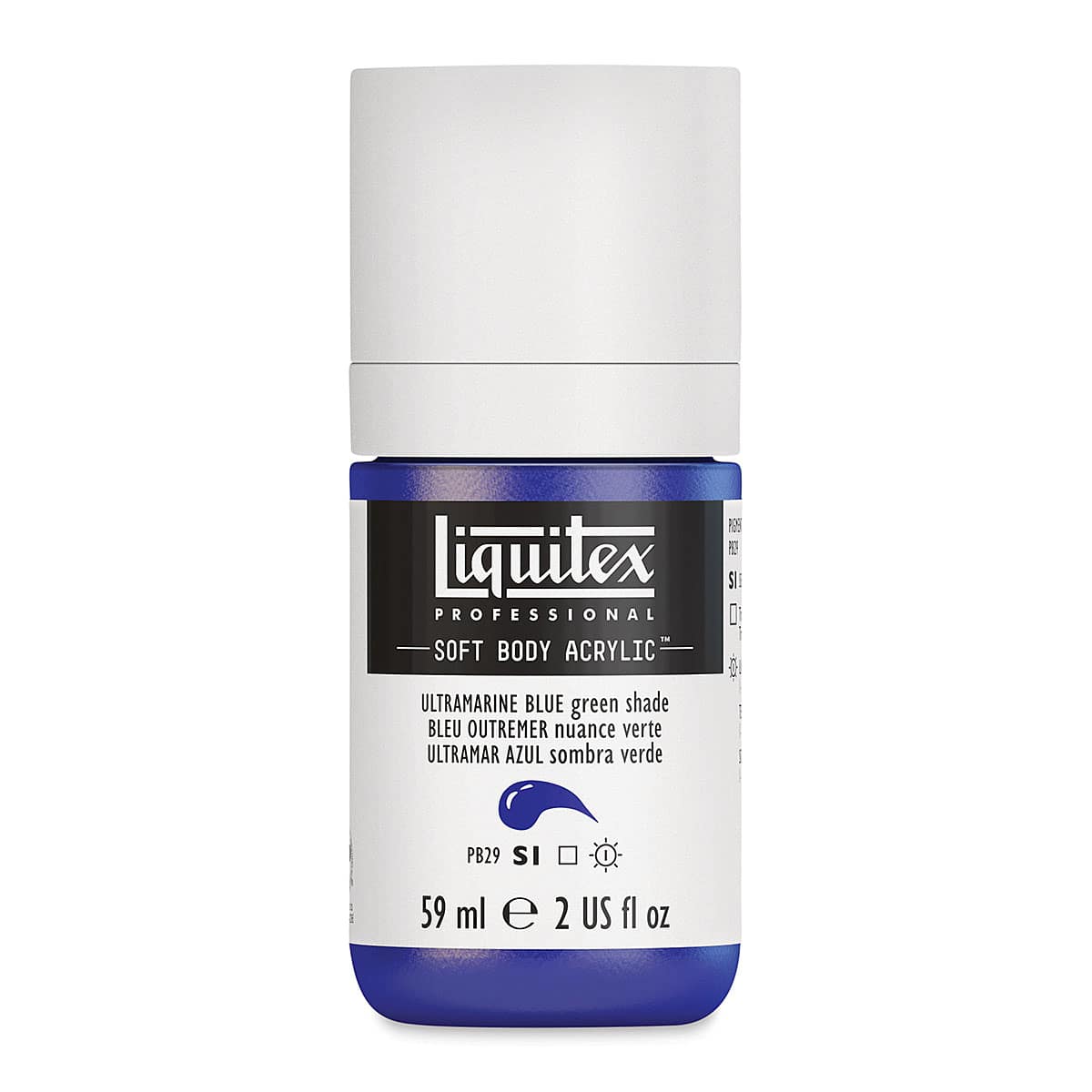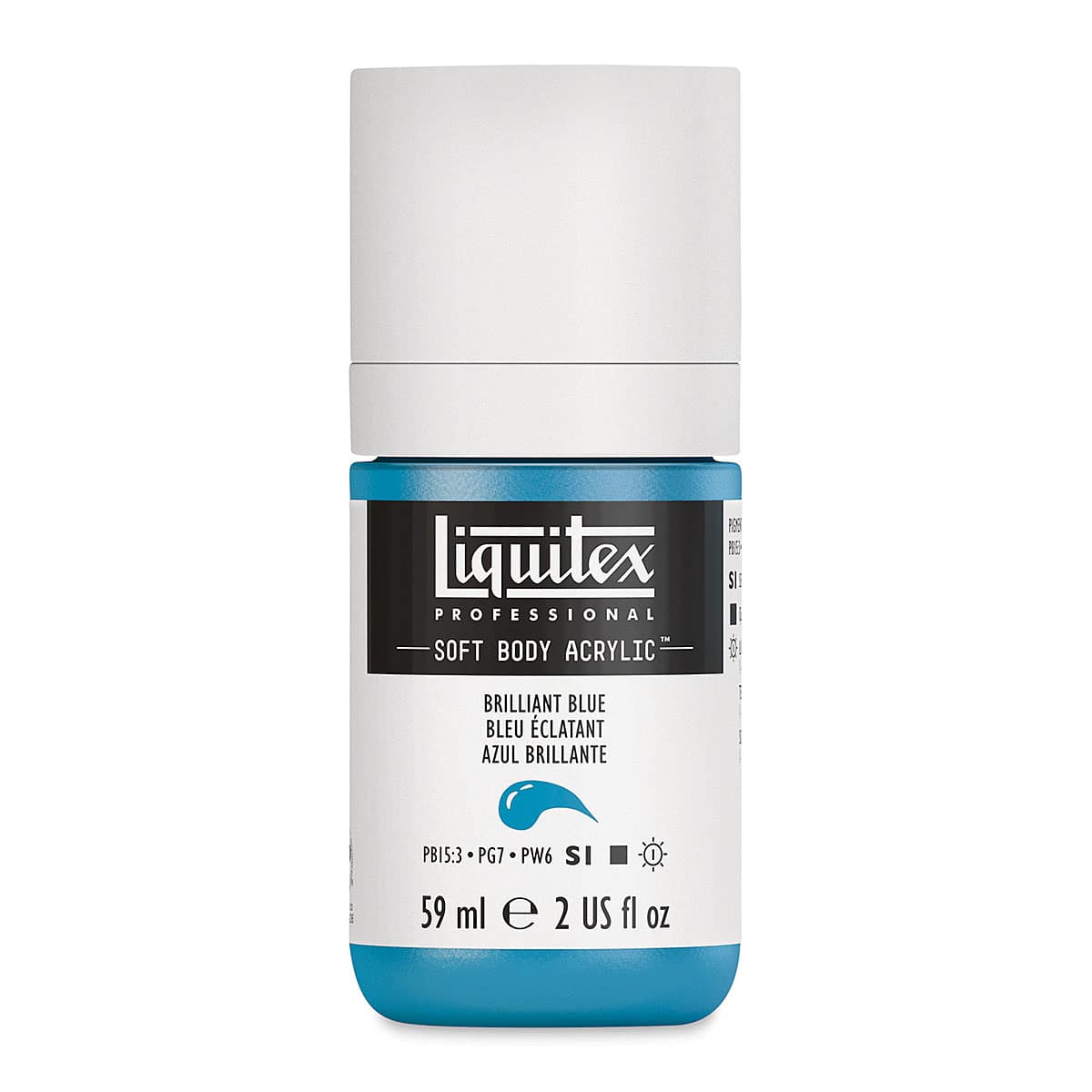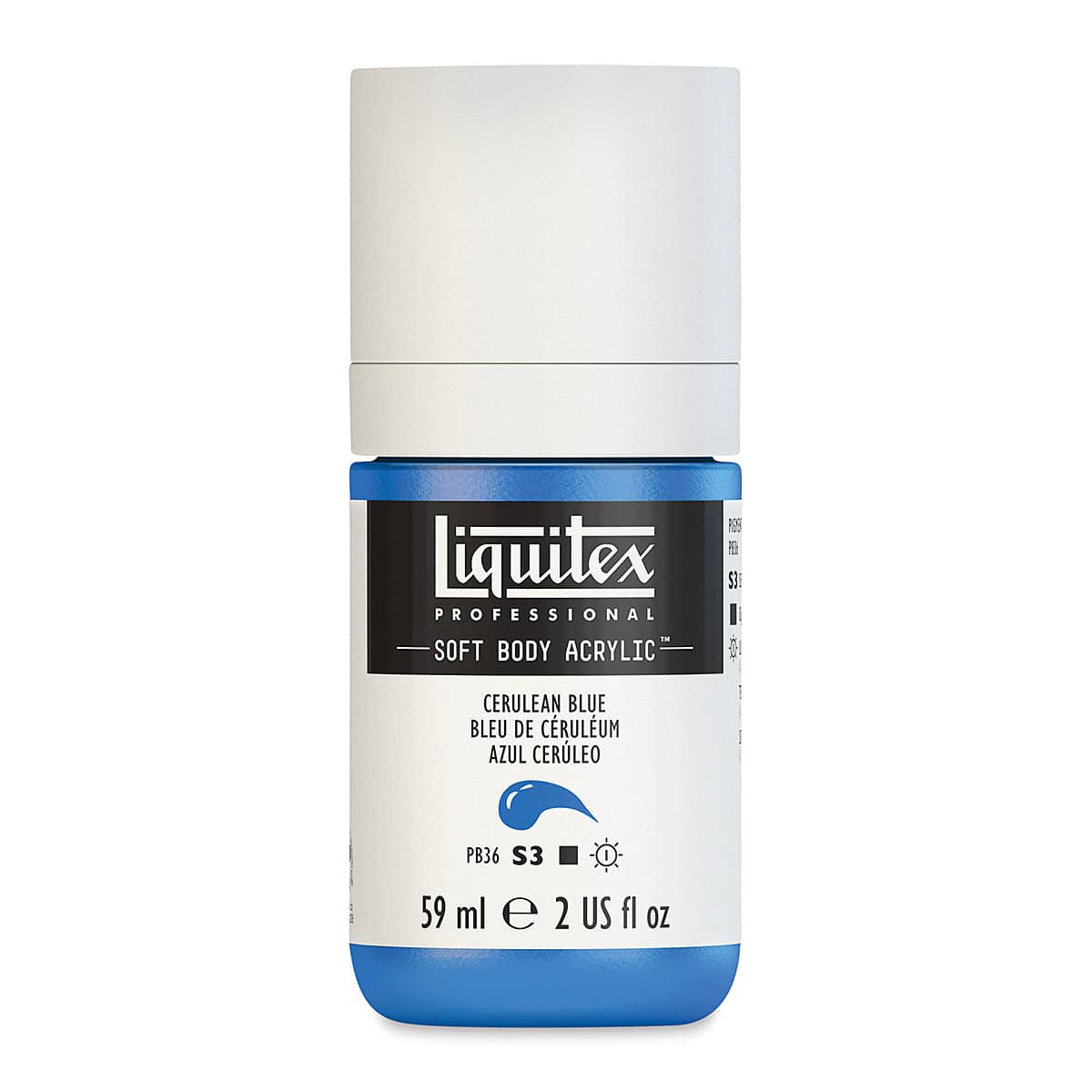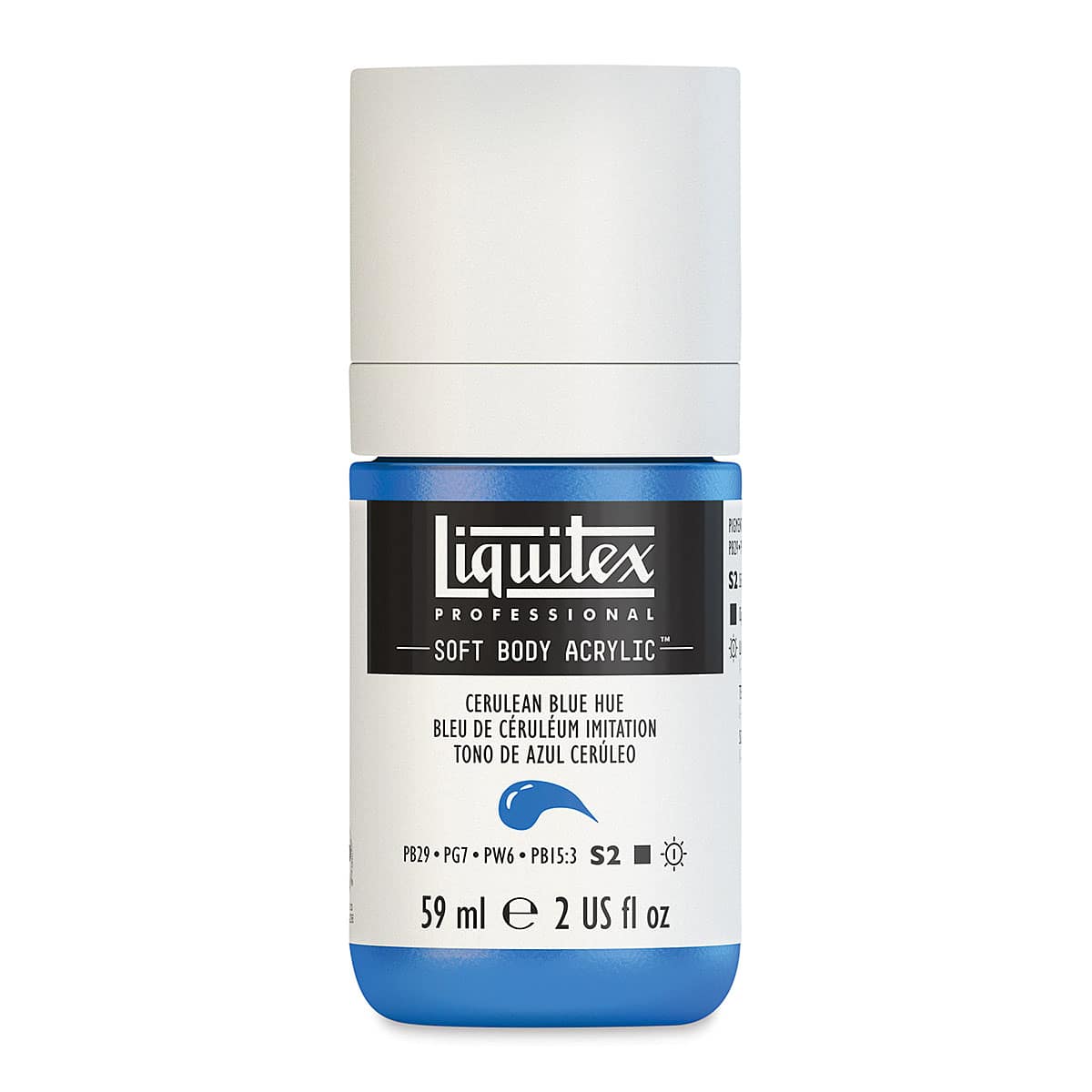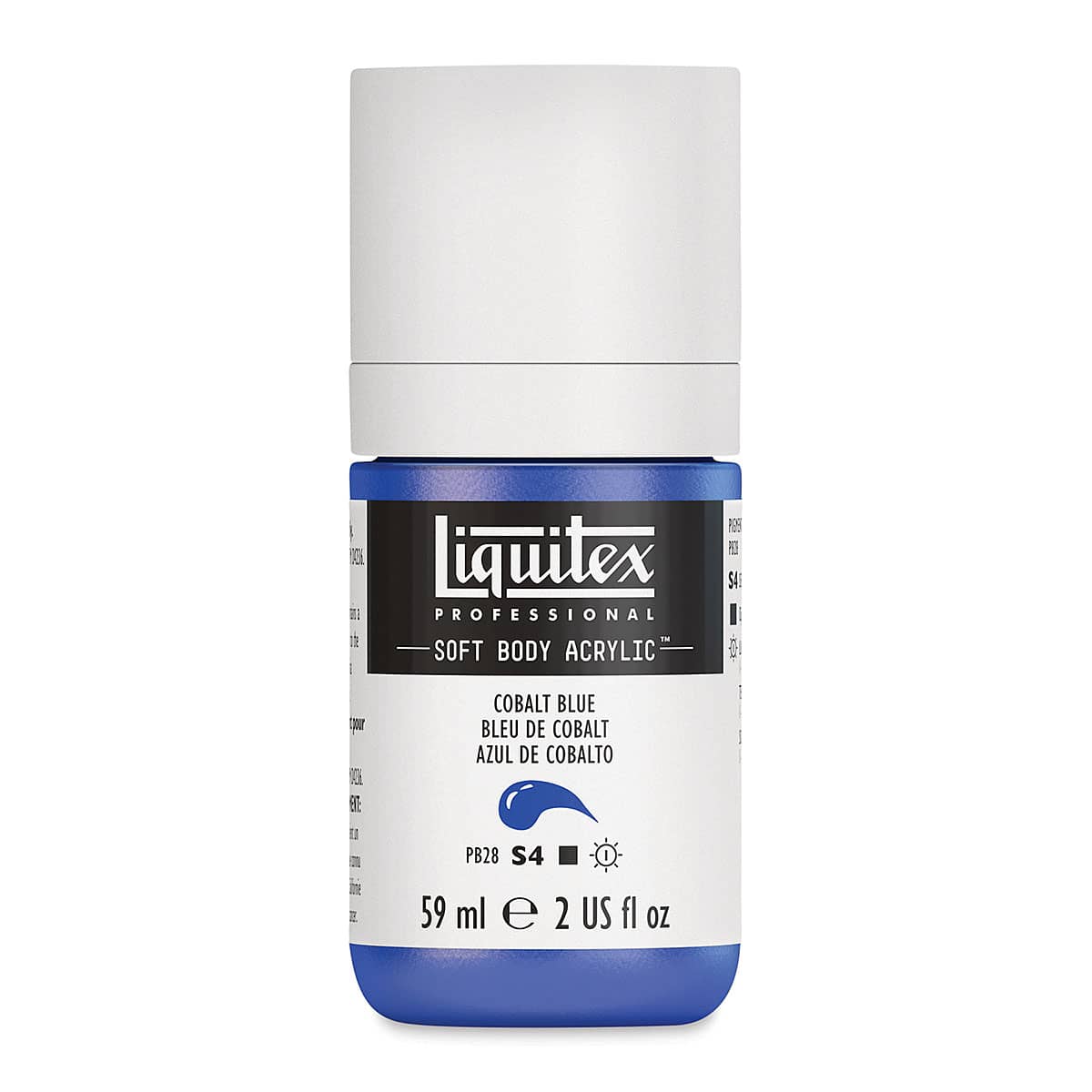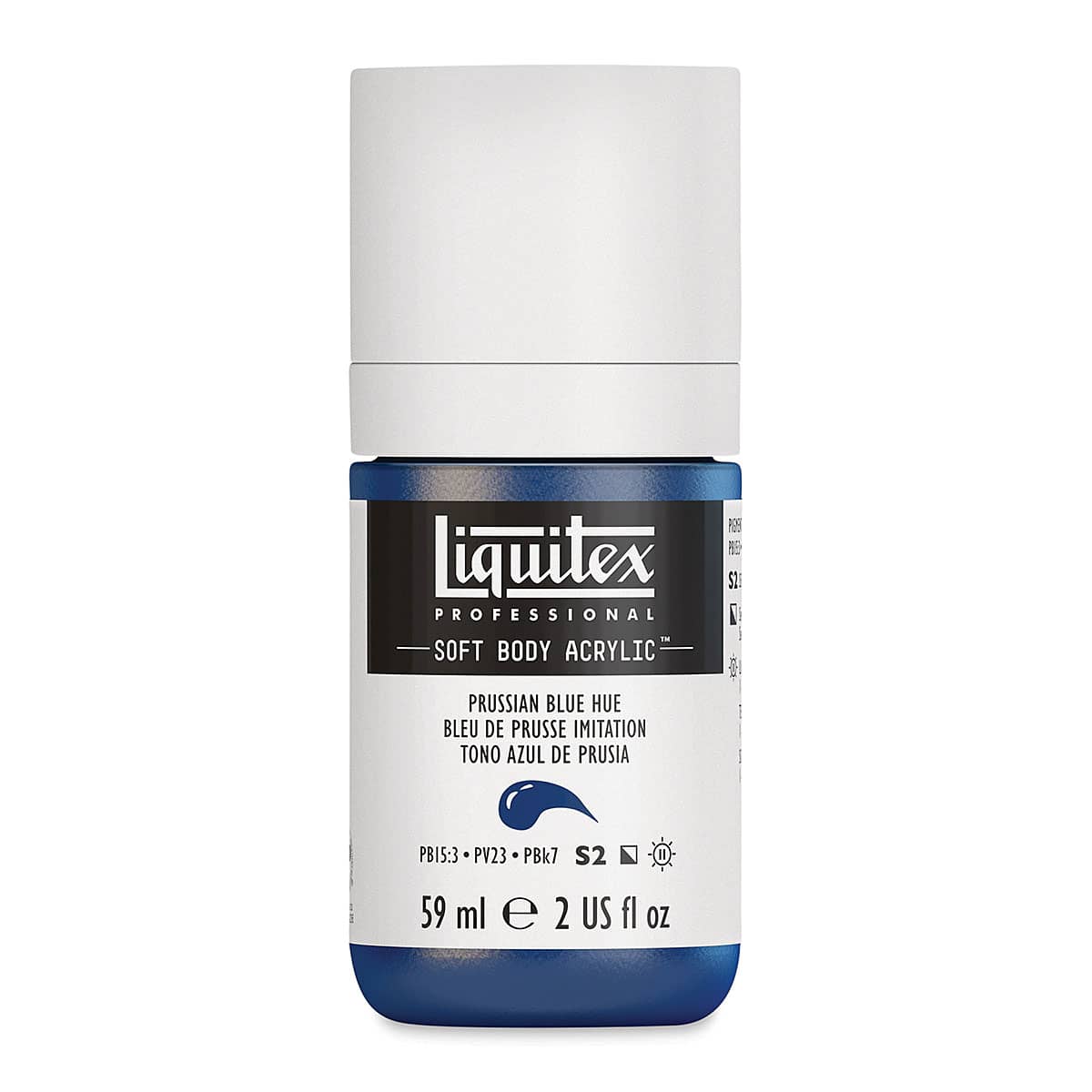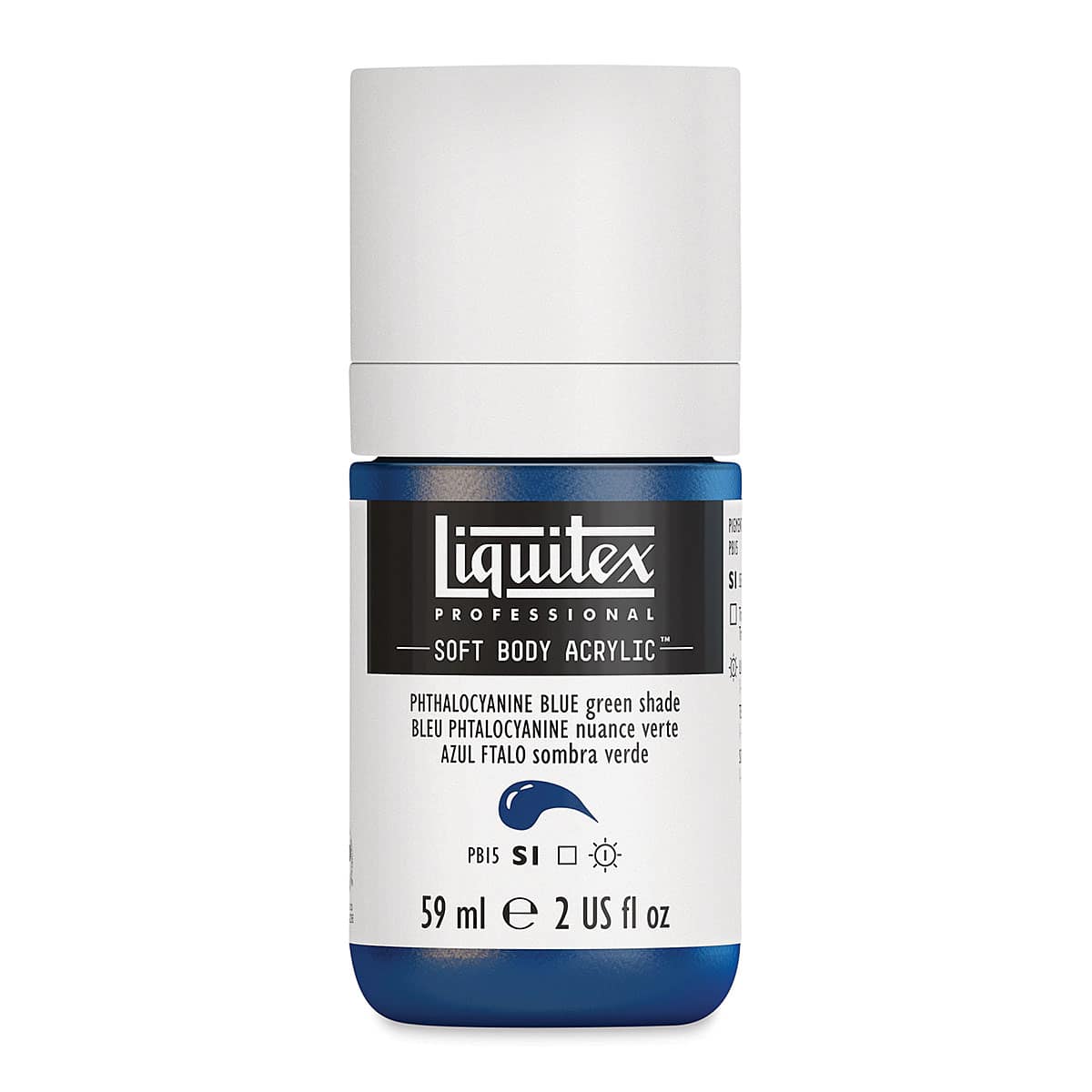
Liquitex Soft Body Artist Acrylics - Phthalo Blue (Red Shade), 59 ml bottle

Professional Soft Body Acrylics

Store price

Listed prices, not live quotes. Check delivery, tax and stock at the shop.

  • Blick Art Materials
    $11.40 USDShop
    Recorded Oct 21, 2026, 8:55 AM UTC

Saving an item to My Stash does not start price monitoring.

Product details
Size
59 ml
Blick SKU
00616-5133
About this product range
  • Professional quality
  • 99 brilliant colors
  • Maximum pigment loads
  • Minimal color shift from wet to dry
  • Balanced flow supports glazing, layering, and knife work
  • Excellent color clarity in thin films and glazes

Liquitex Professional Soft Body Acrylics deliver rich, permanent color in a low-viscosity formula made for versatility. Originally developed as the first water-based acrylic in 1955, this modern version offers a smooth, flowing consistency that’s perfect for fine detail, staining, watercolor-style washes, and fluid techniques like pouring and glazing.

Each color contains high pigment concentrations and a flexible acrylic binder that ensures excellent adhesion and surface integrity. The low-drip formula allows for precision in brushwork or pouring, and it dries to a consistent satin finish with minimal color shift.

Compatible with all Liquitex mediums and acrylic formats, Soft Body Acrylics are ideal for traditional painting, mixed media, and experimental applications where fluidity and control matter.

Pigment information

General reference notes about pigments can describe other media (such as oil). They do not verify this product’s exact formulation or behavior.

Phthalo Blue

Pigment code
PB15:6
Type
organic
Chemical name
epsilon copper phthalocyanine
Chemical formula
C32H16CuN8
Properties
Phthalo Blue PB15:6 is a structural variant of Phthalo Blue PB15 that produces more yellowish tones.
Permanence
Phthalo Blues are completely lightfast and stable and are permanent for all paint uses. They are currently used in inks, coatings, and many plastics due to their stability and are considered a standard pigment in printing ink and the packaging industry.
Toxicity
Phthalo Blues have no significant hazards, although those made before 1982 contained some PCBs (polychlorinated biphenyls).
History
Developed by chemists using the trade name Monastral Blue, the organic blue dyestuff now known as Phthalo Blue was presented as a pigment in November 1935 in London. Its discovery was accidental. The dark color was observed in a kettle where a dye was being made from a British dyestuff plant. The demand for such a pigment came from commercial printers who wanted a cyan to replace Prussian Blue.

Track this price

New lows for this exact package, across matched retailers.

Loading your account…

Price history

More to explore

Related supplies from the catalog.