General reference notes about pigments can describe other media (such as oil). They do not verify this product’s exact formulation or behavior.
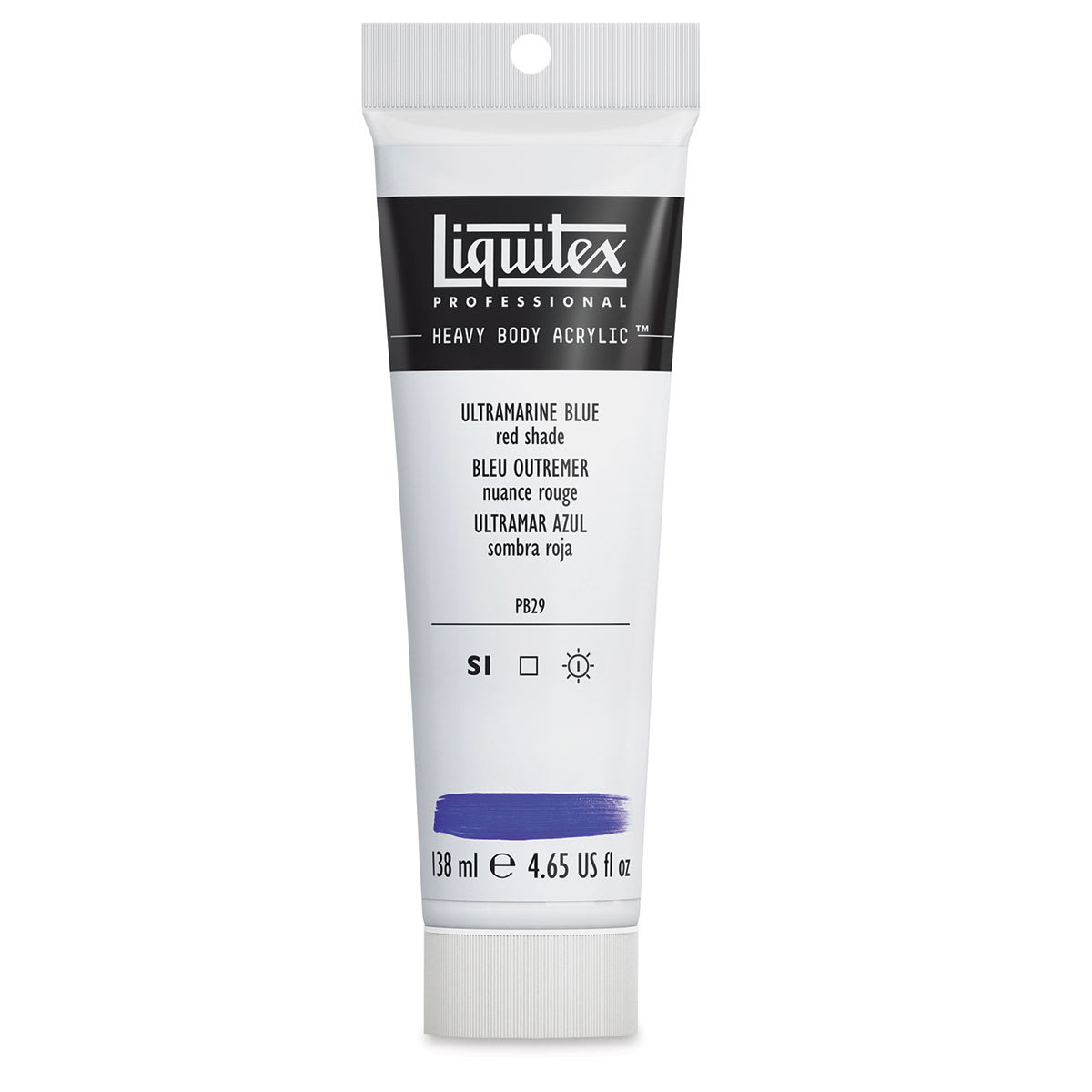
Phthalo Blue
- Pigment code
- PB15:1
- Type
- organic
- Chemical name
- alpha copper phthalocyanine
- Chemical formula
- C32H16CuN8
- Properties
- Phthalo Blue PB15:1 is a structural variant of Phthalo Blue PB15 that produces more reddish tones.
- Permanence
- Phthalo Blues are completely lightfast and stable and are permanent for all paint uses. They are currently used in inks, coatings, and many plastics due to their stability and are considered a standard pigment in printing ink and the packaging industry.
- Toxicity
- Phthalo Blues have no significant hazards, although those made before 1982 contained some PCBs (polychlorinated biphenyls).
- History
- Developed by chemists using the trade name Monastral Blue, the organic blue dyestuff now known as Phthalo Blue was presented as a pigment in November 1935 in London. Its discovery was accidental. The dark color was observed in a kettle where a dye was being made from a British dyestuff plant. The demand for such a pigment came from commercial printers who wanted a cyan to replace Prussian Blue.
- Description
- Phthalo Blue Red Shade, Winsor Blue Red Shade
Quinacridone Violet
- Pigment code
- PV19
- Type
- organic synthetic, quinacridone
- Chemical formula
- C20H12N2O2
- Properties
- Quinacridone Red is a high performance, transparent pigment with an average drying time and uneven dispersal. It is another name for Quinacridone Violet (PV19) and Quinacridone Red (PR192). Quinacridone pigments have relatively low tinting strength in general. For this reason, quinacridone colors are often expensive, because more pigment is required in the formulation.
- Permanence
- Quinacridone Violet has excellent lightfastness and is considered the most lightfast organic pigment in this shade range.
- Description
- Quinacridone Red (PR192), Quinacridone Red (PR19), Gamma Quinacridone (PV19)
Lamp Black
- Pigment code
- PBk7
- Type
- inorganic
- Chemical name
- carbon
- Chemical formula
- C
- Properties
- Lamp black is a very opaque, heavily staining black pigment that does not have much covering or tinting power. It is typically the most opaque black in watercolor form. Though a very pure black, it tends to muddy slightly in mixtures. Natural sources may be brownish or bluish in tone because of impurities. When used in oil paints, it is one of the slowest drying pigments, and should not be used in underpainting or applied in layers underneath other colors.
- Permanence
- Lamp Black is very lightfast and absolutely permanent. It is used in all techniques in permanent painting.
- Toxicity
- Carbon itself is not considered hazardous, however other combustion products that are hazardous are often present as impurities when Lamp Black is produced from natural materials. For this reason, commercial preparations of the pigment should be considered slightly toxic. Avoid skin contact and inhalation. Where such impurities are present, Lamp Black is a possible human carcinogen.
- History
- Lamp Black is a carbon based black traditionally produced by collecting soot (known as lampblack) from oil lamps. It has been used as a pigment since prehistoric times. It is the black found in Egyptian murals and tomb decorations and was the most popular black for fresco painting until the development of Mars Black.
- Description
- Carbon Black, Channel Black, Furnace Black, Oil Black, Vegetable Black. Flame Black is an impure version of Lamp Black. An alternate spelling is Lampblack, in which the first syllable is stressed and the two words are elided to form a closed compound.
 Blick Art Materials