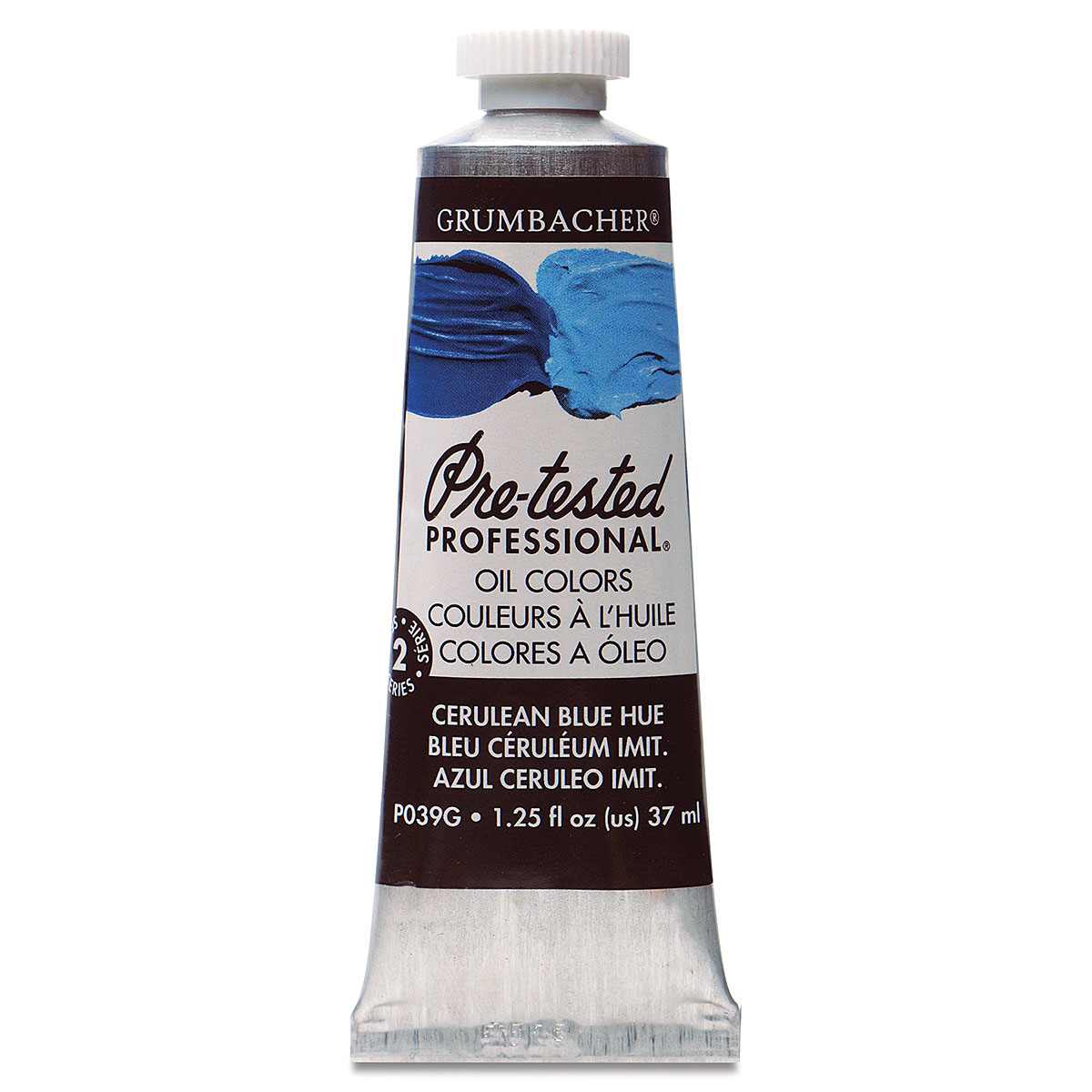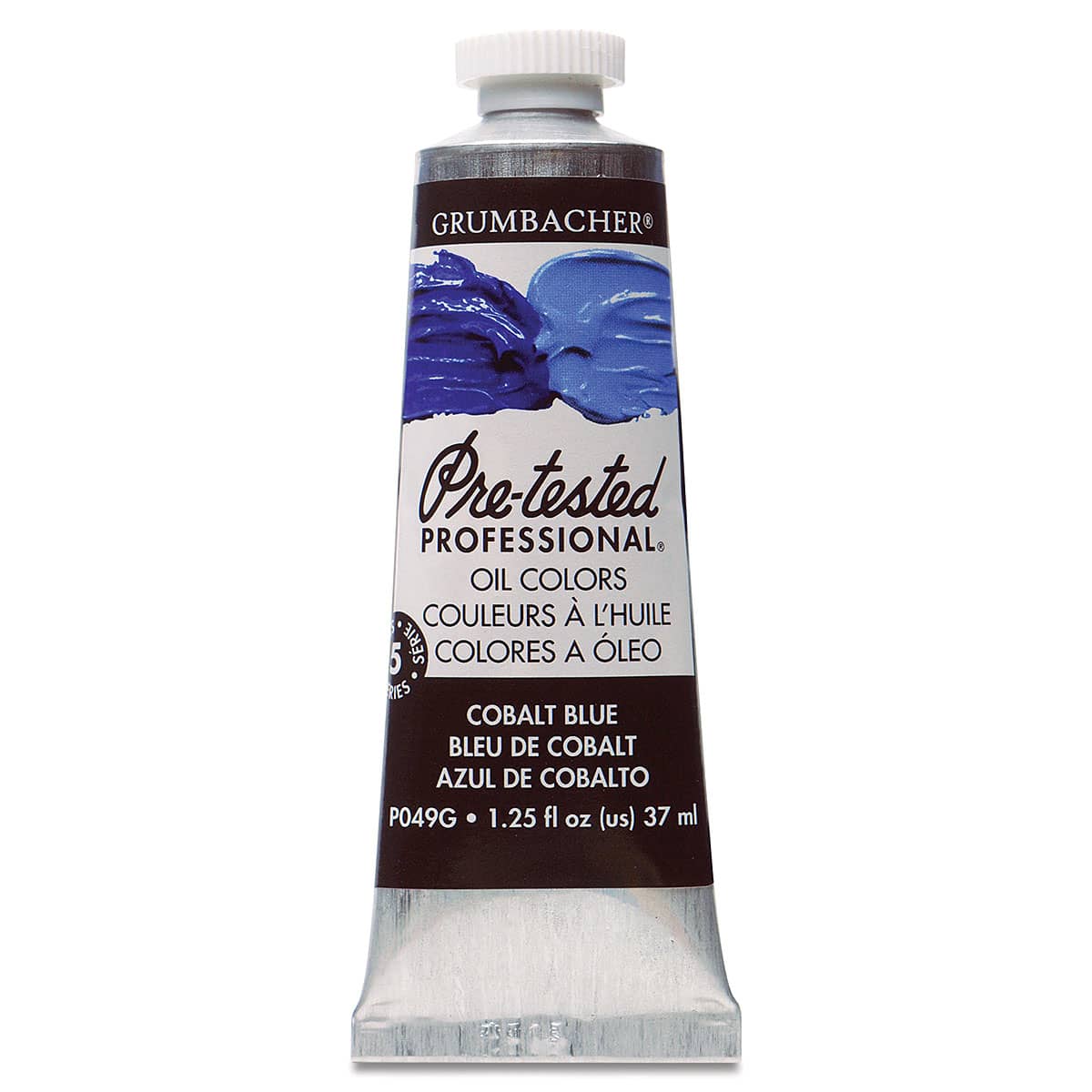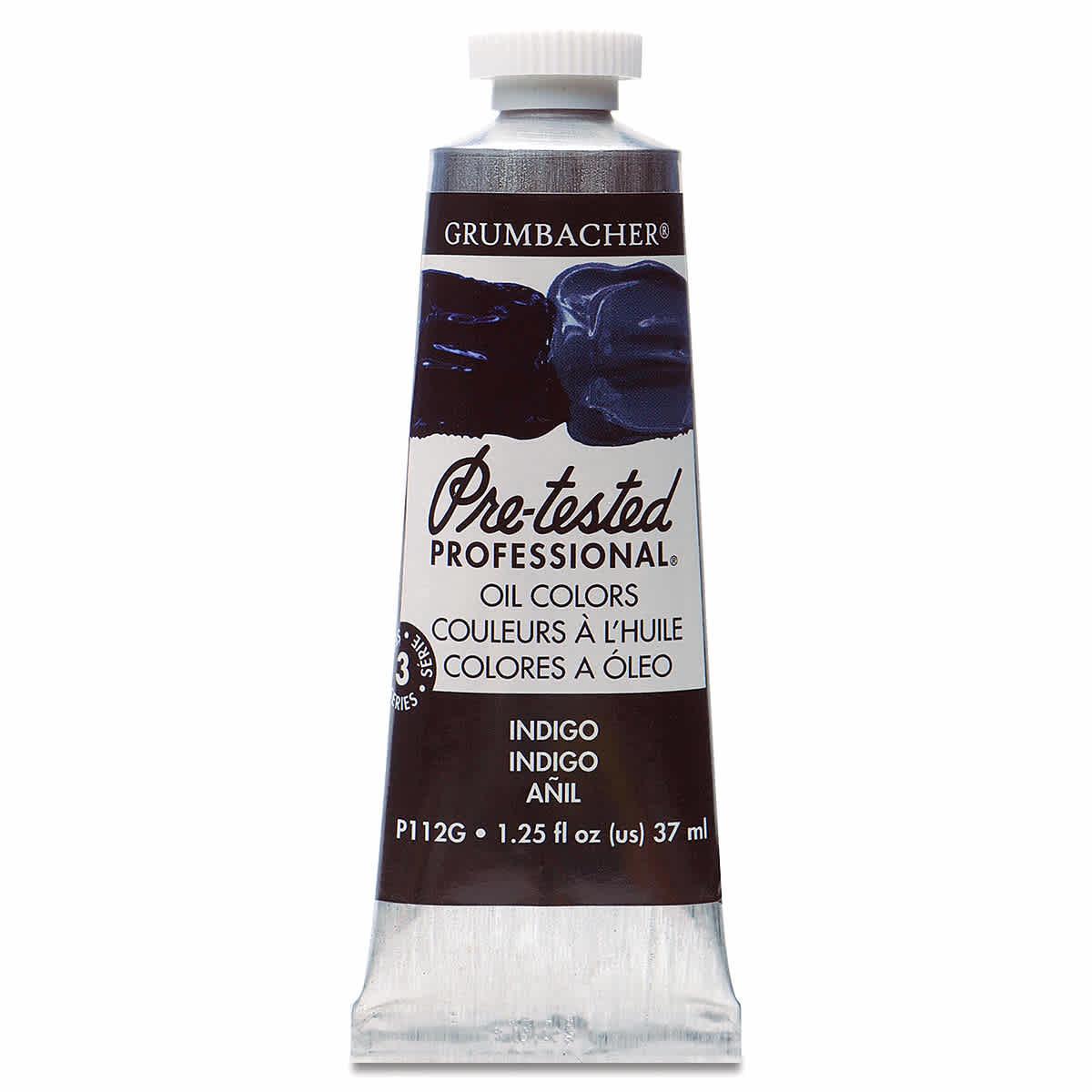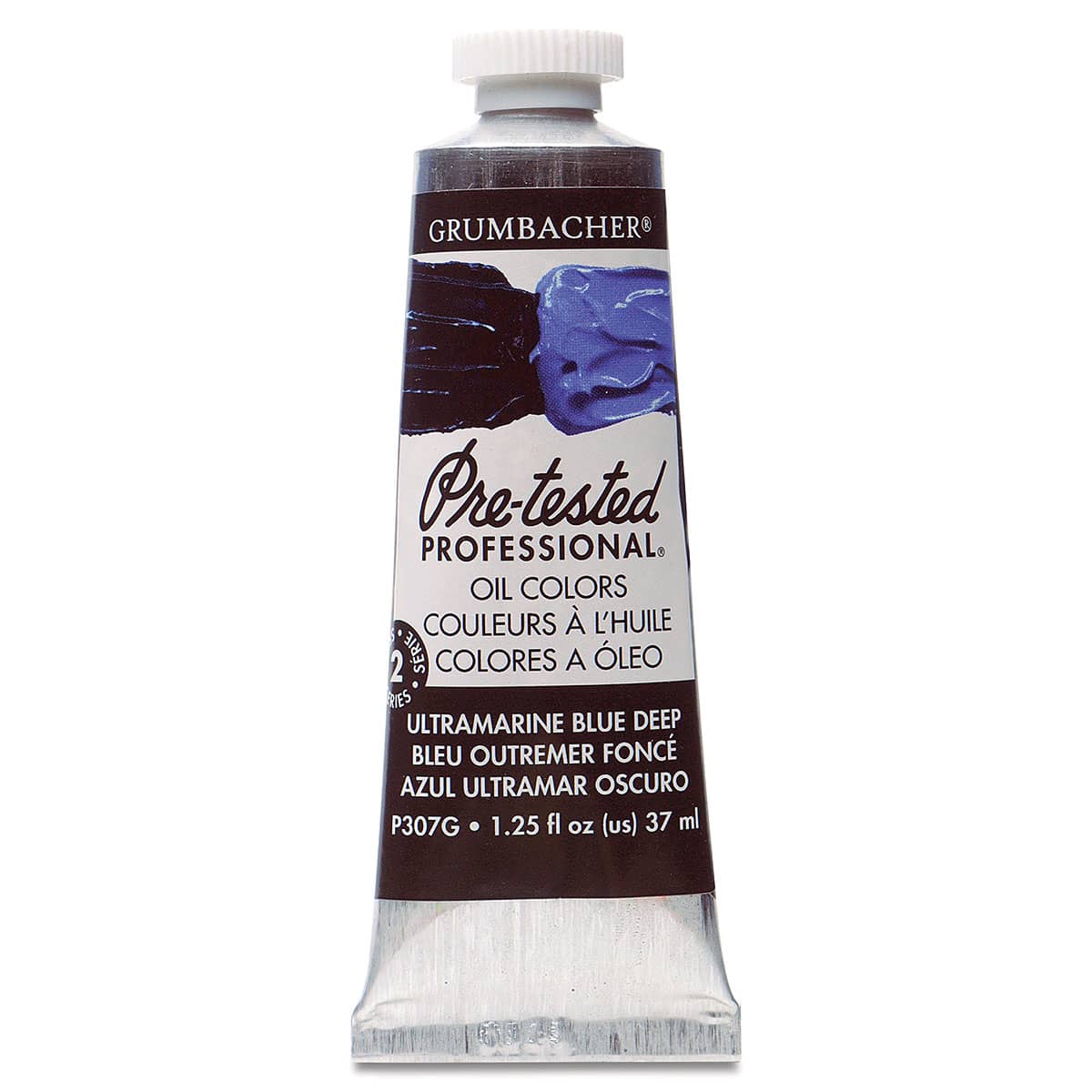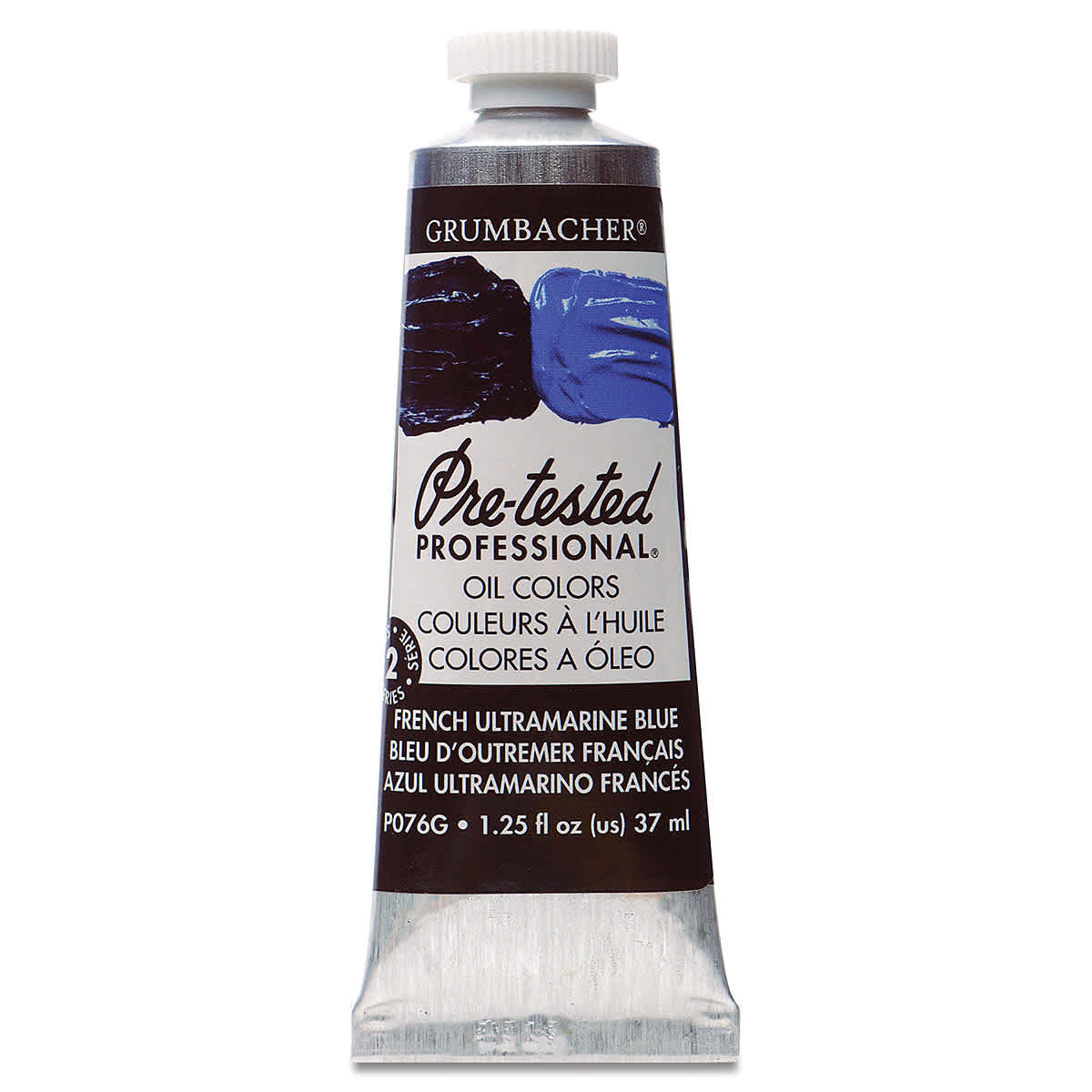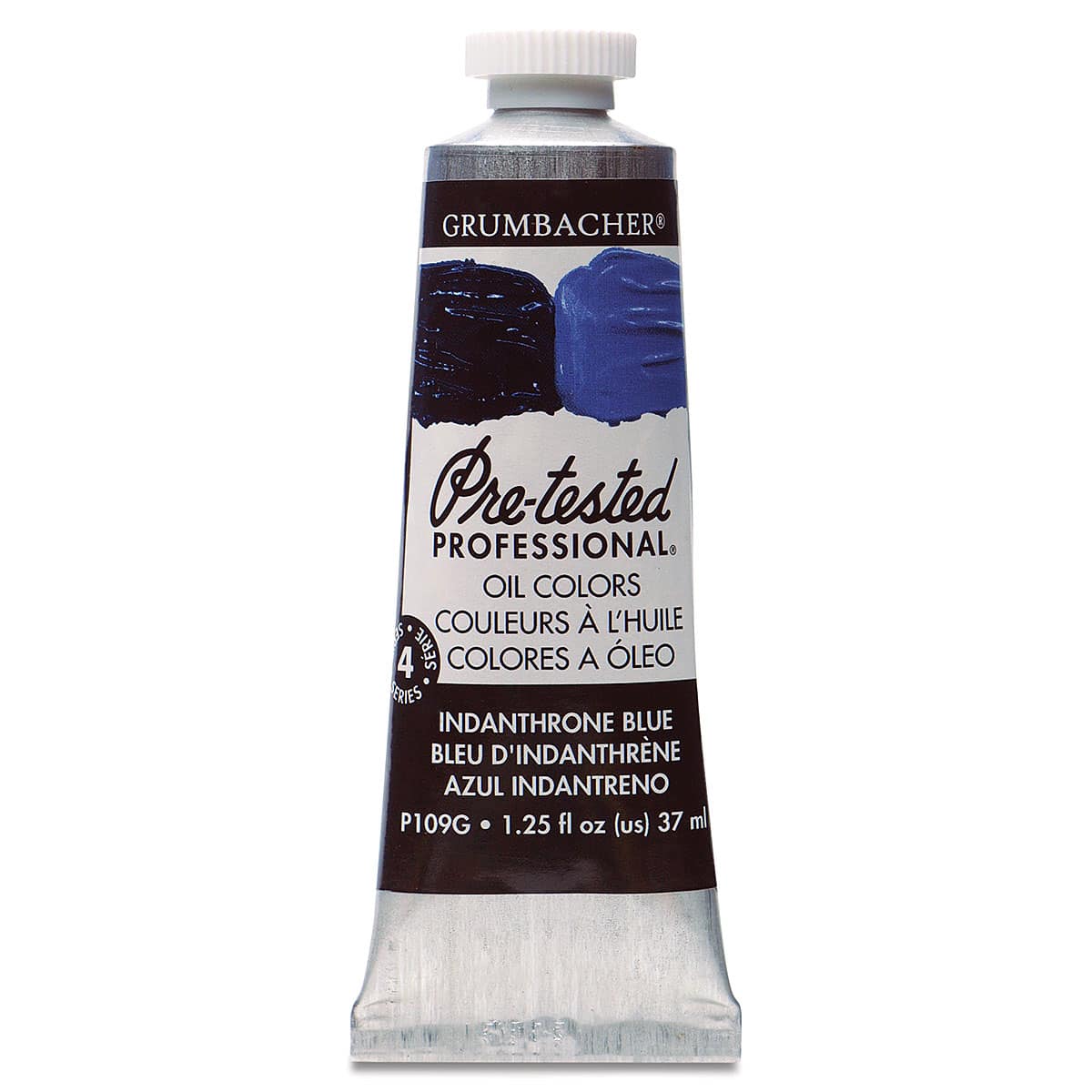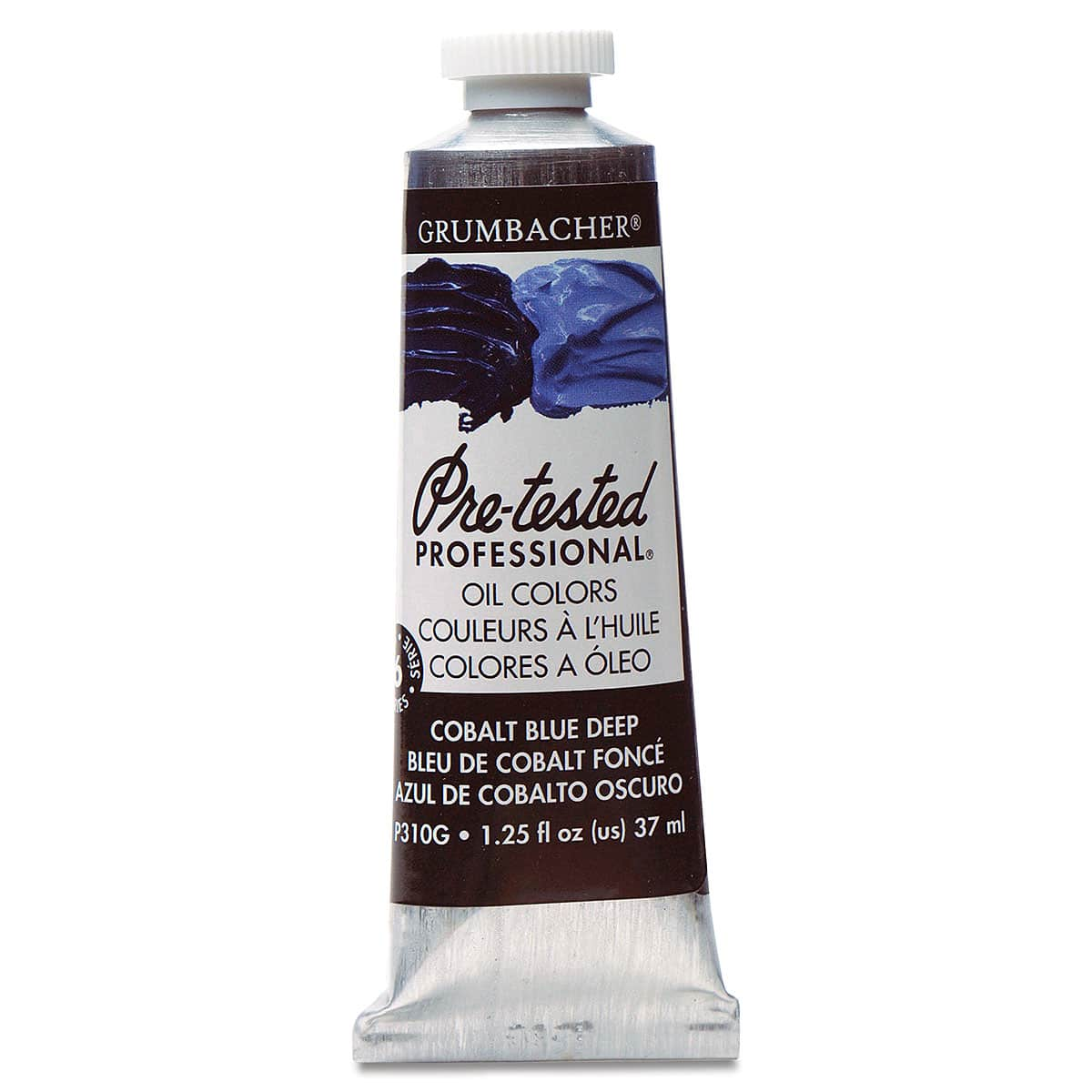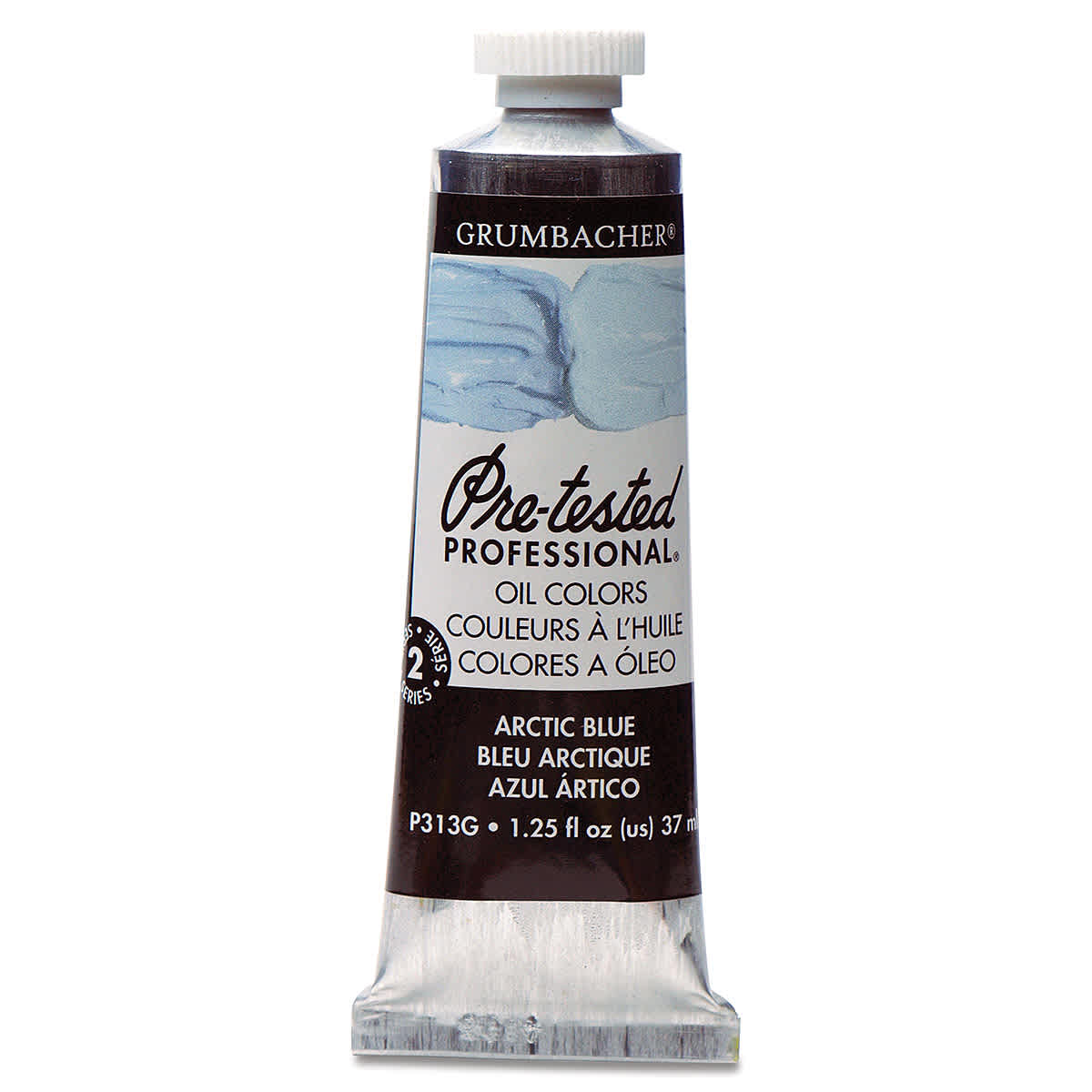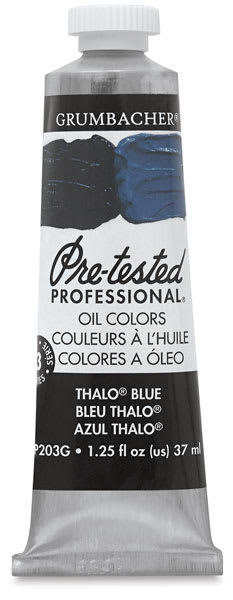
Grumbacher Pre-Tested Artists' Oil Color - Thalo Blue, 1.25 oz tube
$13.79Recorded Oct 21, 2026, 1:18 PM UTC · not live
Pre-Tested Artists' Oil Color
Listed prices, not live quotes. Check delivery, tax and stock at the shop. Unavailable and advance-order listings aren’t ranked.
 Blick Art Materials
Saving an item to My Stash does not start price monitoring.
Tested and approved by professionals, for professionals, Grumbacher Pre-Tested Professional Oils have been one of America's favorite oil paints since 1905. Recently reformulated, the line now includes stronger, purer cadmiums and exciting contemporary colors.
Grumbacher Pre-Tested Oils are made with the finest pure pigments milled in select alkali-refined linseed oil, with the exception of the Whites described below. All 90 colors are highly pigmented, with tinting strength equal to or better than the leading professional brands. Pre-Tested Oils offer high chroma, superior tinting strength, excellent adhesion, outstanding working properties, the utmost lightfastness, and archival permanence.
Superba White is a smooth, buttery, heavy-bodied white ground in non-yellowing poppy seed oil. Superba is unaffected by exposure to light, freely intermixable with other colors, and offers enhanced opacity and tinting strength.
Titanium White is a permanent, heavy-bodied, versatile, opaque, pure white that is neutral in hue. It's ideal for applications where great opacity is required, and is considered the strongest tinting white.
Soft Titanium White is a permanent soft-bodied, opaque, non-yellowing Titanium White that is ground in poppy seed and sunflower oils, rather than linseed oil. These oils do not yellow with age, as does pure linseed oil. Soft Titanium White is also recommended for fluid wet-in-wet techniques.
Zinc White is a permanent, heavy-bodied, semi-opaque, cool white. It's designed especially for brilliant clear tints with all oil colors, and is excellent for glazing.
General reference notes about pigments can describe other media (such as oil). They do not verify this product’s exact formulation or behavior.
New lows for this exact package, across matched retailers.
Loading your account…
Related supplies from the catalog.