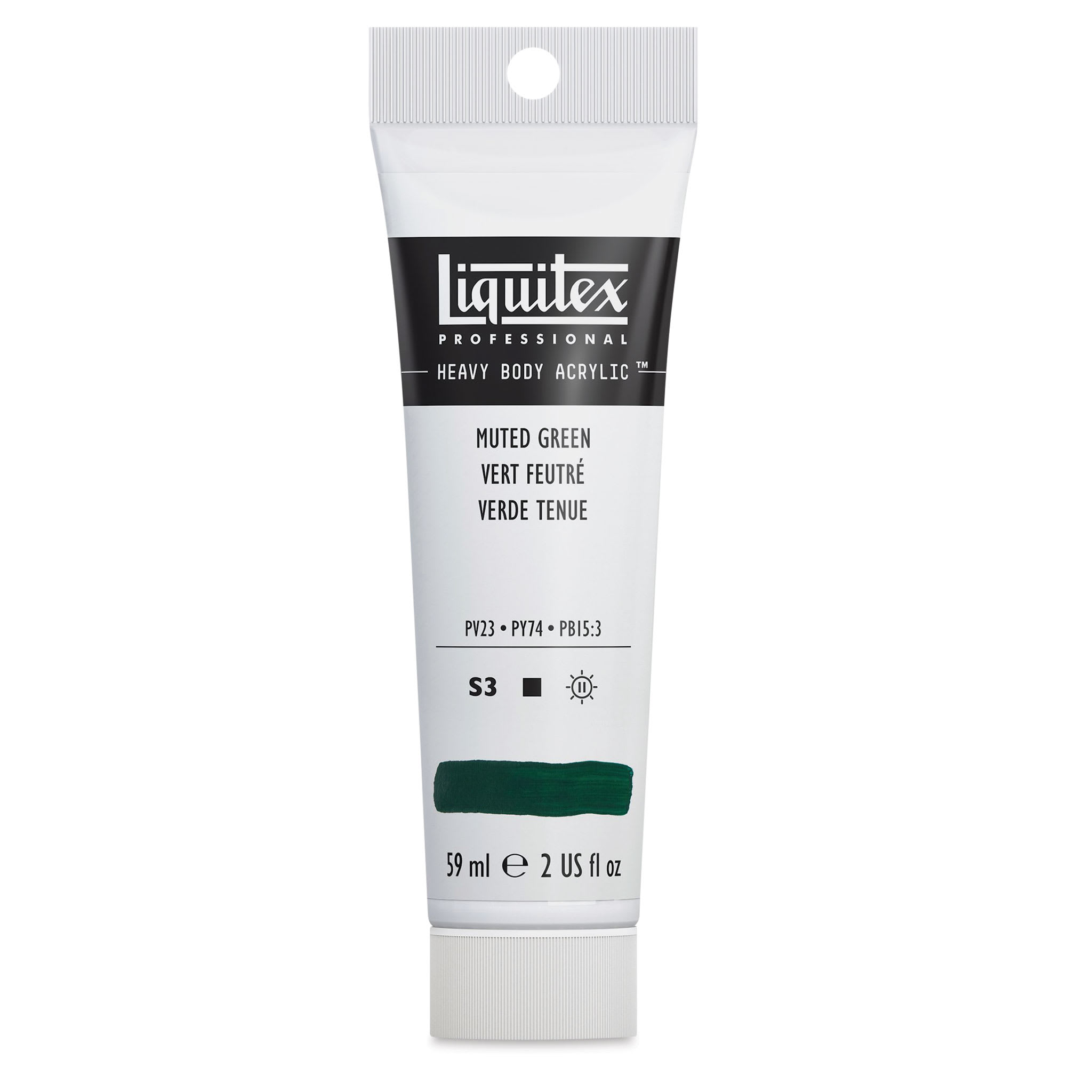
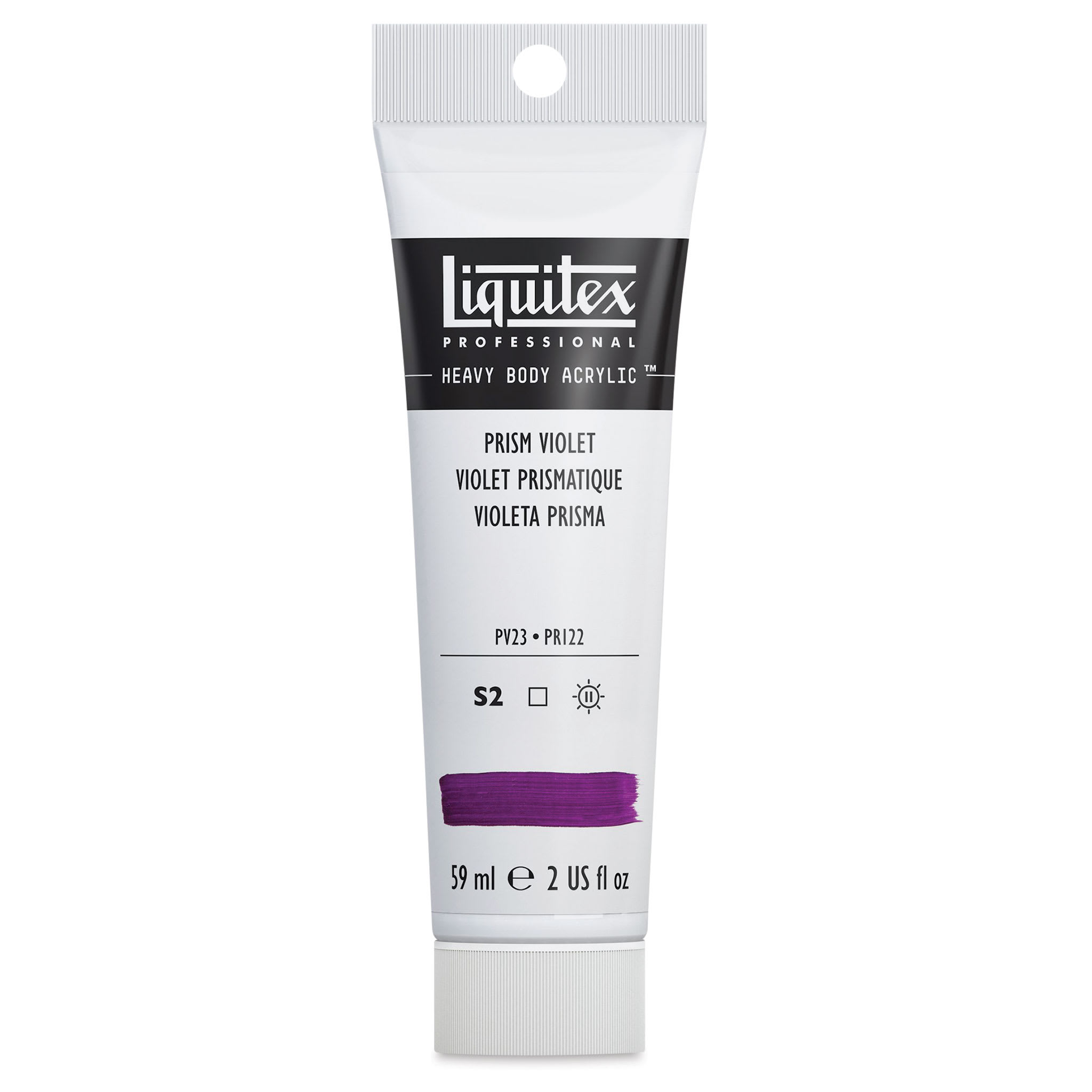
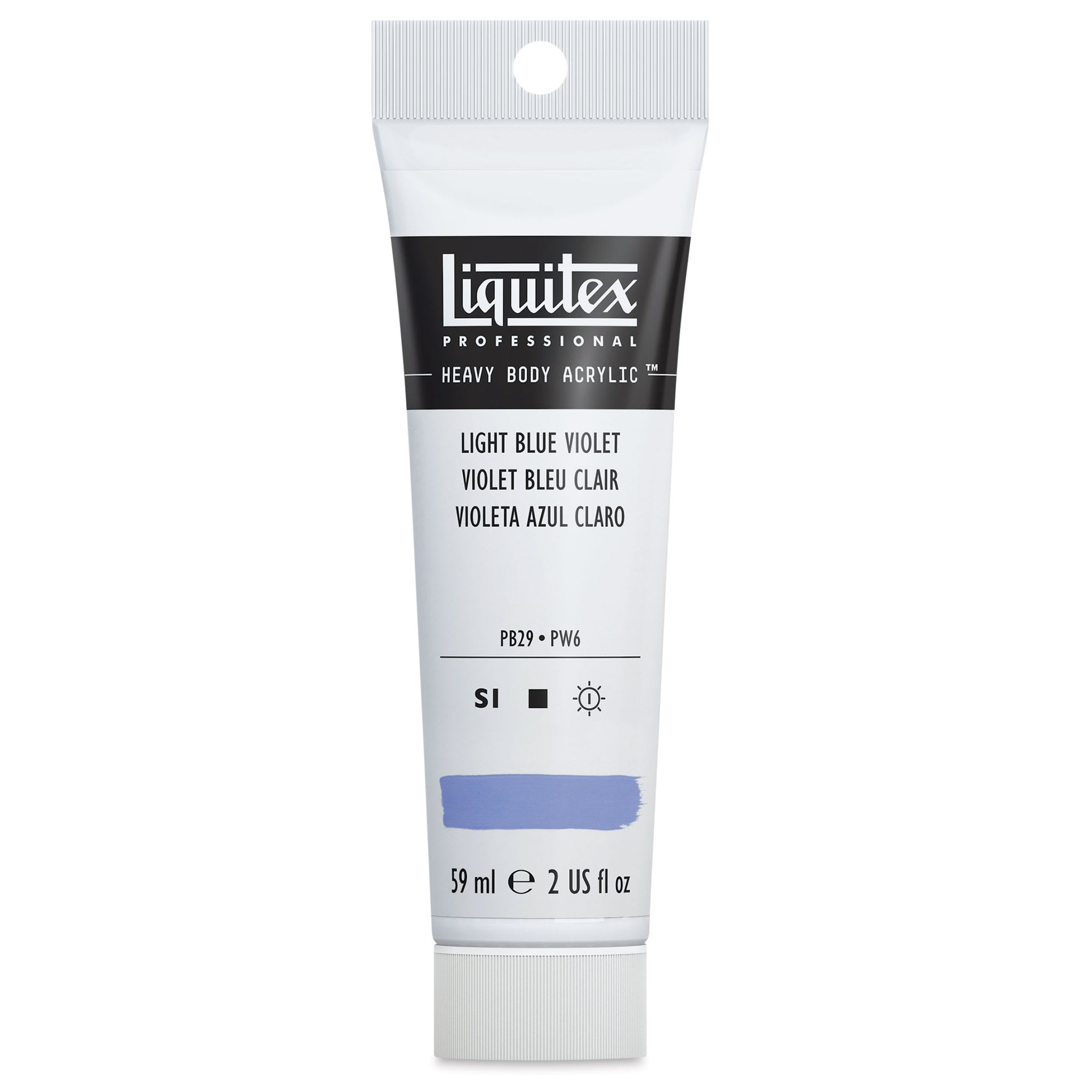
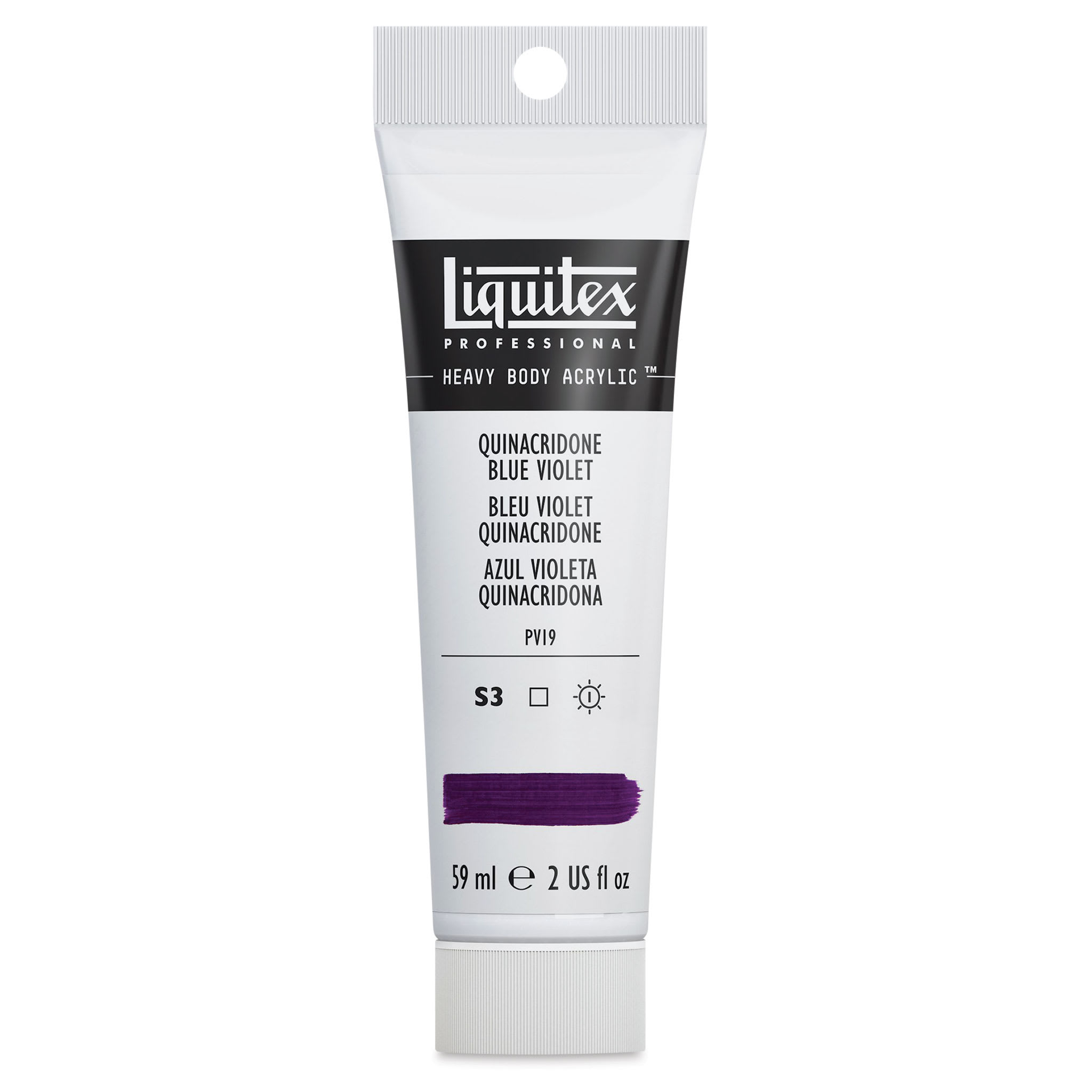
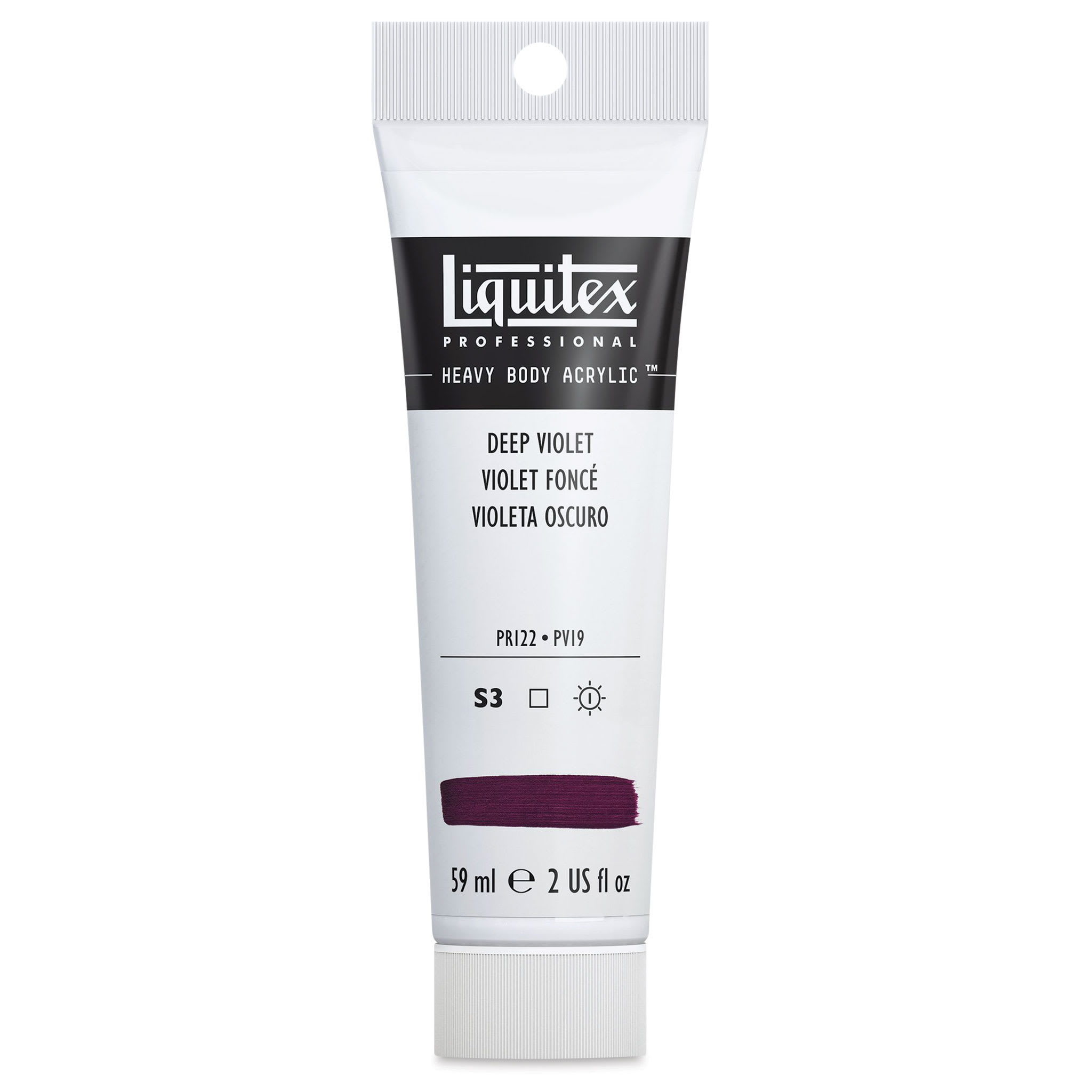
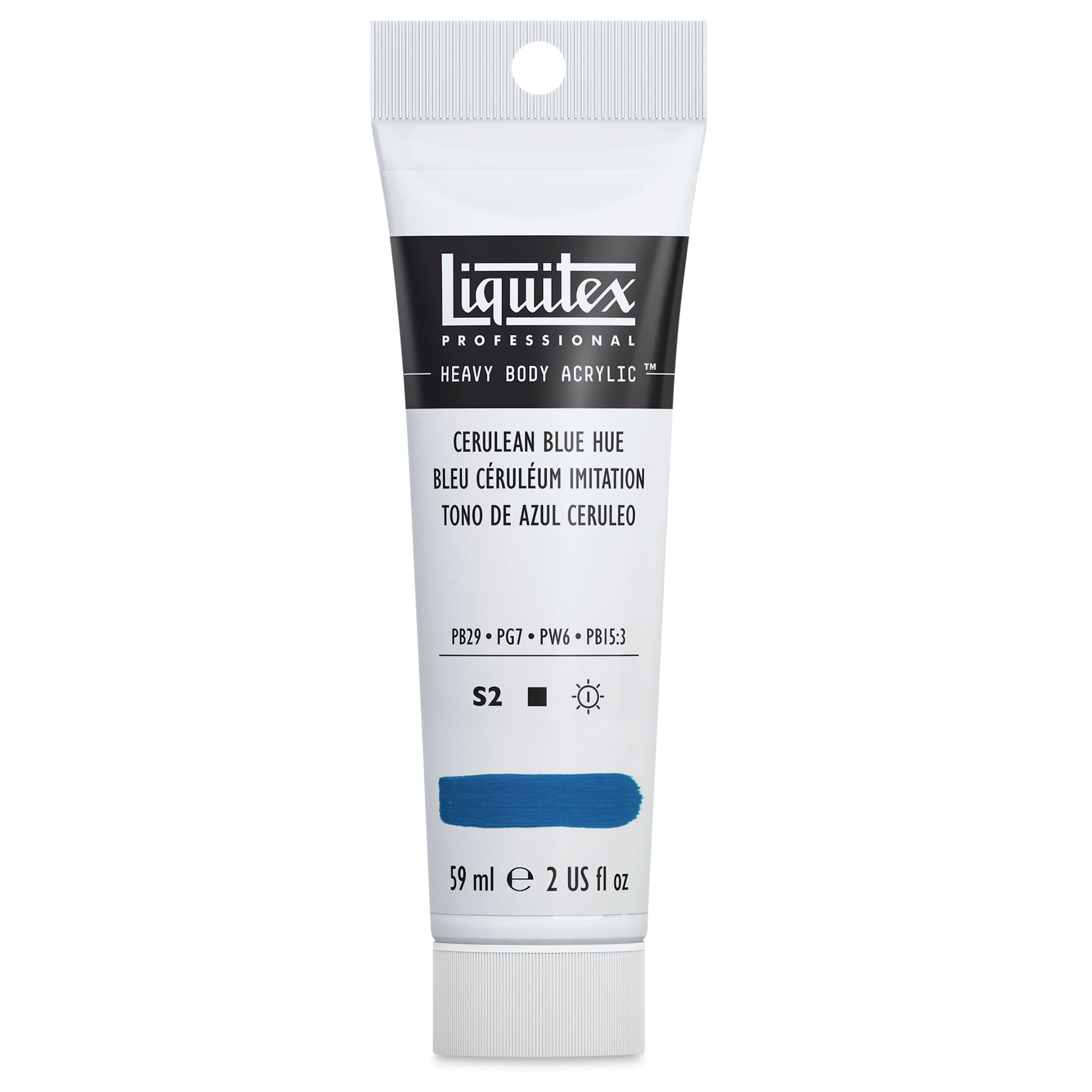
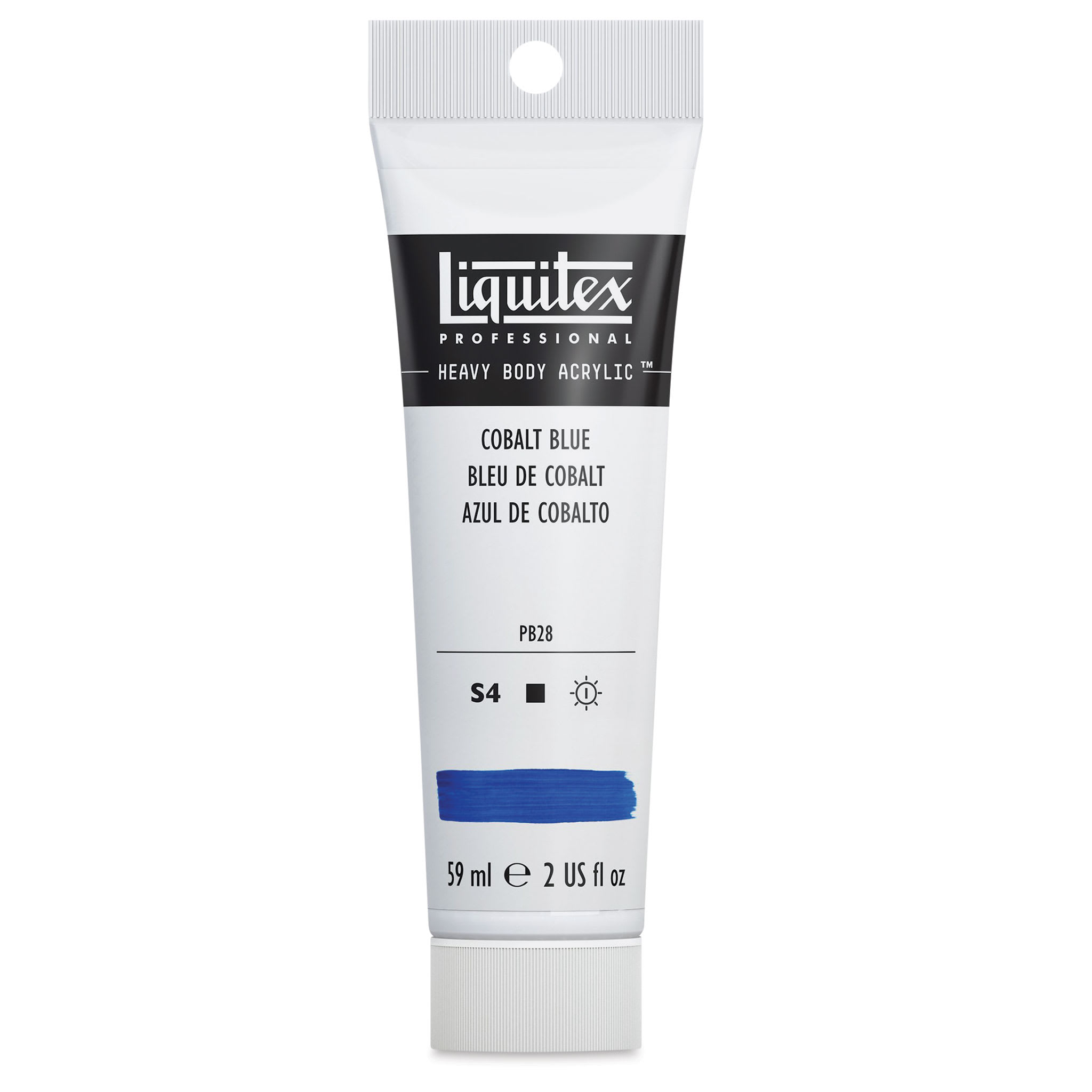
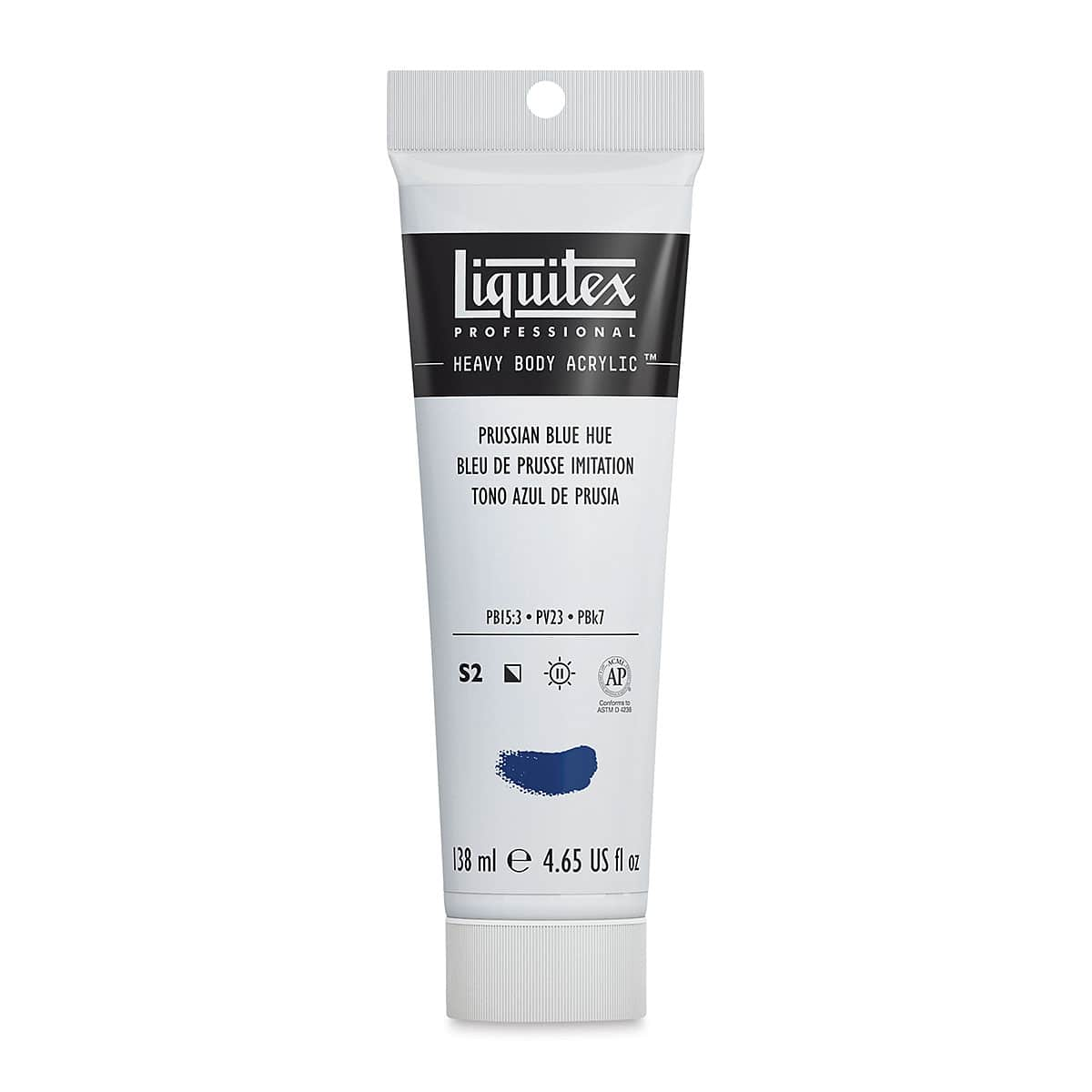
General reference notes about pigments can describe other media (such as oil). They do not verify this product’s exact formulation or behavior.
Dioxazine Violet
- Pigment code
- PV23
- Type
- organic
- Chemical name
- carbazole dioxazine
- Chemical formula
- C34H22Cl2N4O2
- Properties
- Dioxazine Violet is transparent and has very high tinting strength. It is a staining pigment, very dark valued when it is used at full strength. Concentrated, it paints out nearly black, but it mixes with Titanium White to form bright, opaque tints of purple. PV23 produces slightly redder shades than PV37. Because the hue can vary with the conditions of preparation and grinding, it may be offered in red shade, blue shade, and so forth.
- Permanence
- Dioxazine Violet has good lightfastness. There may be some concern about it fading or shifting in color in tints and washes. Some artists have reported that PV37, a molecular variant, is more lightfast than PV23.
- History
- Two molecular variants of Dioxazine Violet, PV23 and PV37, are available. They have similar properties, but mix slightly differently.
- Description
- Dioxazine Purple, Chromothal Violet, Mauve, Carbazole Violet.
Phthalo Blue
- Pigment code
- PB15:3
- Type
- organic
- Chemical name
- beta copper phthalocyanine
- Chemical formula
- C32H16CuN8
- Properties
- Phthalo Blue PB15:3 is a structural variant of Phthalo Blue PB15 that produces more greenish tones.
- Permanence
- Phthalo Blues are completely lightfast and stable and are permanent for all paint uses. They are currently used in inks, coatings, and many plastics due to their stability and are considered a standard pigment in printing ink and the packaging industry.
- Toxicity
- Phthalo Blues have no significant hazards, although those made before 1982 contained some PCBs (polychlorinated biphenyls).
- History
- Developed by chemists using the trade name Monastral Blue, the organic blue dyestuff now known as Phthalo Blue was presented as a pigment in November 1935 in London. Its discovery was accidental. The dark color was observed in a kettle where a dye was being made from a British dyestuff plant. The demand for such a pigment came from commercial printers who wanted a cyan to replace Prussian Blue.
- Description
- Phthalo Blue Green Shade, Winsor Blue Green Shade
Perylene Maroon
- Pigment code
- PR179
- Type
- organic, anthraquinone
- Chemical formula
- C26H14N2O4
- Properties
- Perylene Maroon is a transparent, dull to moderately dull, deep red pigment. Its transparency makes it useful as a glazing color. Its mixing complement is Phthalo Green, and together they produce a pure black that is darker than most carbon-based pigments.
- Permanence
- Perylene Maroon has excellent permanence and lightfastness, and it can be an appropriate replacement for Anthraquinone Red in watercolor form.
- Toxicity
- Perylene Maroon has no significant acute toxicity. Its long term hazards are currently unknown.
- History
- Perylenes have been used as vat dyes since 1912, but they were not manufactured and sold as pigments until 1957.
- Description
- Perylene.
 Blick Art Materials