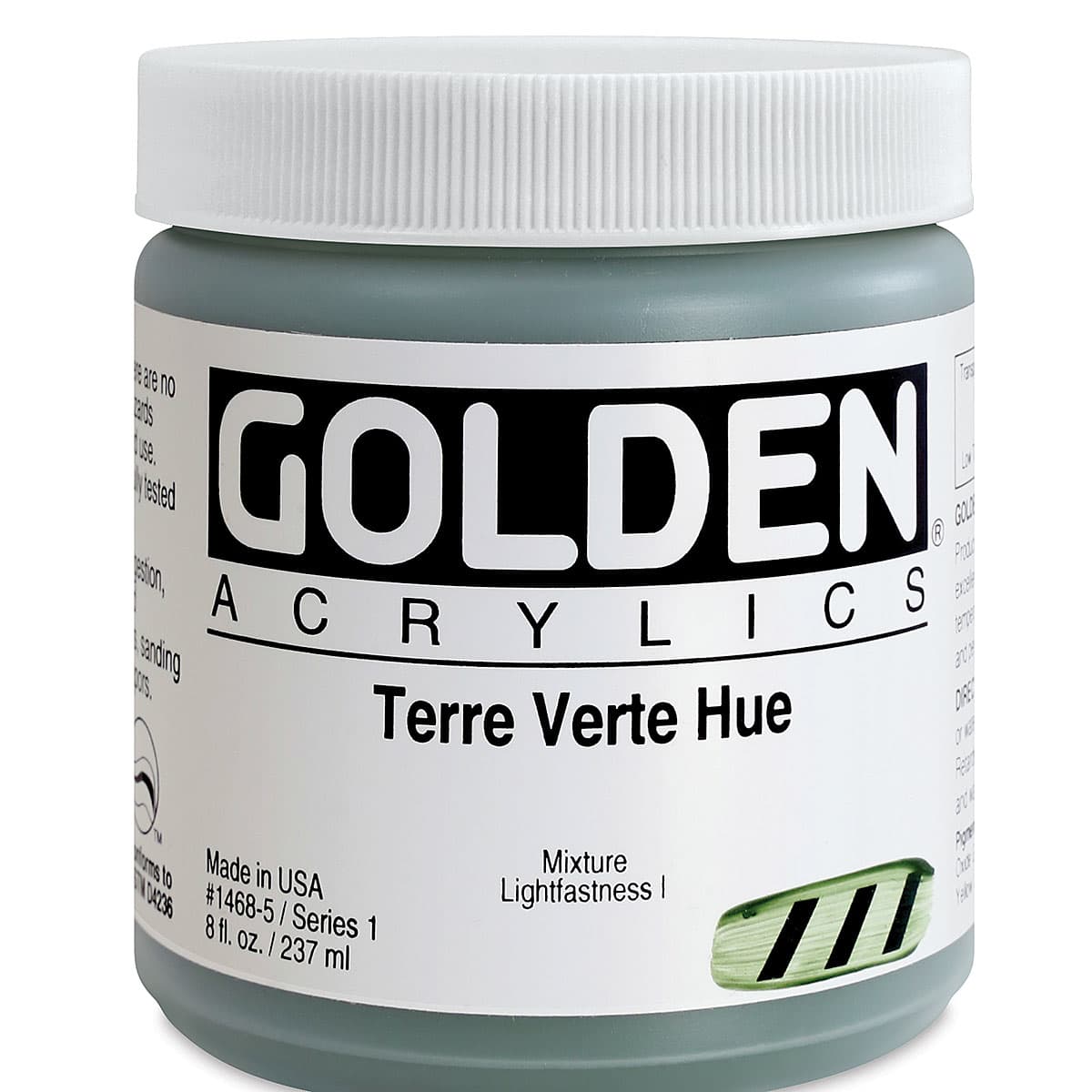
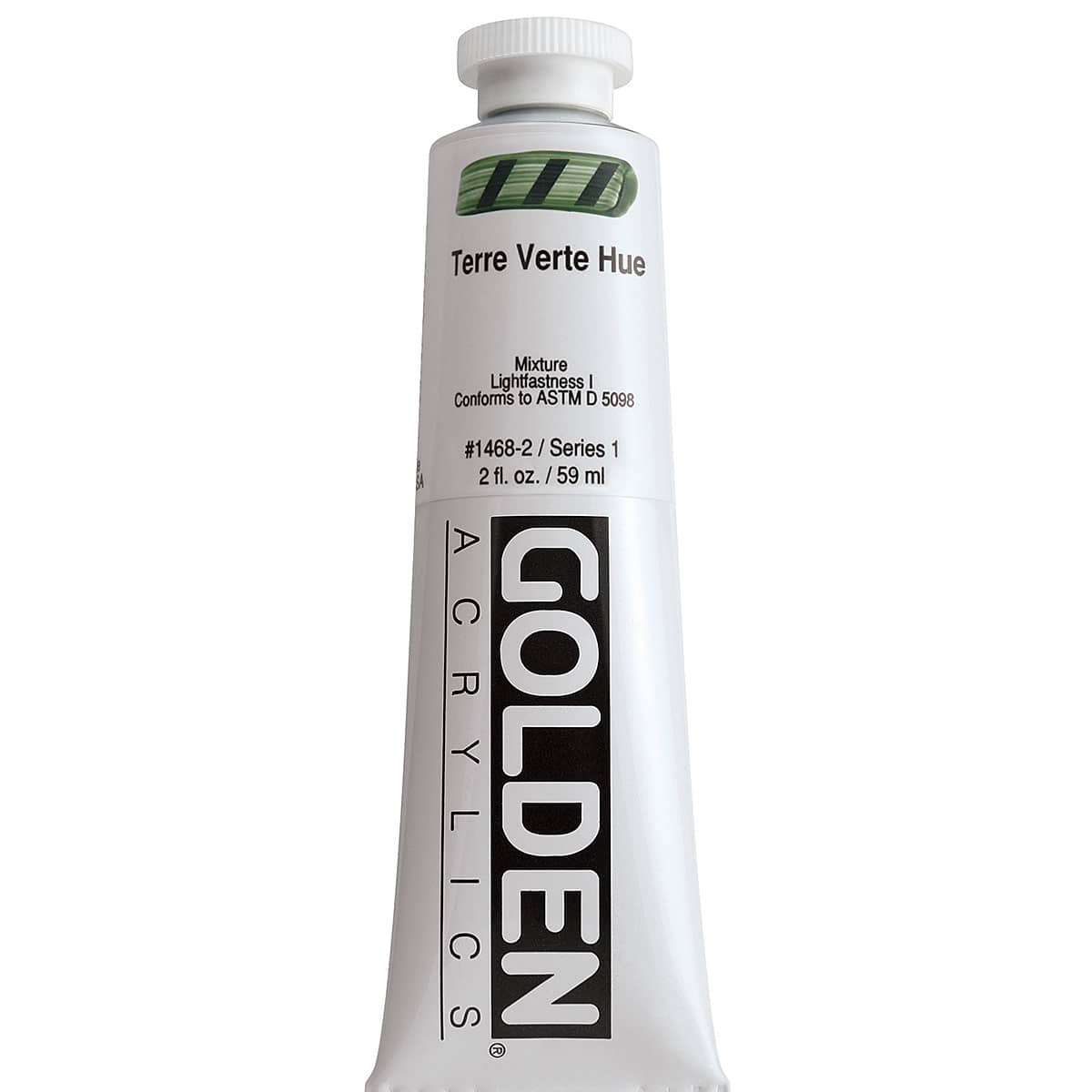
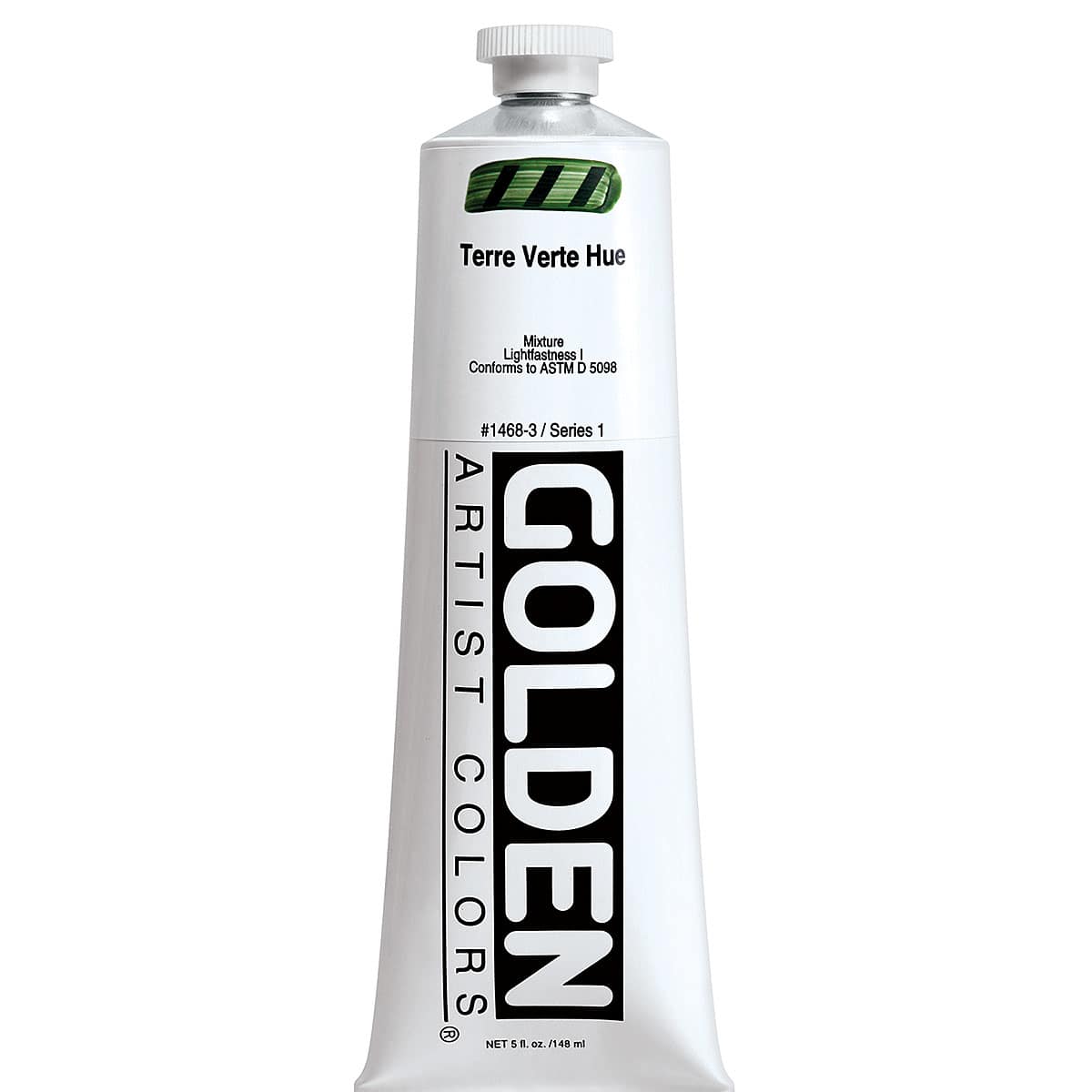
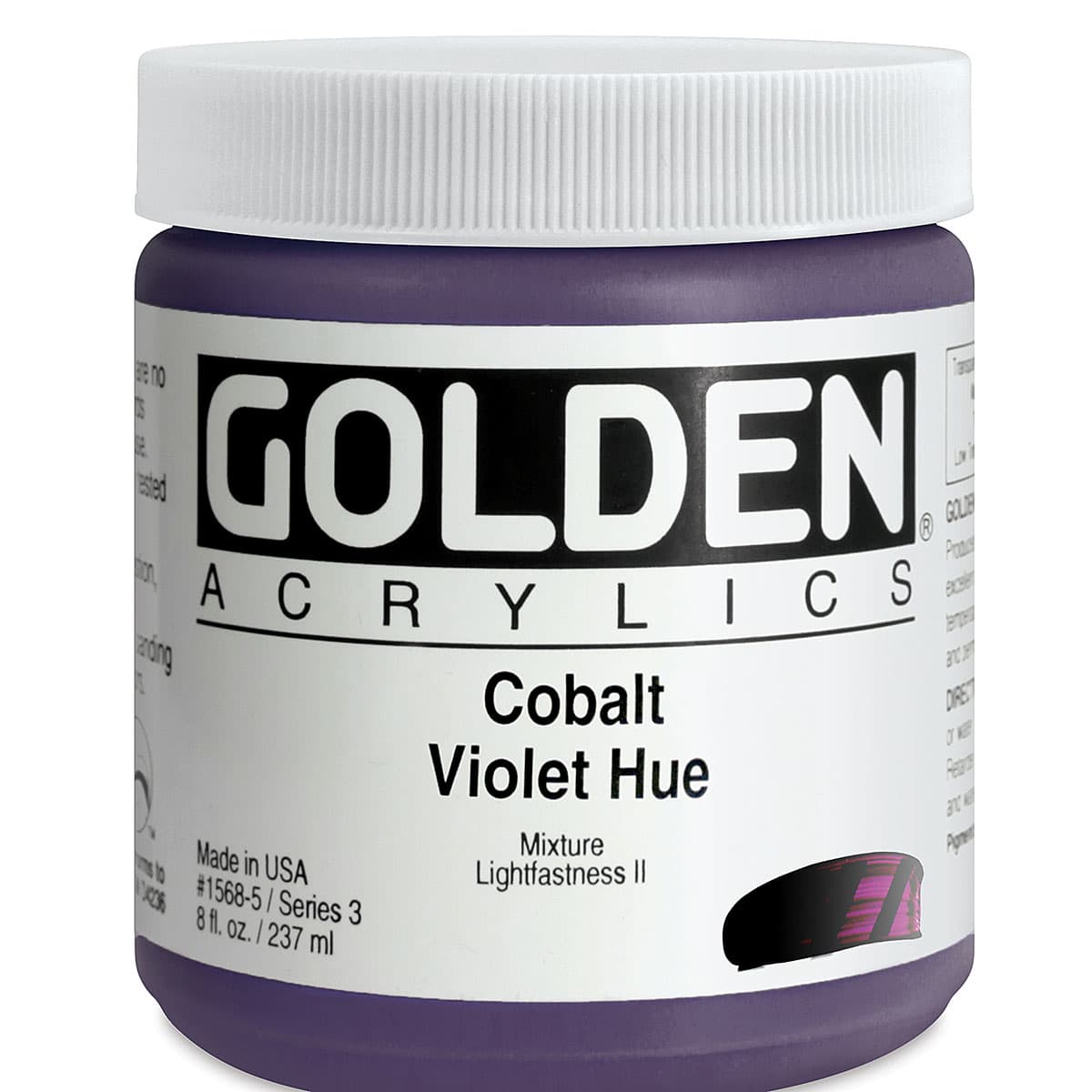
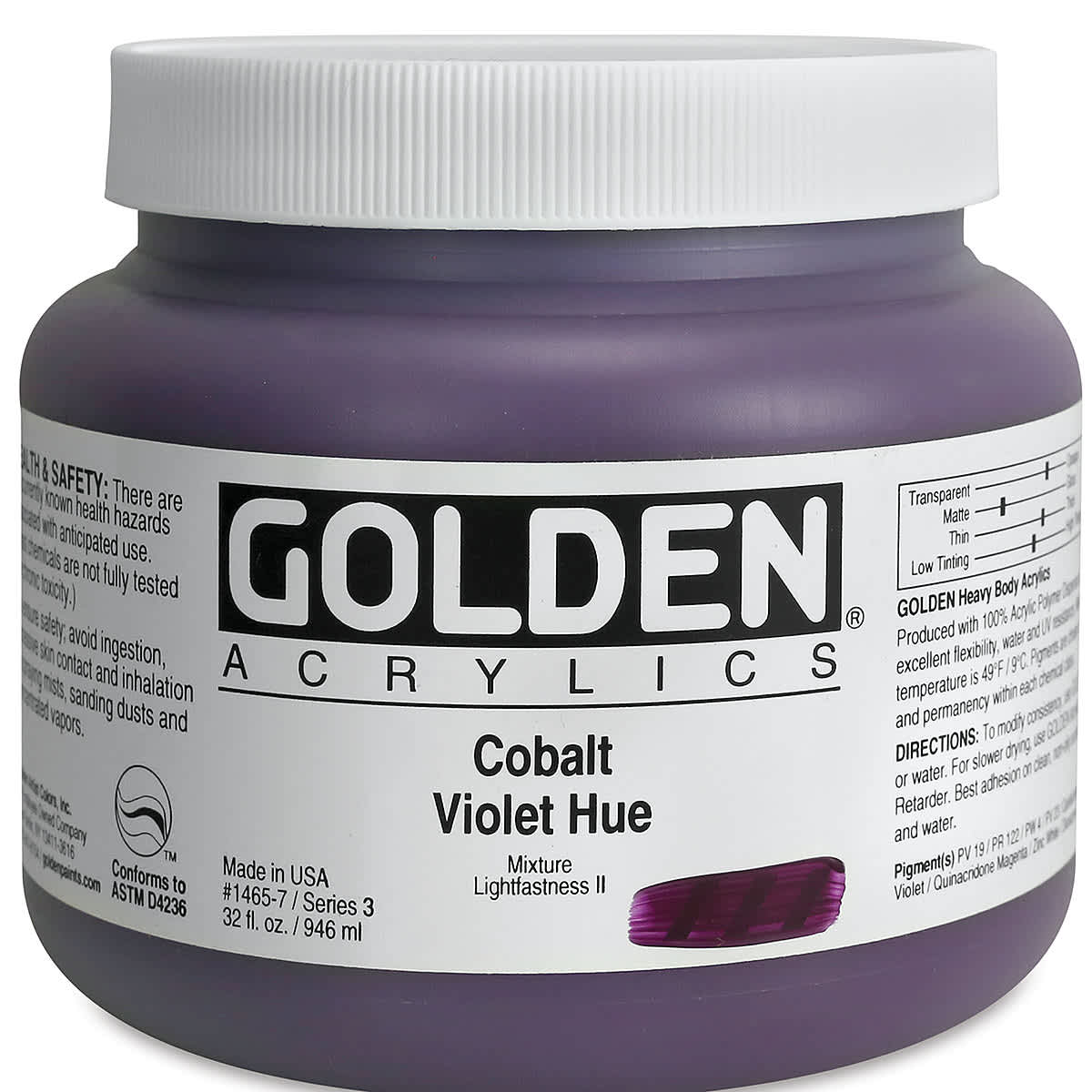
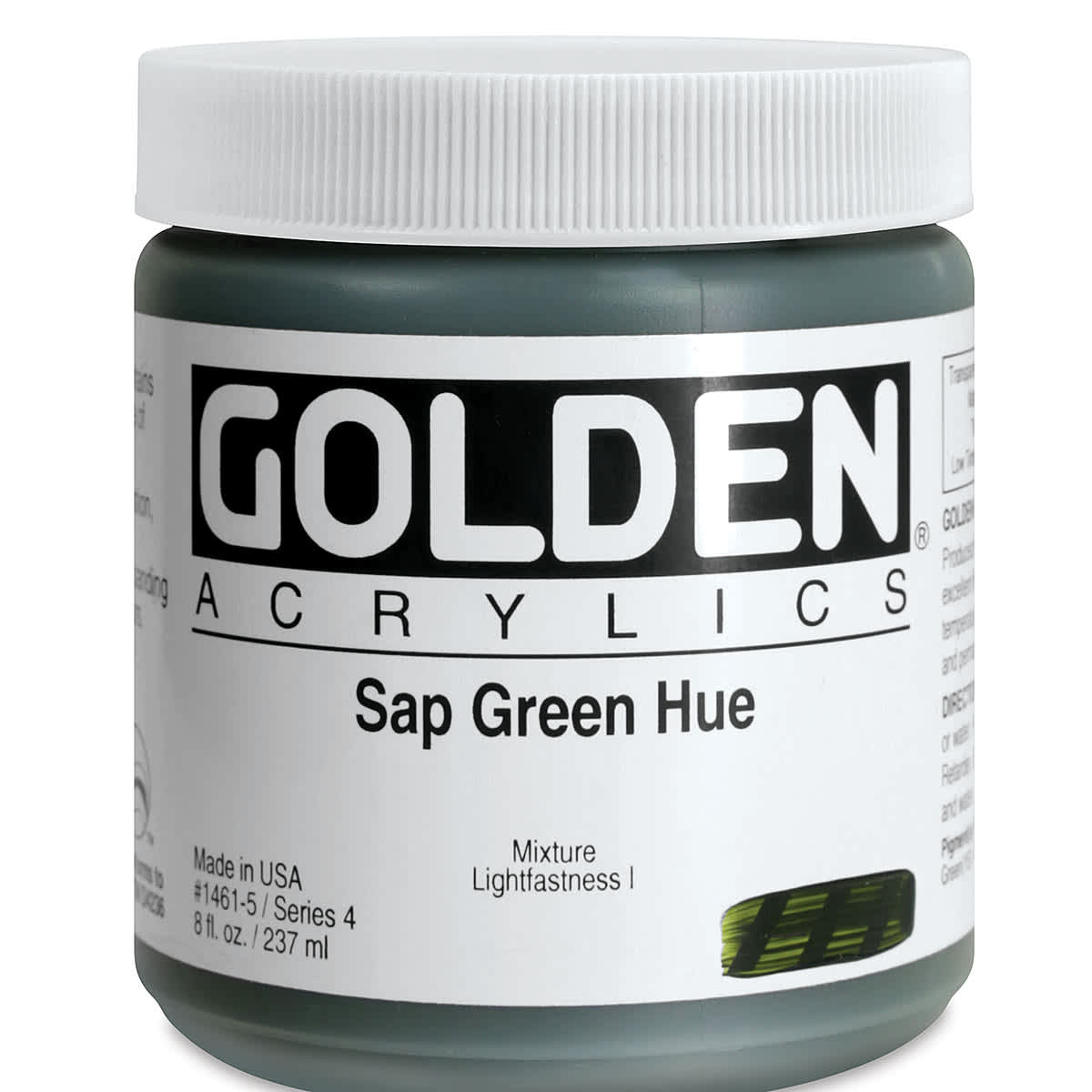
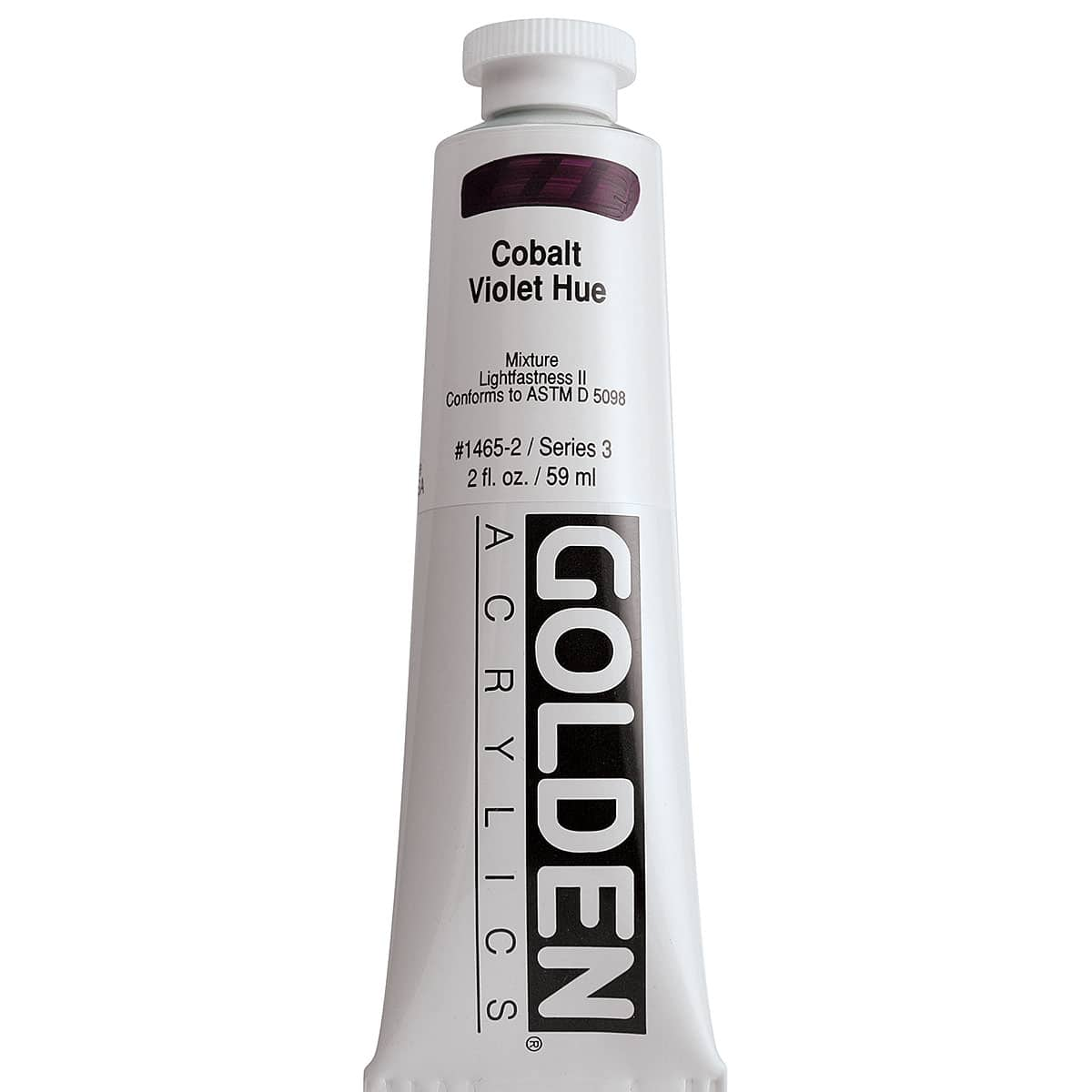
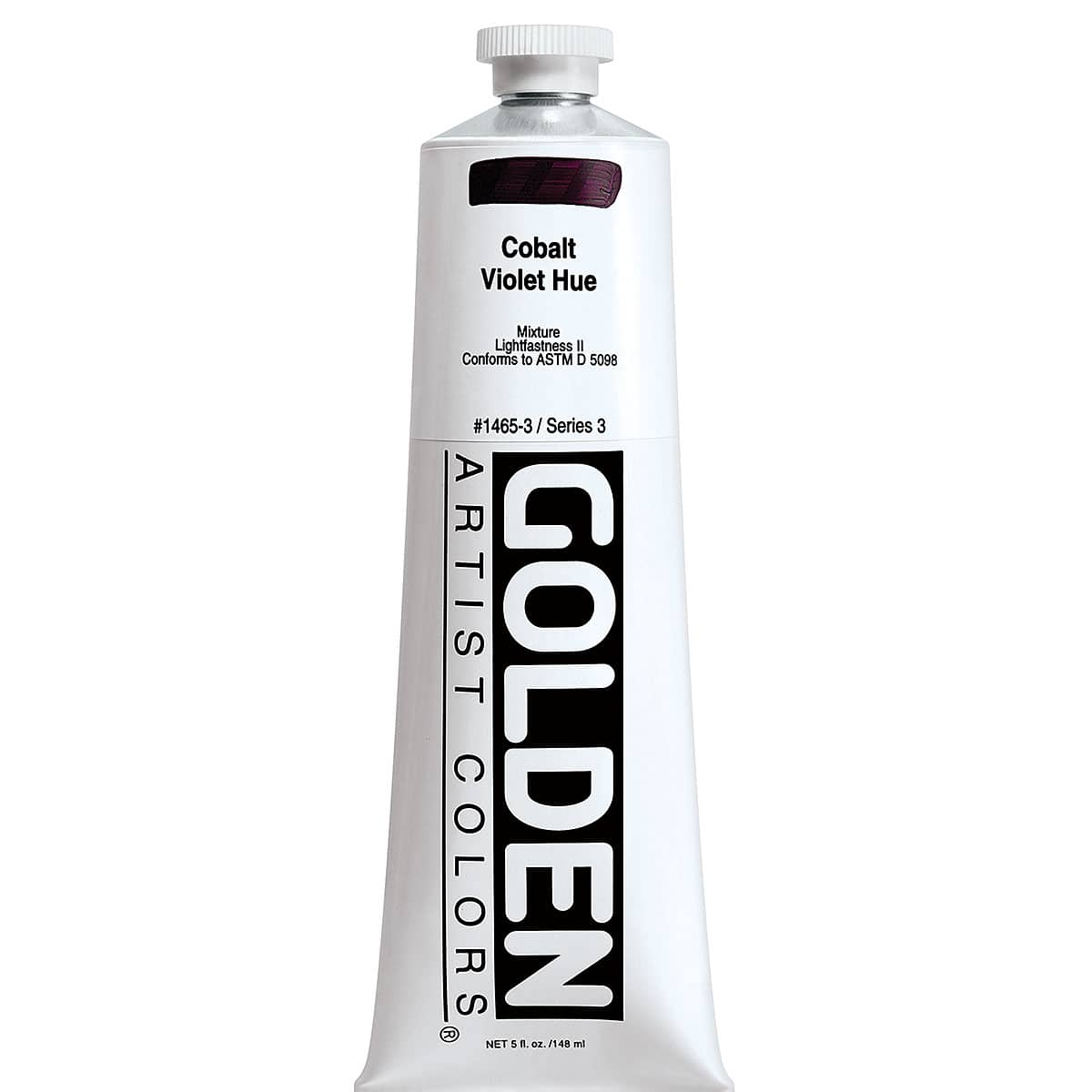
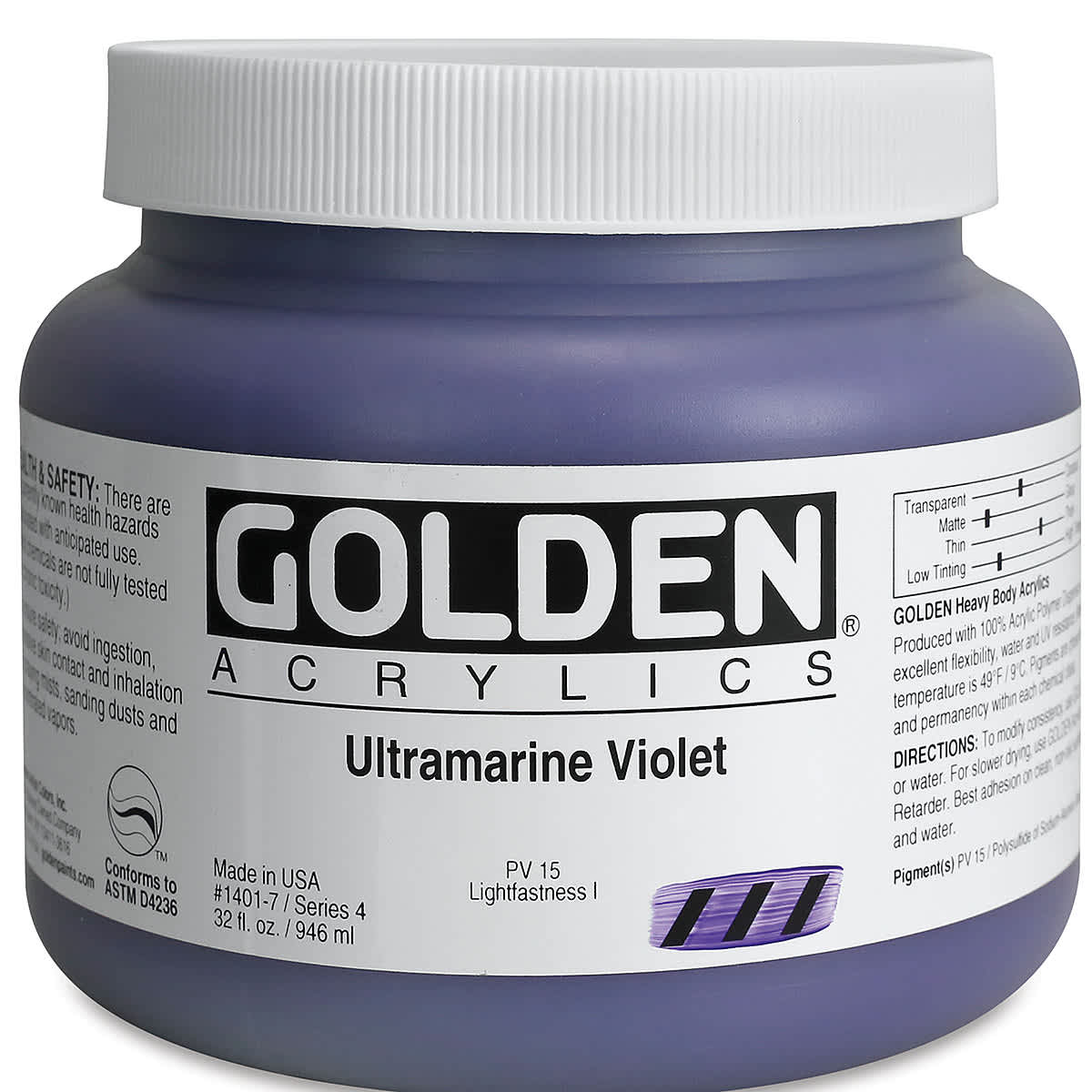
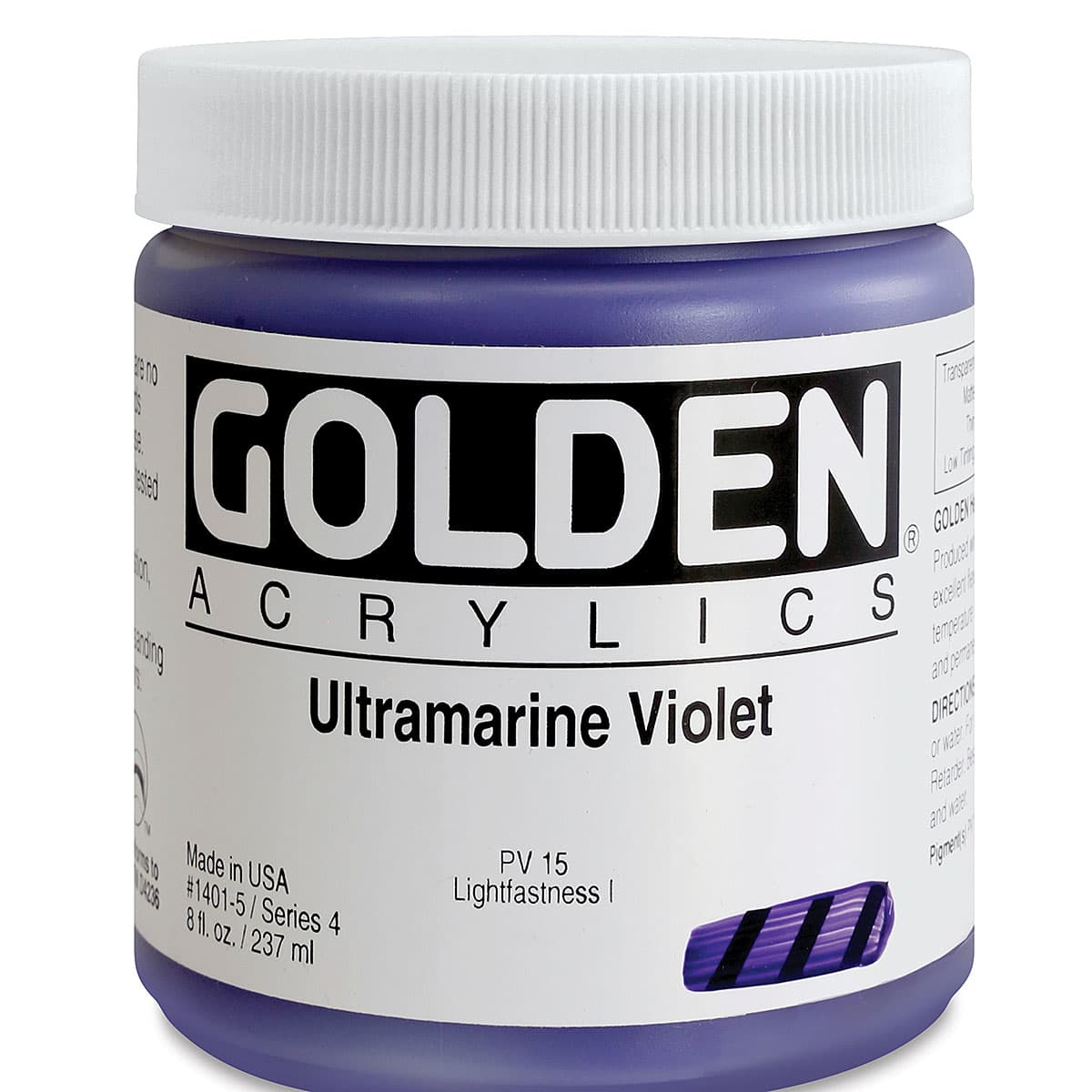
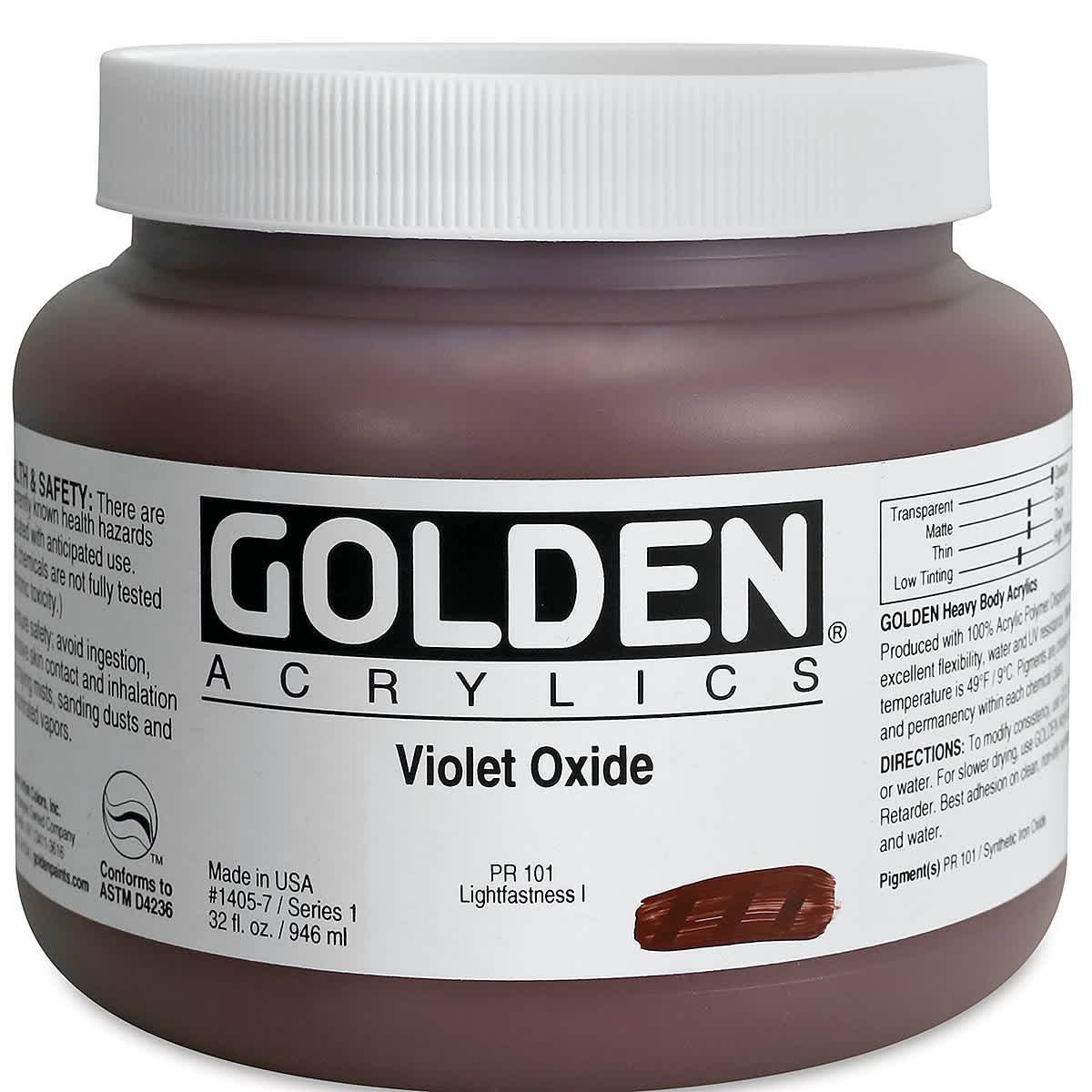
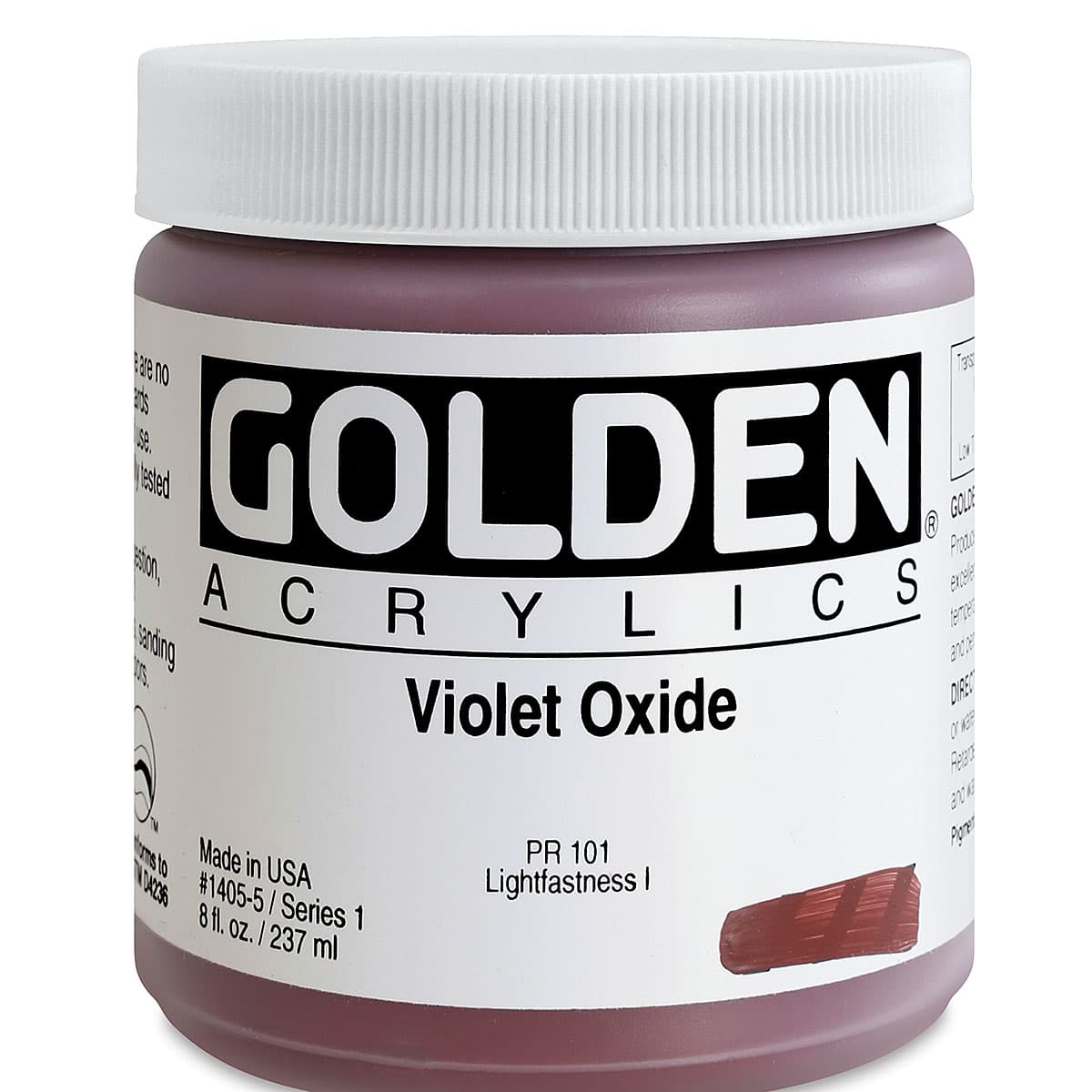
General reference notes about pigments can describe other media (such as oil). They do not verify this product’s exact formulation or behavior.
Phthalo Green
- Pigment code
- PG36
- Type
- organic
- Chemical name
- polybromopolychlorinated copper(II) phthalocyanine
- Chemical formula
- C32H3Cl13CuN8 to C32HCl15CuN8 or C32H16CuN8Cl15 (PG7) or C32Br6Cl10CuN8 (PG36)
- Properties
- Phthalo Green is a transparent, cool, bright, high intensity color used in oil and acrylics. It comes from a Phthalocyanine Blue pigment where most of the hydrogen atoms have been replaced with chlorine, forming highly stable molecules. Pigment PG36 differs from PG7 in that a portion of the chlorine atoms are replaced with bromine atoms, which are reactively similar, but cause a yellow shift that is especially noticeable in mixtures. Phthalo Green has similar pigment properties and permanence to Phthalo Blue. It is slow drying and an excellent base color for mixing a range of bright greens. Phthalo Green is considered a very good alternative to Viridian because it is intense and mixes well and can be used to emphasize mineral colors in various tints. However, its tinting strength is very high, so it can overpower other colors. This pigment most closely resembles the discontinued and toxic Verdigris.
- Permanence
- Phthalo Greens are completely lightfast and resistant to alkali, acids, solvents, heat, and ultraviolet radiation. They are currently used in inks, coatings, and many plastics due to their stability and are considered a standard pigment in printing ink and the packaging industry.
- Toxicity
- Phthalo Green has no significant hazards, but it contained PCBs (polychlorinated biphenyls) until 1982.
- History
- This bright blue-green was developed in 1935 and has been in use since 1938.
- Description
- Bocour Green, Cyan Green, Intense Green, Monastral Green, Phthalocyanine Green, Rembrandt Green, Thalo Green, Winsor Green.
Chromium Oxide Green
- Pigment code
- PG17
- Type
- inorganic
- Chemical name
- chromium oxide
- Chemical formula
- Cr2O3
- Properties
- Chromium Oxide Green is a dull, dense, willow or pale green color that is completely opaque. It has an average drying time and a low tinting strength. It is fairly flexible in oil form and is suitable for all purposes and mediums. This pigment is less versatile in mixtures than Viridian and Phthalocyanine Green, but mixes well with other colors without overpowering them.
- Permanence
- Chromium Oxide Green has excellent permanence, even at high temperatures.
- Description
- Chrome Oxide Green, Olive Green, Permanent Green. Varieties of Chromium Oxide Green include Arnaudon's Green, Dingler's Green, Plessy's Green, Chromium Green-Black Hematite, and Schnitzer's Green.
Burnt Umber
- Pigment code
- PBr7
- Type
- earth
- Chemical name
- iron oxides with manganese silicates or dioxide
- Chemical formula
- Fe2O3,MnO2 or Fe2O3+MnO2+nH2O+Si+Al2O3
- Properties
- Burnt Umber is a more intense reddish brown pigment that results from heating the clay pigment Raw Umber. It has medium to excellent tinting strength and high opacity, and it is quick drying in oil form. Burnt Umber is somewhat more transparent than Raw Umber. It has excellent color properties and can create a variety of subtle, clear tints when mixed with white. It can tend towards chalkiness in dark mixes in oil form, but overall it mixes well with other colors. To create a black color in oil form, mix Burnt Umber with Phthalo Blue or Ultramarine. To achieve a similar color in watercolor form, mix it with Ultramarine or Payne's Gray.
- Permanence
- Burnt Umber has good permanence.
- Toxicity
- Burnt Umber itself is considered non-toxic. If contaminated by manganese compounds, it may be highly toxic if inhaled and moderately toxic if ingested.
- History
- This pigment gets its name from the Latin word umbra, meaning shadow or shade. Its full name is listed as terra di ombra, meaning earth of shadow/shade, due to its original extraction from the area of Umbria, Italy. It has been used as a pigment since prehistoric times. Currently, the finest umber comes from Cyprus.
- Description
- Chestnut Brown, Euchrome, Jacaranda Brown, Mars Brown, Mineral Brown, Raw Brown, Spanish Brown, Van Dyke Umber. Cyprus Umber, Turkey Brown, and Turkey Umber are the best quality umbers.
Yellow Iron Oxide
- Pigment code
- PY42
- Chemical name
- iron(III)-oxide, hydrated
- Chemical formula
- Fe2O3 • H2O
- Properties
- Yellow Ochre provides artists with earthtones from cream to brown. It has good hiding power, produces a quick drying paint, and can be safely mixed with other pigments. Its transparency varies widely from opaque shades to more transparent ones, which are valued for their use as glazes. If gypsum is present, Yellow Ochre is not suitable for frescoing. (See Brown Ochre, PY43.) PY42 is made from synthetic iron oxides. PY43 is made from natural iron oxide.
- Permanence
- Yellow Ochre has excellent permanence because ochres are some of the most permanent pigments available.
- History
- Ochre comes from the Greek word ochros, meaning pale yellow. It was one of the first pigments to be used by human beings, and evidence of its use has been found at 300,000 year old sites in France and the former Czechoslovakia.
- Description
- Chamois, Iron Yellow, Mars Orange, Mars Yellow, Minette, Ochre, Sil, Yellow Earth, Yellow Ochre, Yellow Oxide. Varieties of Yellow Ochre include Brown Ochre, Flesh Ochre, Roman Ochre, Spruce Ochre, and Transparent Gold Ochre.
Ivory Black
- Pigment code
- PBk9
- Type
- charred animal bone
- Chemical name
- carbon + calcium phosphate
- Chemical formula
- C + Ca3(PO4)2 or C x CaPO4
- Properties
- Ivory Black is a cool, semi-transparent blue-black with a slight brownish undertone and average tinting strength. It mixes well with any color, and creates a range of dull greens when mixed with yellow. It has good properties for use in oil, can be slow to dry in oil form, and should never be used in underpainting or frescoing. Ivory Black is denser than Lamp Black.
- Permanence
- Ivory Black is very lightfast and has good permanence, though it is considered the least permanent of the major black pigments.
- Toxicity
- Ivory Black has no significant hazards.
- History
- Ivory Black is a carbon based black first named as Elephantium, and described in the 4th century BCE as produced by heating ivory scraps in clay pots to reduce the ivory or bone to charcoal. The deviation in names is because the more expensive varieties of this pigment were made by burning ivory, and the less expensive ones by burning animal bone. In the 19th century, the name Ivory Black was finally permitted to be applied to Carbon Black pigments made from bone. True Ivory Black is rare in modern times due to the protection of ivory, and the synthetic variety produced today was discovered in 1929. Bone Black is produced as an industrial pigment.
- Description
- Animal Black, Blue Black, Bone Black. Paris Black is an inferior grade of Ivory Black. Incorrectly labeled as Frankfort Black.
 Blick Art Materials