General reference notes about pigments can describe other media (such as oil). They do not verify this product’s exact formulation or behavior.
Quinacridone Gold
- Pigment code
- PO48
- Type
- organic, quinacridone
- Chemical formula
- C20H12N2O2 or C20H10N2O4
- Properties
- Quinacridone Gold is a high performance pigment. It lacks brightness and cleanliness in tints, and it may disperse unevenly. It has an average drying time. Quinacridone pigments have relatively low tinting strength in general. For this reason, quinacridone colors are often expensive, because more pigment is required in the formulation.
- Permanence
- Quinacridone Gold has excellent lightfastness and is considered the most lightfast pigment in its shade range.
- Toxicity
- Quinacridone gold is not considered toxic. Overexposure to quinacridone pigments may cause skin irritation. Quinicridone pigments contain a compound found to be a skin, eye, and respiratory irritant.
- History
- Although quinacridone compounds became known in the late 19th century, methods of manufacturing so as to make them practical for use as commercial pigments did not begin until the 1950s. Quinacridone pigments were first developed as coatings for the automotive industry, but were quickly adopted by artists.
- Description
- Pigment Orange 48, Quinacridone Orange, Quinacridone Burnt Orange
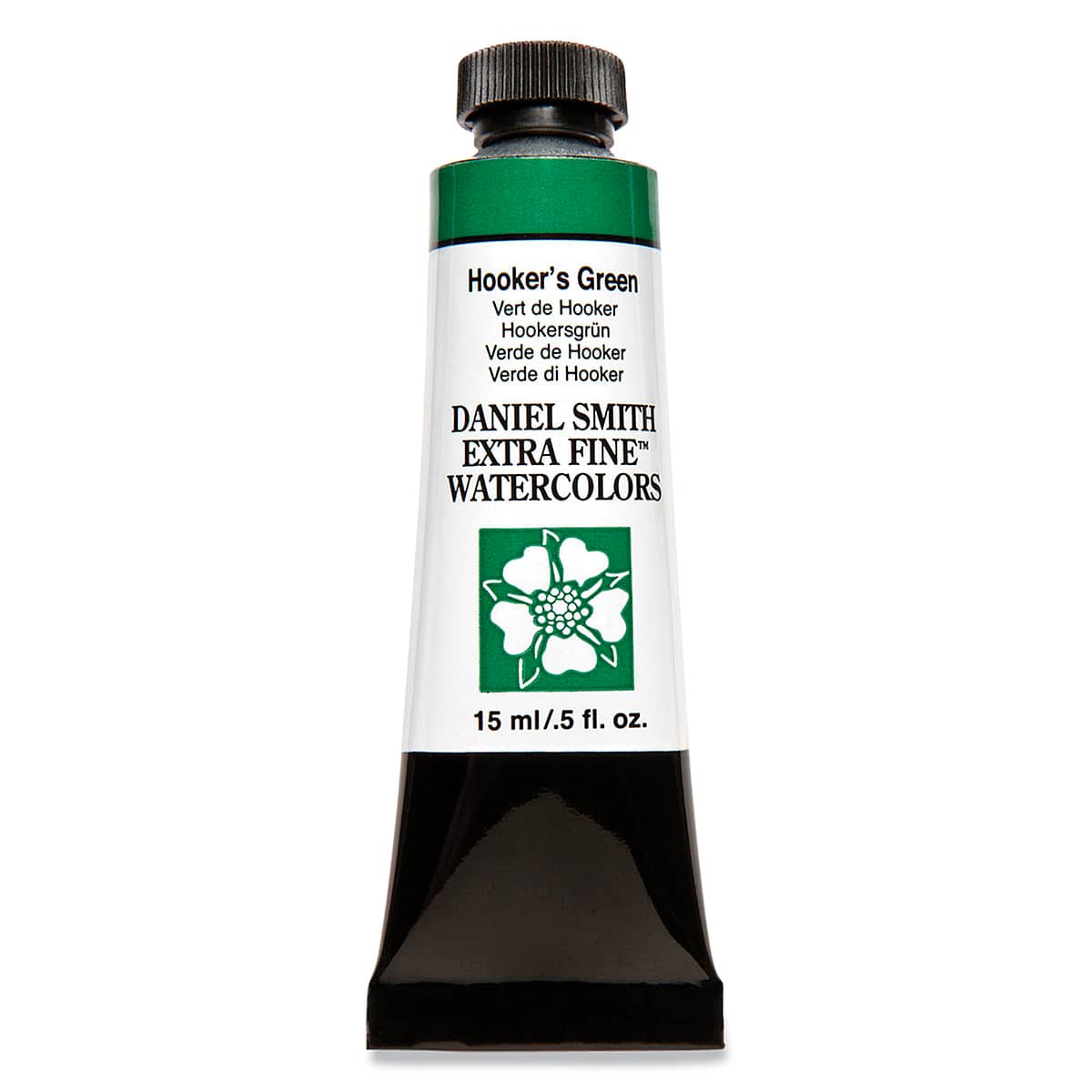
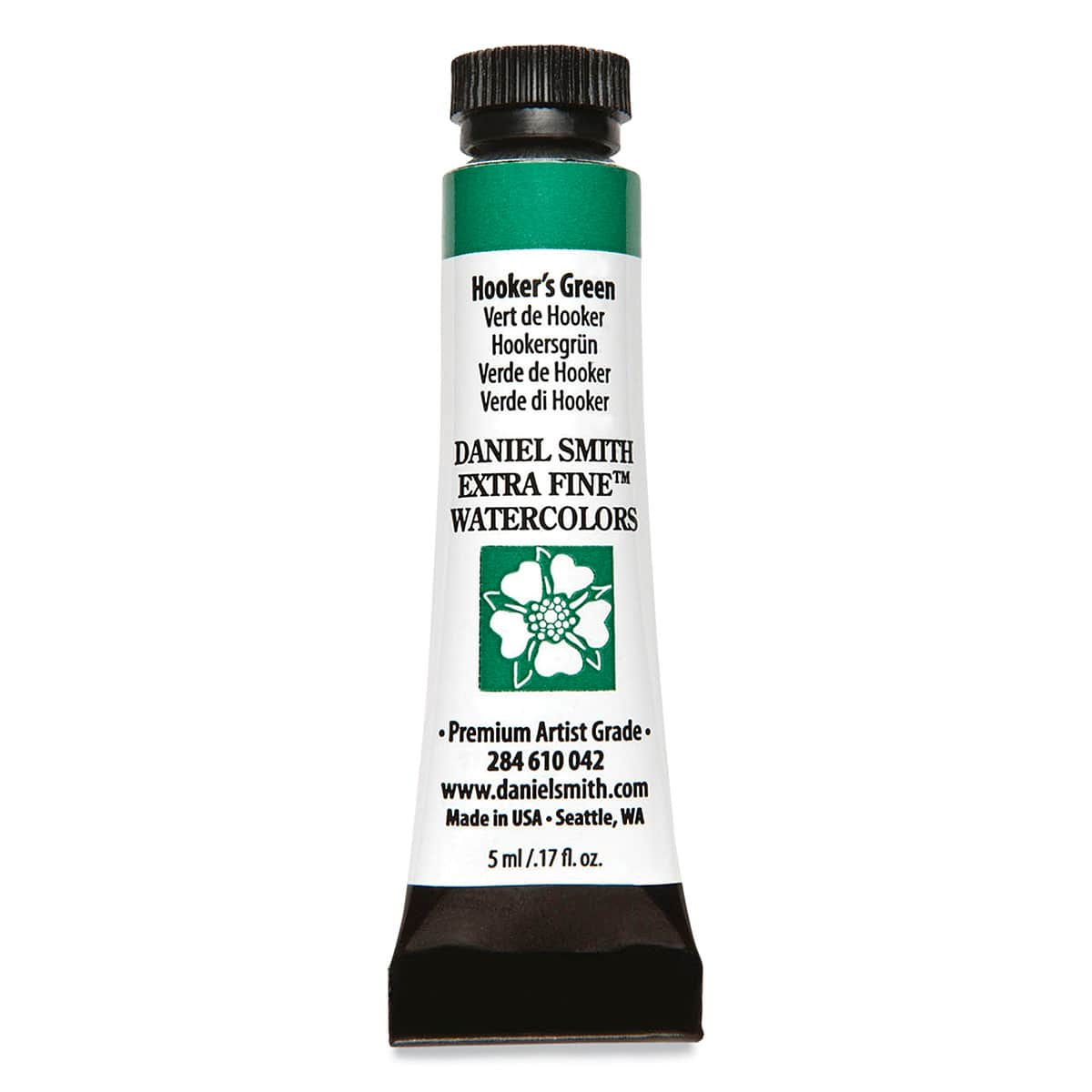
Hooker’s Green
- Pigment code
- PB27
- Type
- mix of organic pigments
- Chemical formula
- C30H18FeN3O6Na
- Properties
- Hooker’s Green is a bright olive-green often sold in a yellowish shade and a bluish shade. Its transparency can range from dull and dark to bright and light because lightness and chroma vary based on manufacturer. Modern varieties have a rich, dark tone that provides a great range when mixing. Hooker’s Green is particularly good for landscape painting when a larger range of foliage is required. Dioxazine Violet is the best mixing compliment in watercolor form.
- Permanence
- The permanence and lightfastness of Hooker’s Green varies by brand. As a composite pigment historically mixed from Prussian Blue and Gamboge, its permanence is only fair. Modern replacements for Hooker's Green tend to be mixed with components that have more permanence, such as Phthalocyanine Green, Burnt Umber, and sometimes Hansa or Cobalt Yellow.
- Toxicity
- Hooker’s Green can be hazardous, but the toxicity level depends on the specific pigments used by each individual manufacturer or brand.
- History
- This pigment was originally an unreliable mix of Prussian or Iron Blue and Gamboge. Later, it became a more reliable mix of Cadmium Yellow and Phthalo Blue or Green. It was a staple green for 19th century landscape and botanical painters. Most modern Hooker’s Green paints are yellow greens with a hue angle around 140, or a mix of Phthalo Green and Burnt Umber.
Hansa Yellow 10G
- Pigment code
- PY3
- Type
- organic, monoazo
- Chemical formula
- C16H12CL2N4O2
- Properties
- This Hansa yellow is a transparent yellow. It has great brightness and tinting strength and its drying time ranges from average to slow. Hansa Yellow makes more intense tints and cleaner secondaries than Cadmium Yellows, especially when mixed with other organic or modern colors like Phthalo Blue and Green. Because they are more transparent, they have great value as glazing colors.
- Permanence
- This Hansa Yellow has fair to good permanence, particularly in the lighter shades.
- Description
- Arylamide Yellow, Arylide, Arylide Yellow, Azo, Brilliant Yellow, Monoazo, Monolite Yellow, Permanent Yellow.
 Blick Art Materials