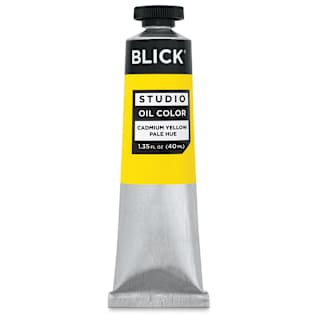
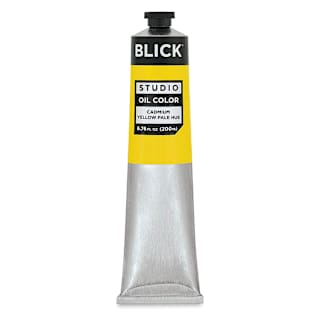
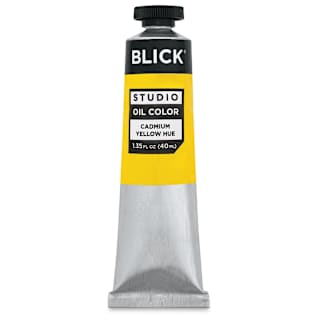
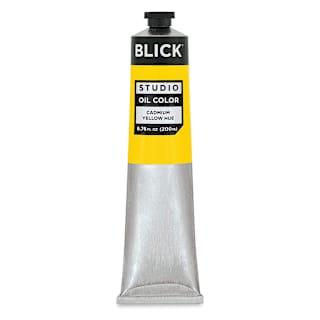
General reference notes about pigments can describe other media (such as oil). They do not verify this product’s exact formulation or behavior.
Phthalo Blue
- Pigment code
- PB15
- Type
- organic
- Chemical name
- copper phthalocyanine
- Chemical formula
- C32H16CuN8
- Properties
- Phthalo Blues are pure and clean primary blues with superior covering power. They have a very high tinting strength and tend to overwhelm other pigments, but if color strength can be controlled, they make predictable mixed colors. In oil form, blues are very deep and slow drying. When mixed with other colors or if chlorine is added, Phthalo Blue quickly tends towards green. When using alone, mix with some white, as Phthalo Blue can be semi-transparent and almost black on its own. It is among the most compatible of modern colors with mineral colors and is considered more reliable than Prussian Blue, while sharing the same physical and color properties. Phthalo Blue is a good color for glazing.
- Permanence
- Phthalo Blues are completely lightfast and stable and are permanent for all paint uses. They are currently used in inks, coatings, and many plastics due to their stability and are considered a standard pigment in printing ink and the packaging industry.
- Toxicity
- Phthalo Blues have no significant hazards, although those made before 1982 contained some PCBs (polychlorinated biphenyls).
- History
- Developed by chemists using the trade name Monastral Blue, the organic blue dyestuff now known as Phthalo Blue was presented as a pigment in November 1935 in London. Its discovery was accidental. The dark color was observed in a kettle where a dye was being made from a British dyestuff plant. The demand for such a pigment came from commercial printers who wanted a cyan to replace Prussian Blue.
- Description
- Bocour Blue, Cyan Blue, Helio Blue, Heliogen Blue, Intense Blue, Monastral Blue, Phthalocyanine Blue, Rembrandt Blue, Thalo Blue, Winsor Blue, Phthalo Blue (RS).
Titanium White
- Pigment code
- PW6
- Type
- inorganic
- Chemical name
- titanium dioxide
- Chemical formula
- TiO2
- Properties
- Titanium White is the most brilliant of the white pigments. It is considered an all purpose oil color useful in all techniques and the best all around white. Its masstone is neither warm nor cool, placing it somewhere between Lead White and Zinc White. It is less prone to cracking and yellowing than Lead White, but it still yellows easily. Titanium White dries slowly in oil form, more slowly than Lead White but more quickly than Zinc White. It is opaque in oil and acrylic forms and semi-opaque in watercolor form. This pigment has good chemical stability, and its tinting strength is superior to both Lead White and Zinc White.
- Permanence
- Titanium White has excellent permanence and lightfastness.
- Toxicity
- Titanium dioxide is highly stable and is regarded as non-toxic.
- History
- Titanium is the ninth most abundant element in the Earth's crust, however mineral deposits that are economical to mine are less common. Titanium dioxide was first discovered in 1821, although it could not be mass produced until 1919. Widespread use of the pigment began in the 1940s. Since that time, it has become the most commonly used white pigment. The name comes from the Latin word Titan, the name for the elder brother of Kronos and ancestor of the Titans, and from the Greek word tito, meaning day or sun.
Zinc White
- Pigment code
- PW4
- Type
- inorganic
- Chemical name
- zinc(II)-oxide
- Chemical formula
- ZnO
- Properties
- Zinc White is the coolest white, and it has a cold, clean masstone and a slightly bluish tint. It has less hiding power and is more transparent than other whites. It dries slowly and is good for painting wet into wet and for glazing and scumbling. Zinc White is neither as opaque nor as heavy as Lead White, its covering power is not as good, and it takes much longer to dry. However, it does not blacken when exposed to sulfur in the air as Lead White does. It is very valuable for making tints with other colors. Unmixed Zinc White dries to a brittle and dry paint film that may crack over the years, so it is not good for frescoing. It is more transparent in acrylic form than Titanium White and is the most commonly used white with gouache. Chinese White is a version of Zinc White appropriate for opaque watercolor techniques.
- Permanence
- Zinc White has great permanence and lightfastness.
- Description
- Chinese White, French White, Permanent White, Silver White, Snow White, Zinc Oxide.
Bismuth Yellow
- Pigment code
- PY184
- Type
- inorganic
- Chemical name
- bismuth orthovanadate or bismuth vanadium oxide
- Chemical formula
- BiVO4
- Properties
- Bismuth Yellow is an intense, light value, semi-opaque yellow pigment with good tinting strength.
- Permanence
- Bismuth Yellow has excellent lightfastness.
- Toxicity
- Bismuth orthovanadate is harmful if swallowed. It is irritating to the eyes, respiratory system, and skin. Exposure may cause conjunctivitis, rhinitis, and reversible irritation of the respiratory tract. More severe cases may cause bronchitis, bronchospas
- History
- Bismuth orthovanadate occurs naturally in several minerals. Although it was synthesized in the 1920s, it was not developed as a commercial pigment until the 1970s.
- Description
- Permanent Lemon Yellow, Vanadium Yellow.
 Blick Art Materials · recorded Oct 22, 2026, 2:49 AM UTC