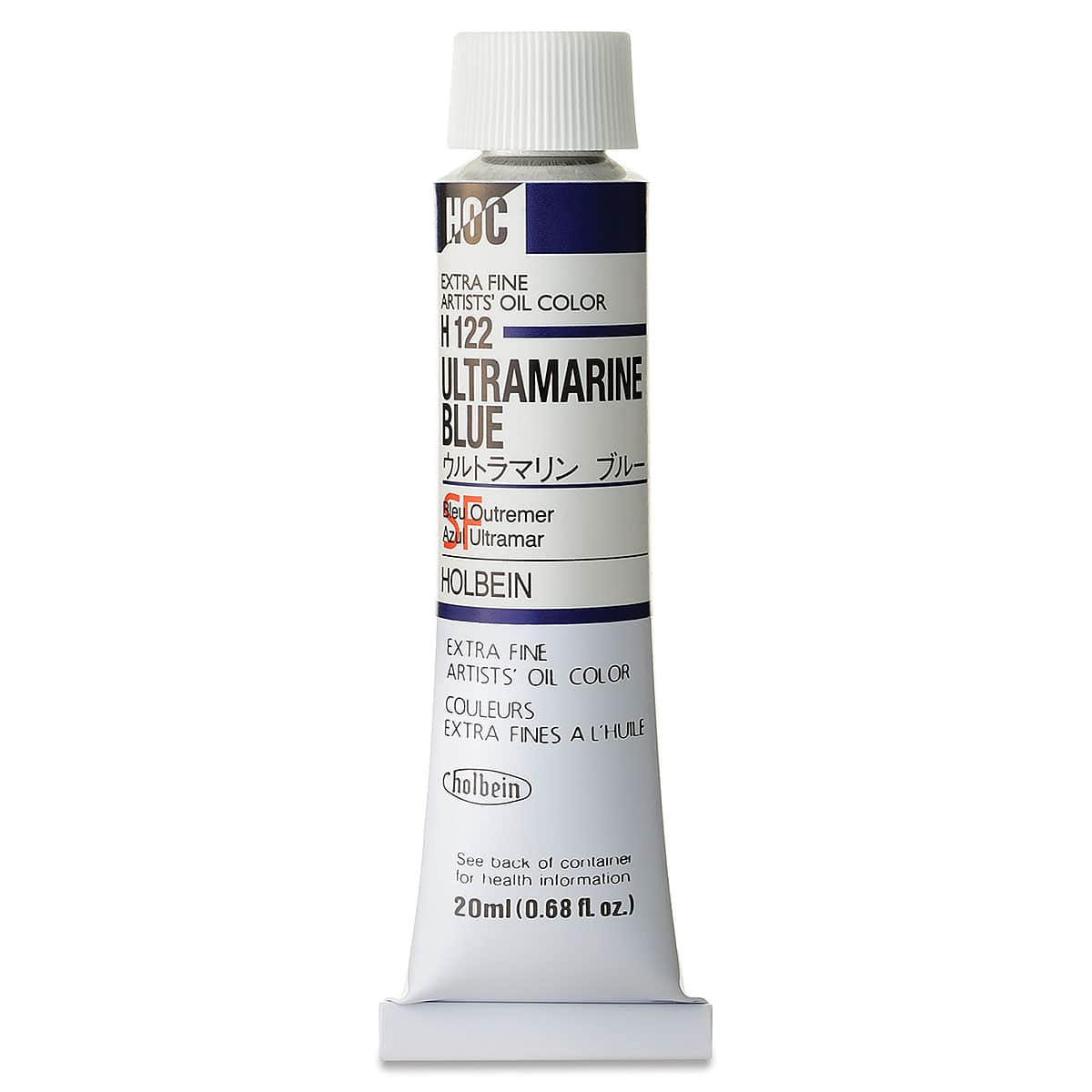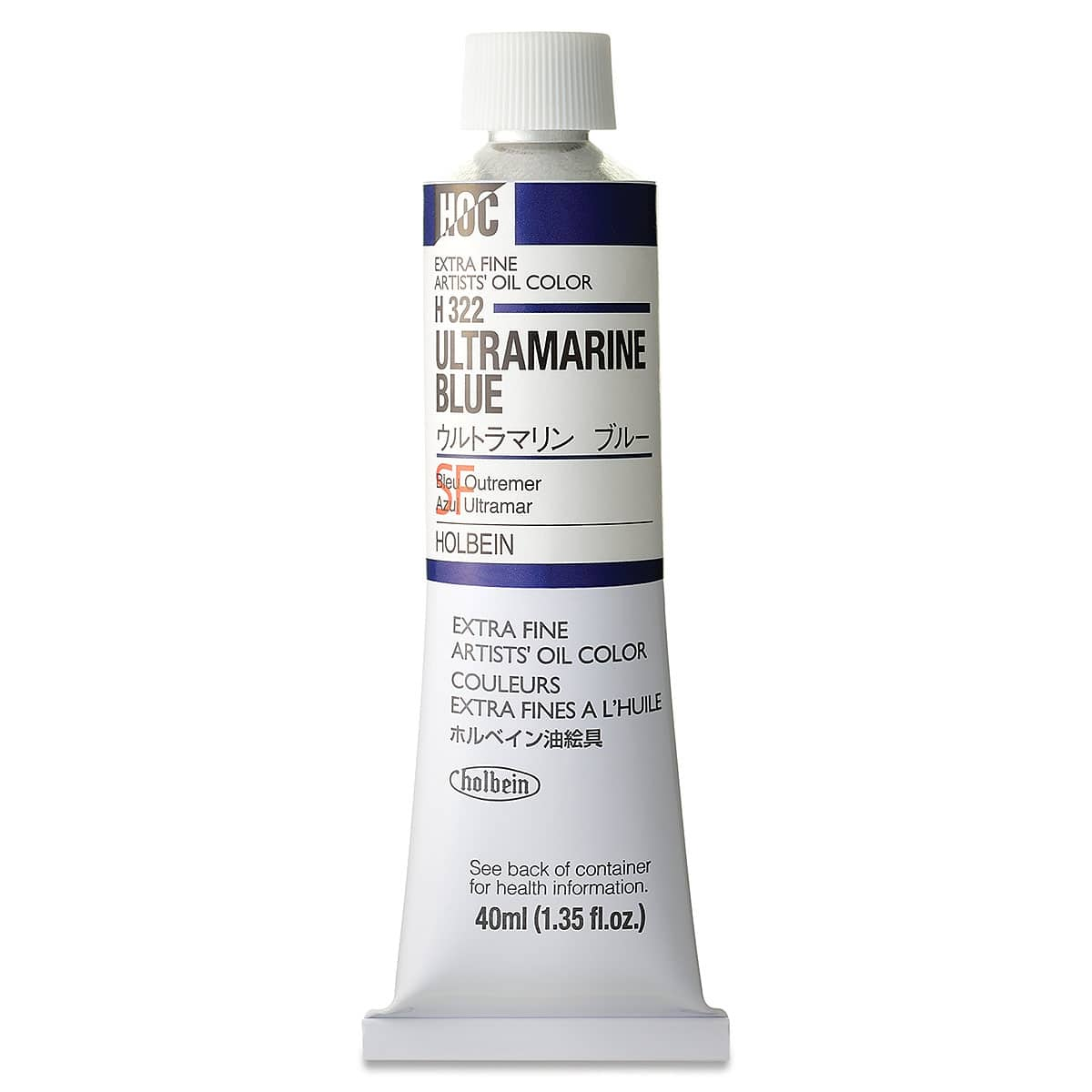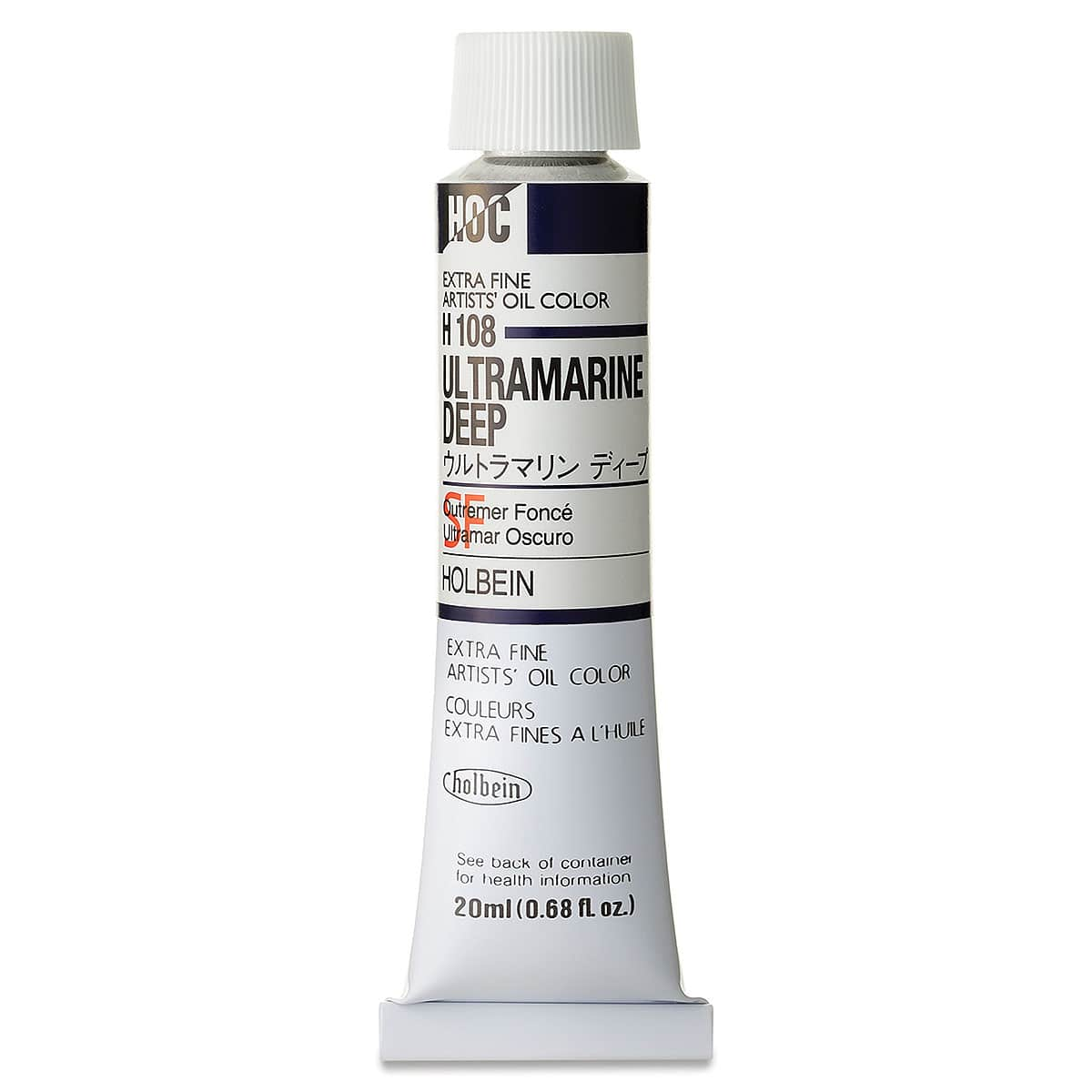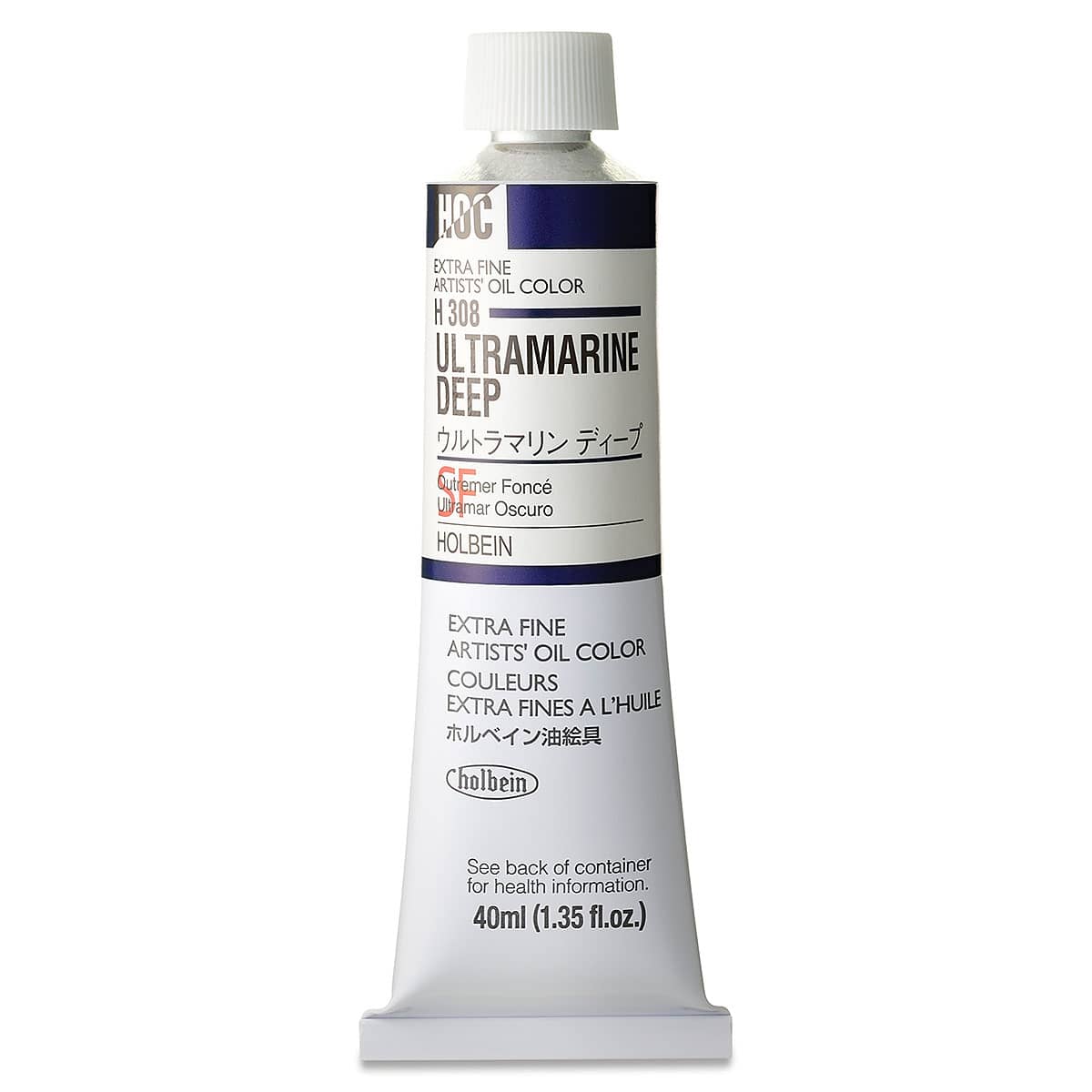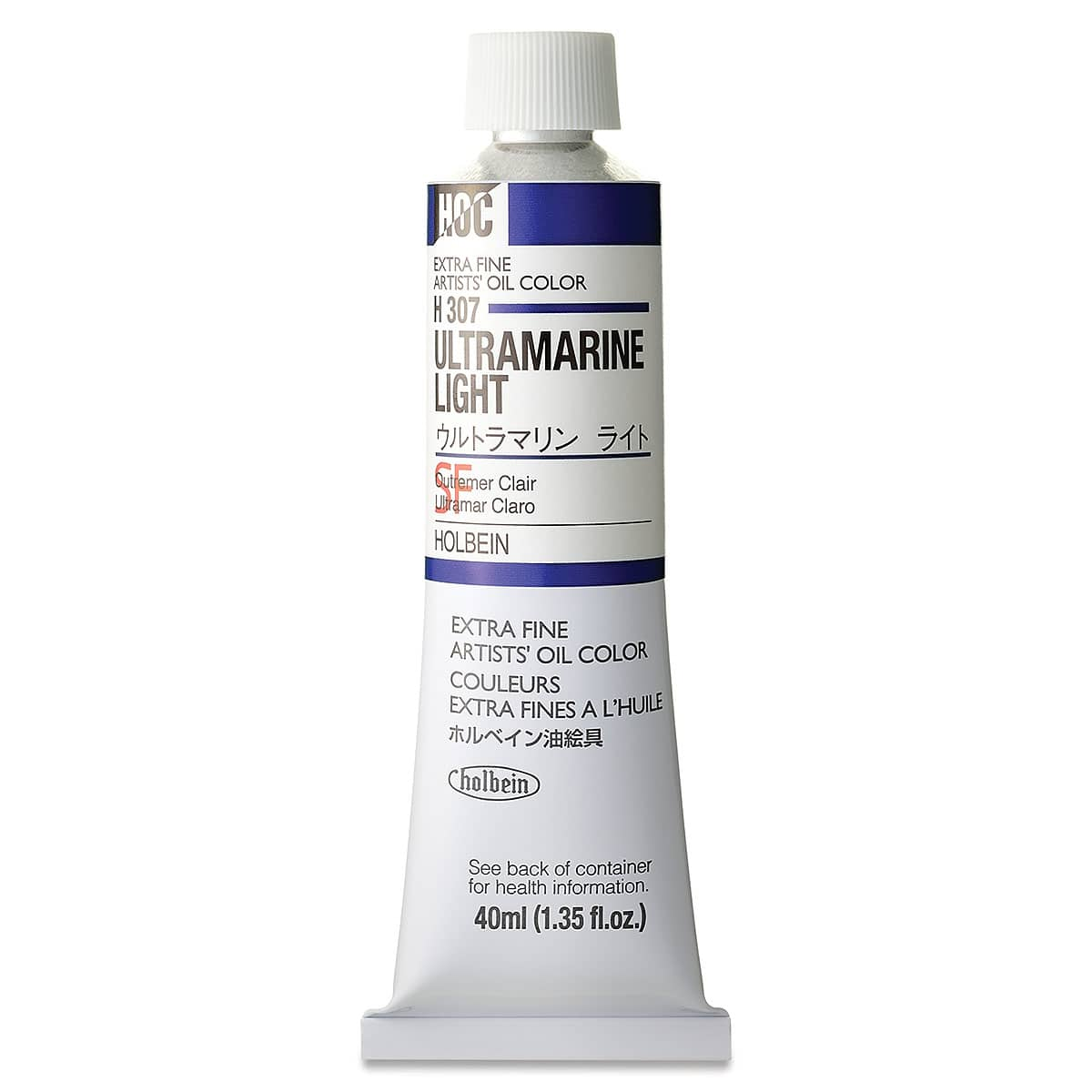
Holbein Artists' Oil Color - Ultramarine Light, 20 ml tube

Artists' Oil Colors

Store price

Listed prices, not live quotes. Check delivery, tax and stock at the shop.

  • Blick Art Materials
    $9.00 USDShop
    Older record · Recorded Oct 21, 2026, 9:50 AM UTC

Saving an item to My Stash does not start price monitoring.

Product details
Size
20 ml
Blick SKU
00425-5302
About this product range

Holbein ranks as one of the world's finest lines of professional oil colors. The Holbein Artists’ Oil Paints rank as one of the world's finest lines of professional oil colors. The formulation of each color is modified individually to compensate for the inherent differences in the working characteristics of pigments, for an even consistency across the entire palette of color.

Holbein maintains its quality standards by test inspection of pigment purity, color tone, applicability and adhesion, physical stability, light stability, thermo-stability, and anti-bacterial stability. Pigments are ground from three to five times as necessary to achieve a universally consistent viscosity. The manufacturing process in each of the preparation, mixing, grinding, adjustment, and filling stages is monitored by reference to optimum quality standards.

Foundation colors contain a high percentage of opaque pigment suspended in linseed oil. They provide a barrier between the painting and the primed surface and are perfect for underpainting and texturizing the surface prior to painting.

Transparent colors are pre-thinned for glazing, handcoloring photographs, and decorative painting on many surfaces, including glass.

Pigment information

General reference notes about pigments can describe other media (such as oil). They do not verify this product’s exact formulation or behavior.

Ultramarine [Blue]

Pigment code
PB29
Type
inorganic
Chemical name
complex silicate of sodium and aluminum with sulfur
Chemical formula
Na8-10Al6Si6O24S2-4 or Na6-8Al6Si6O24S2-4
Properties
Ultramarine is the standard warm blue, a brilliant blue pigment that has the most purple and least green in its undertone. It has a moderate to high tinting strength and a beautiful transparency. Synthetic Ultramarine is not as vivid a blue as natural Ultramarine. Ultramarine dries slowly in oil and tends to produce clean, though granular, washes in watercolor. French Ultramarine mixes well with Alizarin colors in oil and watercolor form to create a range of purples and violets. It can dull when mixed with white in acrylic form, but mixes well with other colors. The shade varies based on manufacturer. Considered a great color for glazes, it is not suitable for frescoing.
Permanence
Ultramarine has excellent permanence, although synthetic Ultramarine is not as permanent as natural Ultramarine. It may discolor if exposed to acid because of its sulfuric content.
Toxicity
Ultramarine has no significant hazards.
History
The name for this pigment comes from the Middle Latin ultra, meaning beyond, and mare, meaning sea, because it was imported from Asia to Europe by sea. It is a prominent component of lapis lazuli and was used on Asian temples starting in the 6th century. It was one of the most expensive pigments in 16th century Europe, worth twice its weight in gold, and so was used sparingly and when commissions were larger. Ultramarine is currently imitated by a process invented in France in 1826 by Jean Baptiste Guimet, making blue affordable to artists and extending the range of colors on their palettes.
Description
Artificial Ultramarine, French Blue, French Ultramarine, Gmelin's Blue, Guimet's Blue, Permanent Blue, Royal Blue, Synthetic Ultramarine. New Blue describes particular shades of Ultramarine. Armenian Blue and Lazuline Blue are names for genuine Lapiz Ultramarine. Sky Blue is a pale tone of Ultramarine.

Track this price

New lows for this exact package, across matched retailers.

Loading your account…

Price history

More to explore

Related supplies from the catalog.