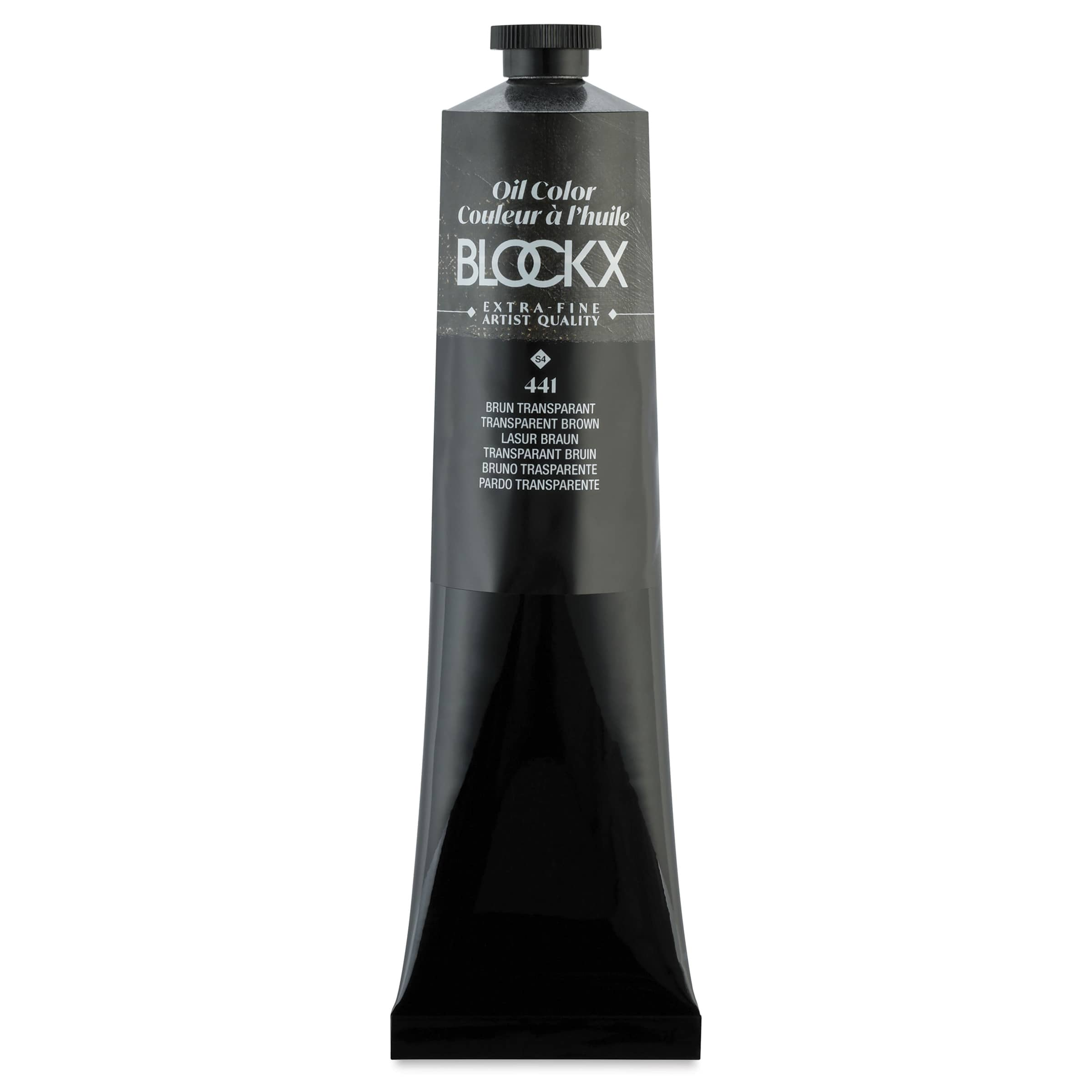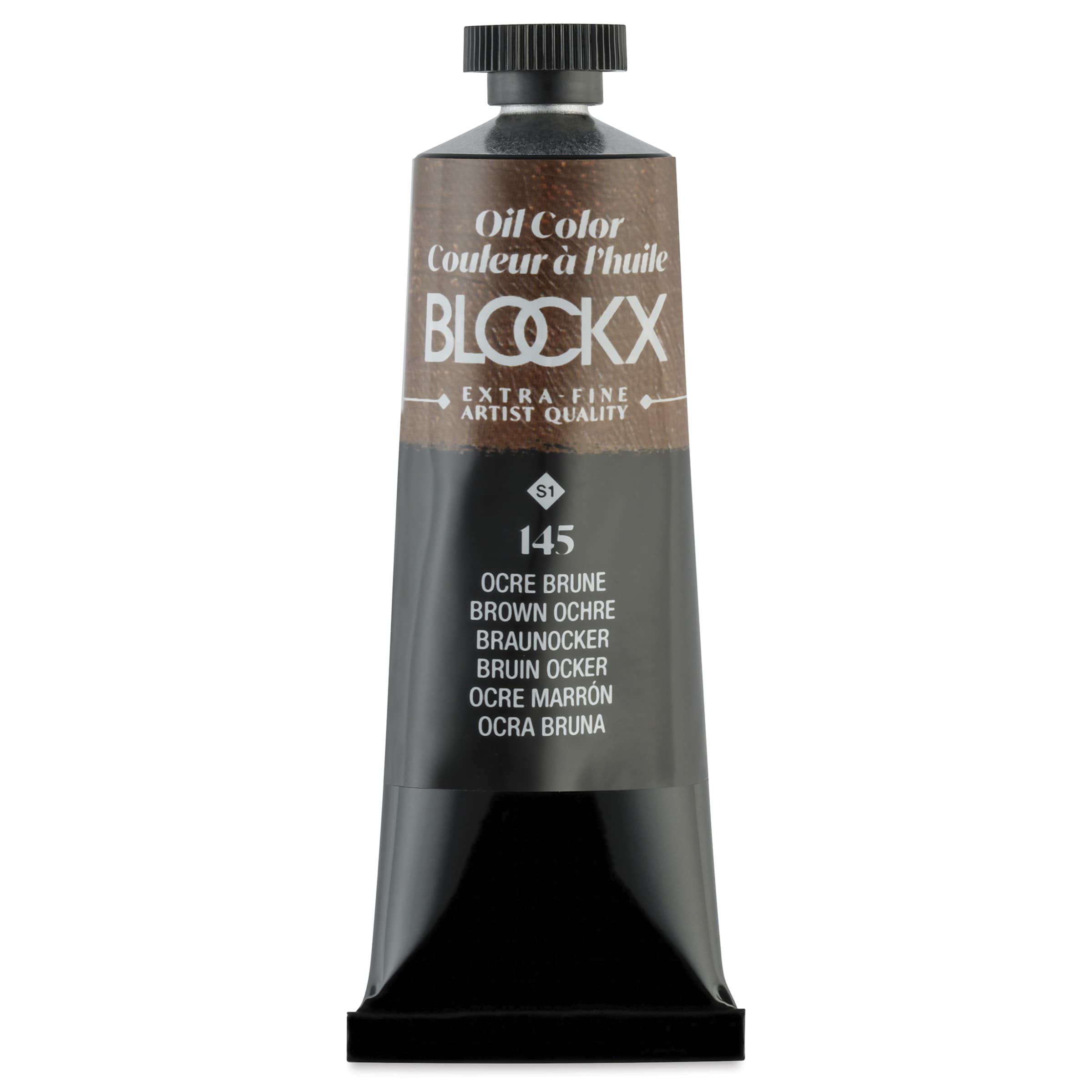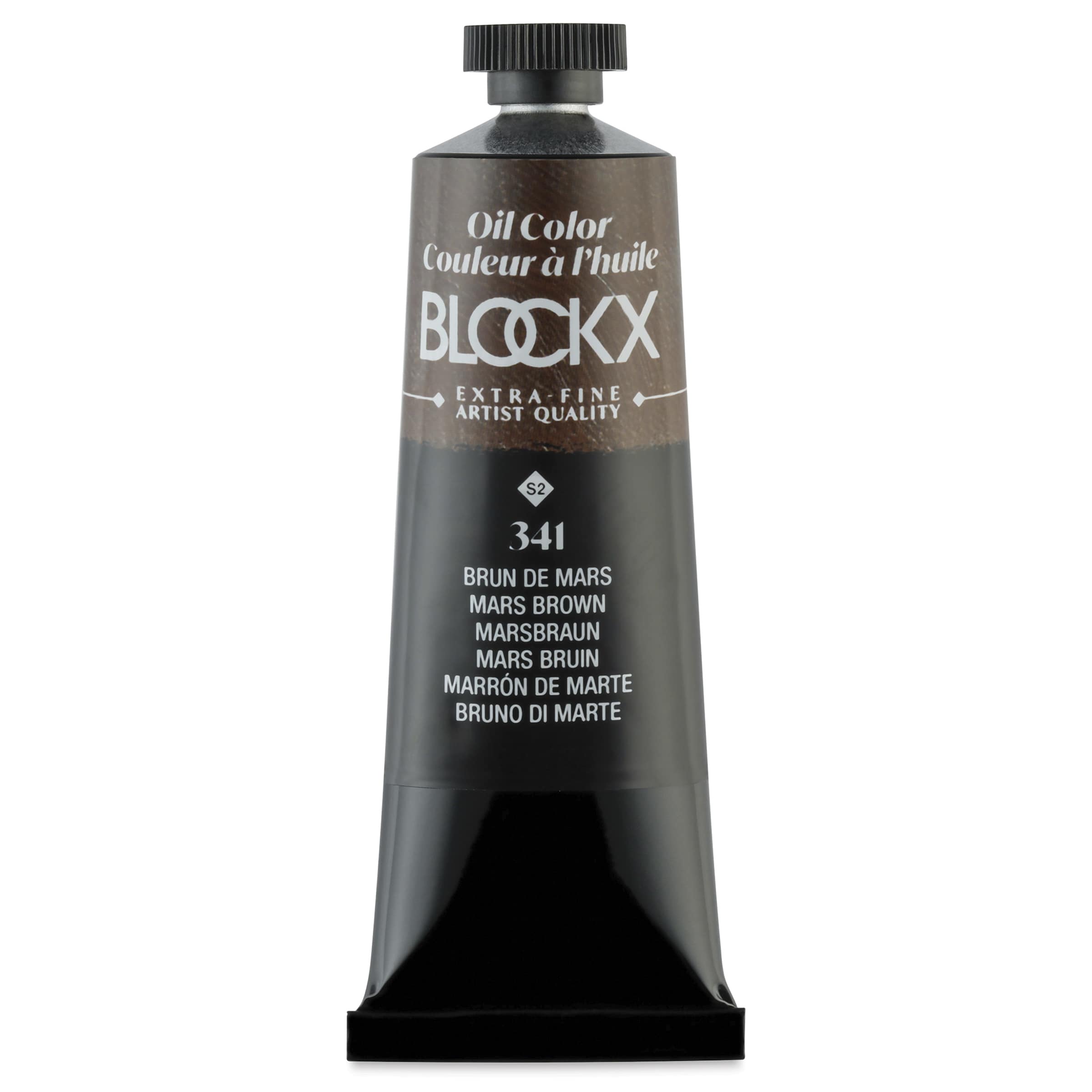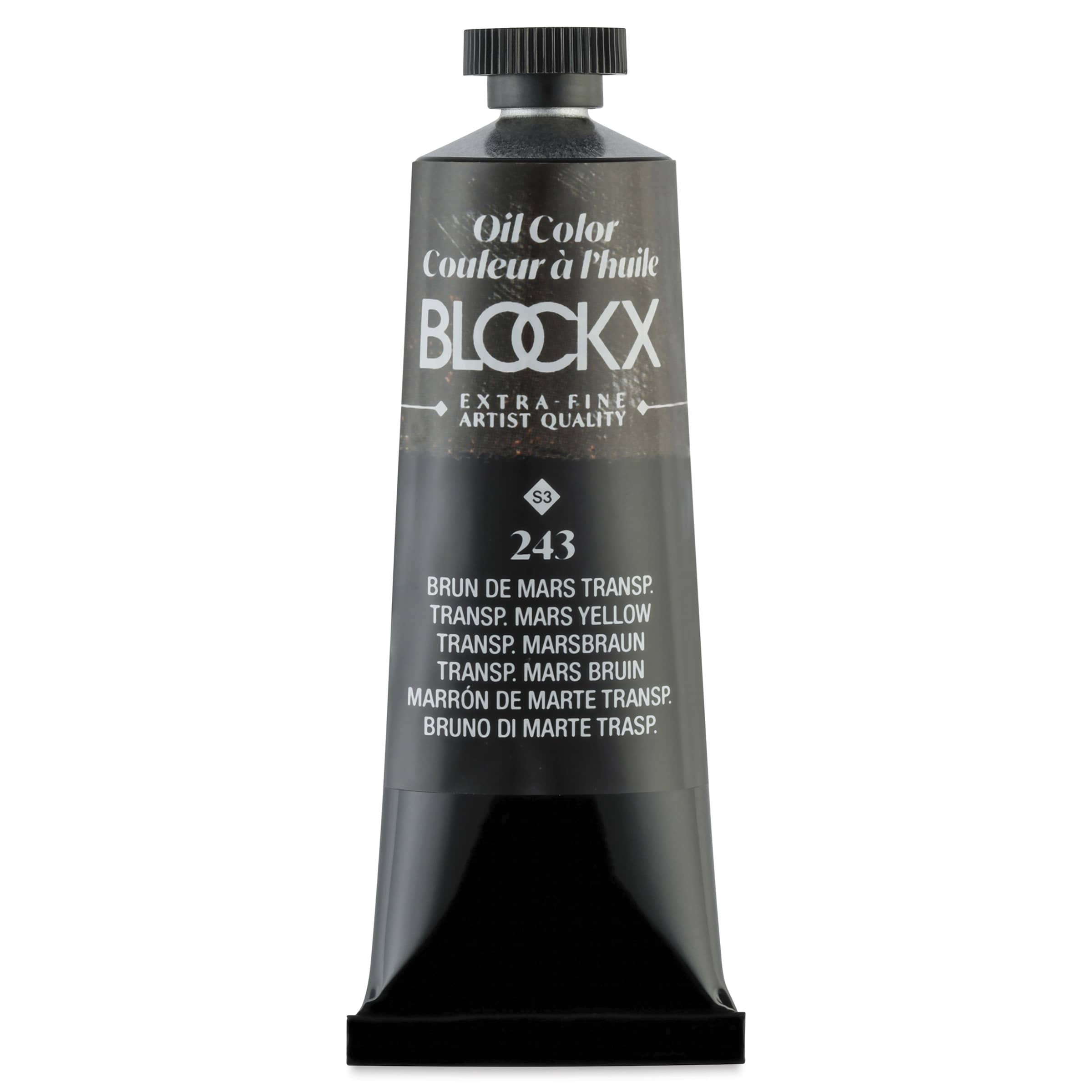
Blockx Artist Oil Color - Transparent Brown, 35 ml tube

Oil Color

Store price

Listed prices, not live quotes. Check delivery, tax and stock at the shop.

  • Blick Art Materials
    $26.60 USDShop
    Older record · Recorded Oct 21, 2026, 9:38 AM UTC

Saving an item to My Stash does not start price monitoring.

Product details
Size
35 ml
Blick SKU
01574-8930
About this product range
  • Legendary professional-quality oil colors
  • Majority of range is mono-pigment
  • High pigment loads and the finest linseed/poppyseed oils
  • Maximum tint strength and lightfastness
  • Stone ground for optimal pigment integrity

Family-made in Belgium for over 140 years, Blockx Oil Colors are hand-ground up to four times on slowly rotating stone mills for perfect pigment integrity and the purest possible color experience. This time-honored production method results in a range of luminous, ultra-smooth oil colors that rank among the world’s very best.

Still crafted using Jacques Blockx’s original formulas, maximum concentrations of the purest pigments guarantee unparalleled brilliance. Iron oxides, earths, and blacks are ground with linseed oil — the rest of the range is ground with non-yellowing poppyseed oil, which results in noticeably brighter, more intense color and cleaner mixtures.

Entirely free of additives or fillers, Blockx Oil Colors carry the highest possible lightfastness ratings. The range consists primarily of single-pigment colors, and each is meticulously tested to uphold the legendary quality that has attracted artists like René Magritte, Salvador Dalí, and Frank Stella. Historical pigments — including Vermilion, Naples Yellow (Light and Dark), and Lapis Lazuli — expand the range for those seeking timeless hues.

An investment in Blockx means investing in the very finest materials for your art, safeguarding its integrity for generations to come.

Pigment information

General reference notes about pigments can describe other media (such as oil). They do not verify this product’s exact formulation or behavior.

Burnt Sienna

Pigment code
PBr7
Type
earth
Chemical name
iron oxides
Chemical formula
Fe2O3
Properties
Burnt Sienna is a warm, mid-brown color formed by burning the yellow-brown limonite clay called Raw Sienna. It ranges from semi-opaque to semi-transparent due to the combination of its opaque, red-brown mass tone and its transparent, orangey undertone. It is an excellent mixing complement for blues and greens and creates salmon or peach colored tints when mixed with white. It can be useful for subduing bright colors and does not get chalky in dark mixtures.
Permanence
Burnt Sienna has good permanence and is considered one of the most versatile of the permanent pigments.
Toxicity
Burnt Sienna has no significant hazards.
History
Burnt Sienna has been used as a pigment since prehistoric times, but its current name came about during the Renaissance. It comes from the city of Siena, in Italy, and is short for terra di Siena, meaning earth of Siena. Sienna was famous for the mining and production of earth pigments from the Renaissance until World War II. Due to the depletion of clay deposits in Tuscany, Italian siennas now come from other areas, including Sicily and Sardinia.
Description
Caput Mortuum, Italian Earth, Natural Brown Iron Oxide, Sienna, Spanish Red, Vandyke Brown.

Viridian

Pigment code
PG18
Type
inorganic
Chemical name
chromium(III)-oxide dehydrate
Chemical formula
Cr2O3 • 2 H2O or Cr2(OH3)
Properties
Viridian is the standard green and is stable, powerful, and cold with an emerald green undertone. It has a transparent hue, good tinting strength, a dark masstone that can be almost black at full strength, and a slow drying time in oil form. Viridian is commonly replaced by the darker, more saturated, and staining Phthalo Greens, but its properties make it a necessary part of the palette of an experienced landscape painter.
Permanence
Viridian has excellent permanence, except in high-temperature work, and is highly valued as a glazing color.
Toxicity
Viridian is slightly toxic.
History
Viridian’s name comes from the Latin viridis, meaning green. The process for manufacturing Viridian, or Transparent Oxide of Chromium, was patented by Guignet in Paris in 1859. However, it had actually been discovered by Pannetier and Binet in 1838. Viridian replaced Verdigris, which was reactive and unstable, and Emerald Green, which was a poisonous copper aceto-arsenite used as a rat poison in the sewers of Paris.
Description
Emerald Chromium Oxide, Emeraude Green, French Veronese Green, Guignet’s Green, Pannetier's Green, Permanent Green, Smaragd Green, Transparent Oxide of Chromium, Vert Emeraude. Casali's Green and Mittler's Green are varieties of Viridian. Viridian has historically been sold under the name Emerald Green, but they are currently considered to be and are marketed as two different pigments.

Track this price

New lows for this exact package, across matched retailers.

Loading your account…

Price history

More to explore

Related supplies from the catalog.