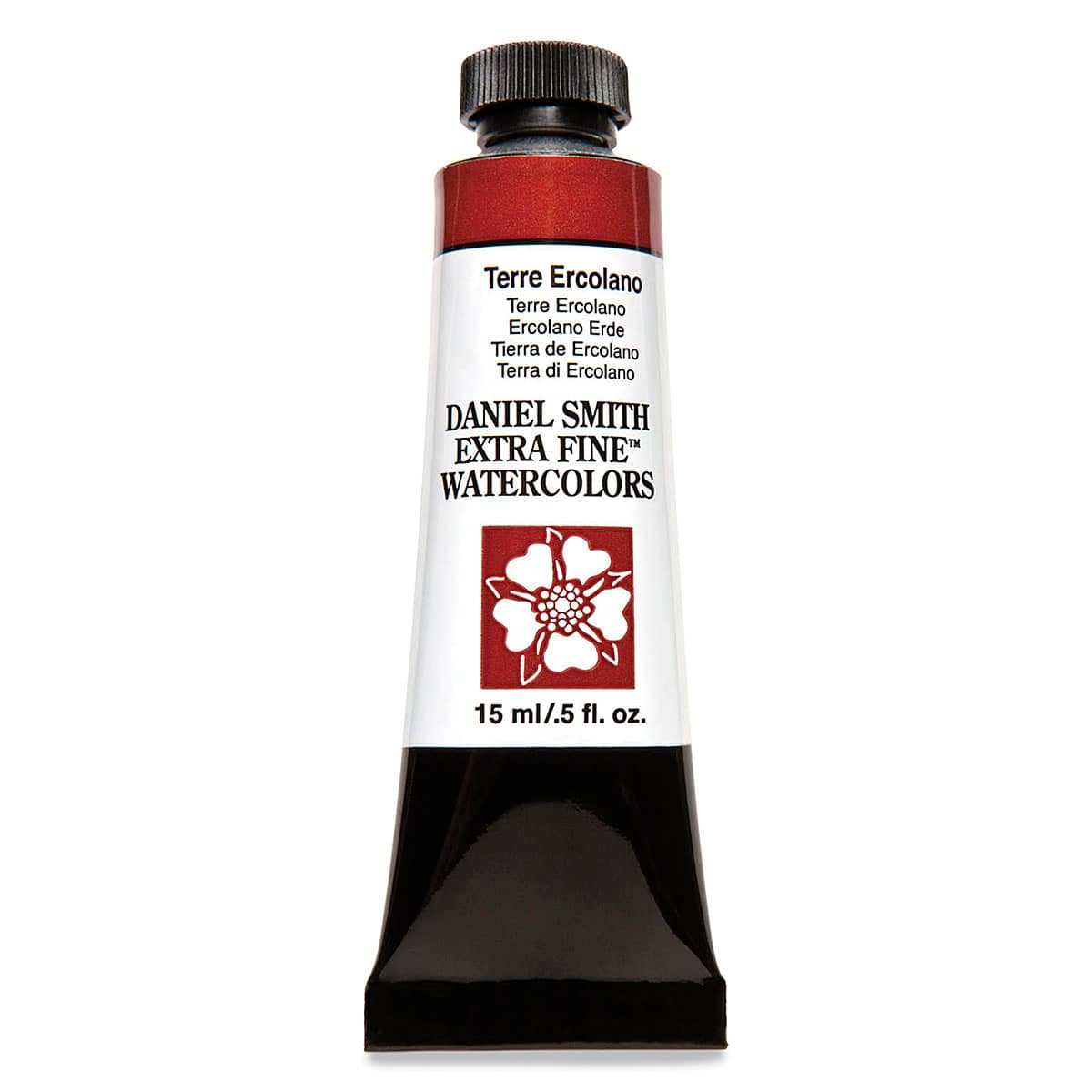
General reference notes about pigments can describe other media (such as oil). They do not verify this product’s exact formulation or behavior.
Ultramarine [Blue]
- Pigment code
- PB29
- Type
- inorganic
- Chemical name
- complex silicate of sodium and aluminum with sulfur
- Chemical formula
- Na8-10Al6Si6O24S2-4 or Na6-8Al6Si6O24S2-4
- Properties
- Ultramarine is the standard warm blue, a brilliant blue pigment that has the most purple and least green in its undertone. It has a moderate to high tinting strength and a beautiful transparency. Synthetic Ultramarine is not as vivid a blue as natural Ultramarine. Ultramarine dries slowly in oil and tends to produce clean, though granular, washes in watercolor. French Ultramarine mixes well with Alizarin colors in oil and watercolor form to create a range of purples and violets. It can dull when mixed with white in acrylic form, but mixes well with other colors. The shade varies based on manufacturer. Considered a great color for glazes, it is not suitable for frescoing.
- Permanence
- Ultramarine has excellent permanence, although synthetic Ultramarine is not as permanent as natural Ultramarine. It may discolor if exposed to acid because of its sulfuric content.
- Toxicity
- Ultramarine has no significant hazards.
- History
- The name for this pigment comes from the Middle Latin ultra, meaning beyond, and mare, meaning sea, because it was imported from Asia to Europe by sea. It is a prominent component of lapis lazuli and was used on Asian temples starting in the 6th century. It was one of the most expensive pigments in 16th century Europe, worth twice its weight in gold, and so was used sparingly and when commissions were larger. Ultramarine is currently imitated by a process invented in France in 1826 by Jean Baptiste Guimet, making blue affordable to artists and extending the range of colors on their palettes.
- Description
- Artificial Ultramarine, French Blue, French Ultramarine, Gmelin's Blue, Guimet's Blue, Permanent Blue, Royal Blue, Synthetic Ultramarine. New Blue describes particular shades of Ultramarine. Armenian Blue and Lazuline Blue are names for genuine Lapiz Ultramarine. Sky Blue is a pale tone of Ultramarine.
Nickel Azo Yellow
- Pigment code
- PY150
- Type
- inorganic
- Chemical name
- nickel azomethine yellow
- Chemical formula
- C30H18Cl2N6NiO4
- Properties
- Nickel Azo Yellow is a transparent, moderately staining yellow pigment with high tinting strength. It is considered a good color match in botanical and landscape painting for natural gamboge (NY24), a historic yellow pigment with fair to poor lightfastness.
- Permanence
- Nickel azomethine yellow has excellent lightfastness.
- Toxicity
- Nickel azo yellow pigment is mildly toxic, and is often labeled as hazardous. Avoid respiratory and skin exposure to pigment dust. It should be disposed of properly with other hazardous wastes, not washed down the sink.
- History
- Nickel azomethine yellow has been developed as an artist pigment becasue it is a close match for gamboge, a historic yellow.
- Description
- Gamboge Hue, New Gamboge.
Quinacridone Gold
- Pigment code
- PO48
- Type
- organic, quinacridone
- Chemical formula
- C20H12N2O2 or C20H10N2O4
- Properties
- Quinacridone Gold is a high performance pigment. It lacks brightness and cleanliness in tints, and it may disperse unevenly. It has an average drying time. Quinacridone pigments have relatively low tinting strength in general. For this reason, quinacridone colors are often expensive, because more pigment is required in the formulation.
- Permanence
- Quinacridone Gold has excellent lightfastness and is considered the most lightfast pigment in its shade range.
- Toxicity
- Quinacridone gold is not considered toxic. Overexposure to quinacridone pigments may cause skin irritation. Quinicridone pigments contain a compound found to be a skin, eye, and respiratory irritant.
- History
- Although quinacridone compounds became known in the late 19th century, methods of manufacturing so as to make them practical for use as commercial pigments did not begin until the 1950s. Quinacridone pigments were first developed as coatings for the automotive industry, but were quickly adopted by artists.
- Description
- Pigment Orange 48, Quinacridone Orange, Quinacridone Burnt Orange
 Blick Art Materials