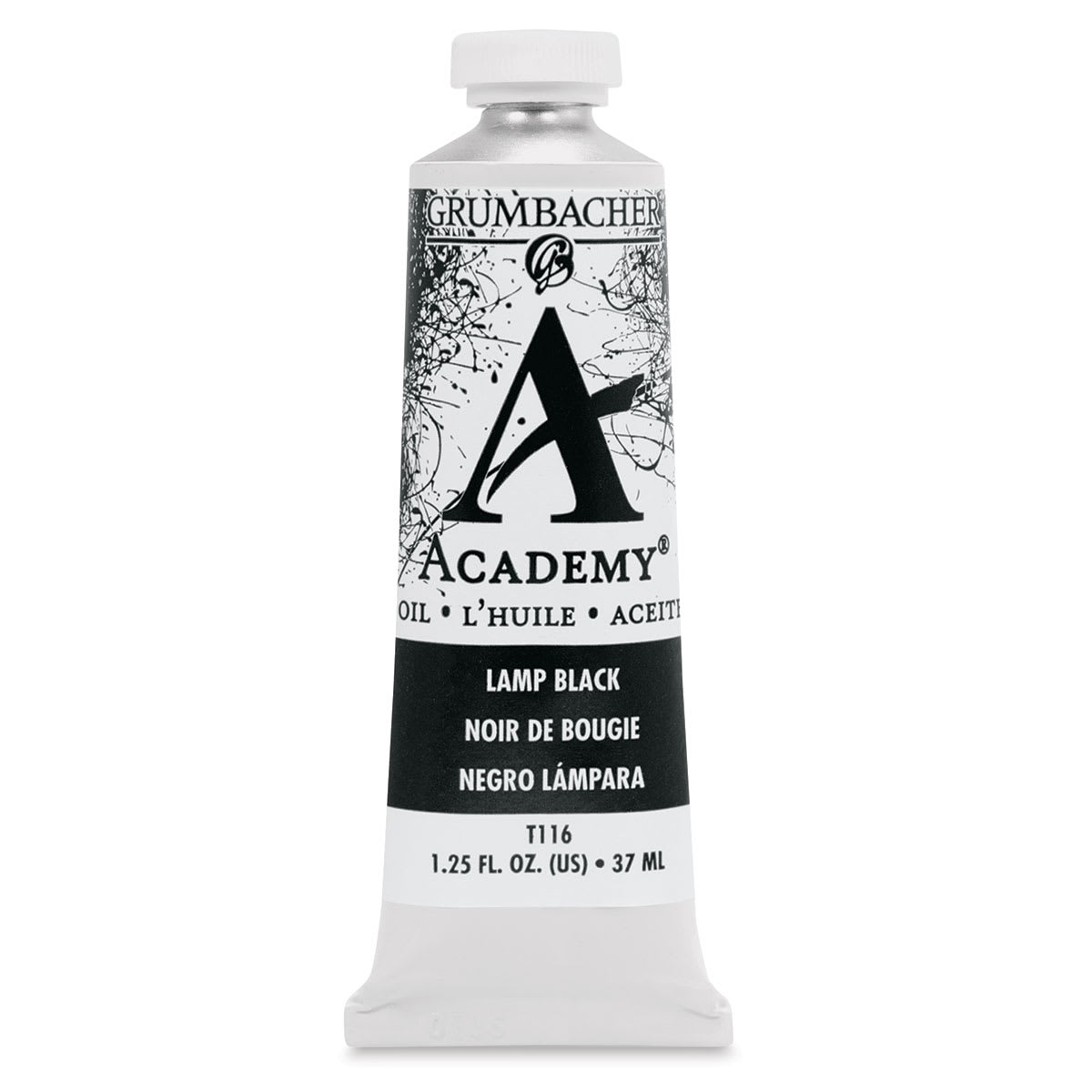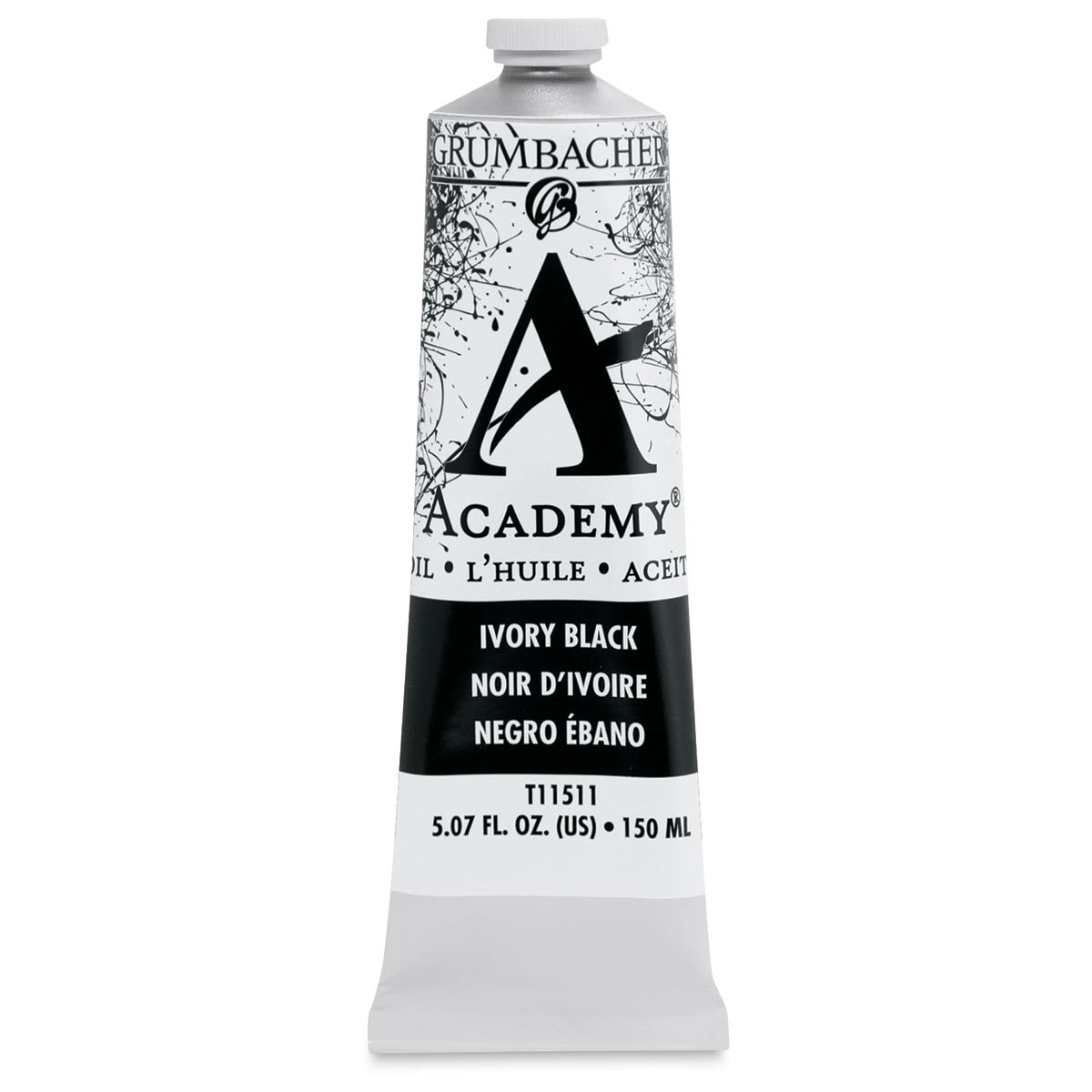
Grumbacher Academy Oil Color - Ivory Black, 37 ml tube

Store price

Listed prices, not live quotes. Check delivery, tax and stock at the shop. Unavailable and advance-order listings aren’t ranked.

  • Blick Art Materials
    $7.17 USDShop
    Recorded Oct 21, 2026, 12:39 PM UTC

Saving an item to My Stash does not start price monitoring.

Product details
Size
37 ml
Blick SKU
00418-2253
About this product range

Grumbacher Academy Oils are available in a range of 45 highly pigmented colors offering superior tinting strength at an affordable student price. The line includes a variety of single-pigment colors, as well as mixed hues and metallics. Every color in the range boasts an ASTM lightfast rating of ‘1-Excellent’ and most correlate to the Pre-Tested Professional line, allowing students to graduate to a professional-grade paint with ease.

The majority of colors in the range are ground in pure linseed oil. Titanium White Soft is ground in a mixture of linseed and poppyseed oil. Titanium White, Unbleached Titanium White, Zinc White, Pale Pink, Lemon Yellow, and Thalo Silver are ground in sunflower oil.

Pigment information

General reference notes about pigments can describe other media (such as oil). They do not verify this product’s exact formulation or behavior.

Ivory Black

Pigment code
PBk9
Type
charred animal bone
Chemical name
carbon + calcium phosphate
Chemical formula
C + Ca3(PO4)2 or C x CaPO4
Properties
Ivory Black is a cool, semi-transparent blue-black with a slight brownish undertone and average tinting strength. It mixes well with any color, and creates a range of dull greens when mixed with yellow. It has good properties for use in oil, can be slow to dry in oil form, and should never be used in underpainting or frescoing. Ivory Black is denser than Lamp Black.
Permanence
Ivory Black is very lightfast and has good permanence, though it is considered the least permanent of the major black pigments.
Toxicity
Ivory Black has no significant hazards.
History
Ivory Black is a carbon based black first named as Elephantium, and described in the 4th century BCE as produced by heating ivory scraps in clay pots to reduce the ivory or bone to charcoal. The deviation in names is because the more expensive varieties of this pigment were made by burning ivory, and the less expensive ones by burning animal bone. In the 19th century, the name Ivory Black was finally permitted to be applied to Carbon Black pigments made from bone. True Ivory Black is rare in modern times due to the protection of ivory, and the synthetic variety produced today was discovered in 1929. Bone Black is produced as an industrial pigment.
Description
Animal Black, Blue Black, Bone Black. Paris Black is an inferior grade of Ivory Black. Incorrectly labeled as Frankfort Black.

Track this price

New lows for this exact package, across matched retailers.

Loading your account…

Price history

More to explore

Related supplies from the catalog.