General reference notes about pigments can describe other media (such as oil). They do not verify this product’s exact formulation or behavior.
Brown Ochre
- Pigment code
- PY43
- Chemical name
- iron(III)-oxide, partly hydrated
- Chemical formula
- Fe2O3(• H2O)
- Properties
- Brown Ochre provides artists with earthtones from cream to brown and is a dull, dark variety of Yellow Ochre. Its transparency varies widely from opaque shades to more transparent ones, which are valued for their use as glazes. It has good hiding power, produces a quick drying paint, and can be safely mixed with other pigments. The highest quality Brown Ochre comes from Cyprus, where it is yellow in its raw form and is roasted to get the deeper brown-red varieties that result when water is removed. (See Yellow Ochre, PY42/43.)
- Permanence
- Brown Ochre has excellent permanence.
- Toxicity
- Brown Ochre is non-toxic.
- History
- Ochre comes from the Greek word ochros, meaning pale yellow. It has been used since prehistoric times, and evidence of its use has been found in some of the earliest known cave paintings in Lascaux, France. It has also been called Goethite, after the German philosopher and mineralogist Johann Wolfgang von Goethe (1749-1832).
- Description
- Goethite, Yellow Ochre.
Titanium White
- Pigment code
- PW6
- Type
- inorganic
- Chemical name
- titanium dioxide
- Chemical formula
- TiO2
- Properties
- Titanium White is the most brilliant of the white pigments. It is considered an all purpose oil color useful in all techniques and the best all around white. Its masstone is neither warm nor cool, placing it somewhere between Lead White and Zinc White. It is less prone to cracking and yellowing than Lead White, but it still yellows easily. Titanium White dries slowly in oil form, more slowly than Lead White but more quickly than Zinc White. It is opaque in oil and acrylic forms and semi-opaque in watercolor form. This pigment has good chemical stability, and its tinting strength is superior to both Lead White and Zinc White.
- Permanence
- Titanium White has excellent permanence and lightfastness.
- Toxicity
- Titanium dioxide is highly stable and is regarded as non-toxic.
- History
- Titanium is the ninth most abundant element in the Earth's crust, however mineral deposits that are economical to mine are less common. Titanium dioxide was first discovered in 1821, although it could not be mass produced until 1919. Widespread use of the pigment began in the 1940s. Since that time, it has become the most commonly used white pigment. The name comes from the Latin word Titan, the name for the elder brother of Kronos and ancestor of the Titans, and from the Greek word tito, meaning day or sun.
Burnt Sienna
- Pigment code
- PBr7
- Type
- earth
- Chemical name
- iron oxides
- Chemical formula
- Fe2O3
- Properties
- Burnt Sienna is a warm, mid-brown color formed by burning the yellow-brown limonite clay called Raw Sienna. It ranges from semi-opaque to semi-transparent due to the combination of its opaque, red-brown mass tone and its transparent, orangey undertone. It is an excellent mixing complement for blues and greens and creates salmon or peach colored tints when mixed with white. It can be useful for subduing bright colors and does not get chalky in dark mixtures.
- Permanence
- Burnt Sienna has good permanence and is considered one of the most versatile of the permanent pigments.
- Toxicity
- Burnt Sienna has no significant hazards.
- History
- Burnt Sienna has been used as a pigment since prehistoric times, but its current name came about during the Renaissance. It comes from the city of Siena, in Italy, and is short for terra di Siena, meaning earth of Siena. Sienna was famous for the mining and production of earth pigments from the Renaissance until World War II. Due to the depletion of clay deposits in Tuscany, Italian siennas now come from other areas, including Sicily and Sardinia.
- Description
- Caput Mortuum, Italian Earth, Natural Brown Iron Oxide, Sienna, Spanish Red, Vandyke Brown.
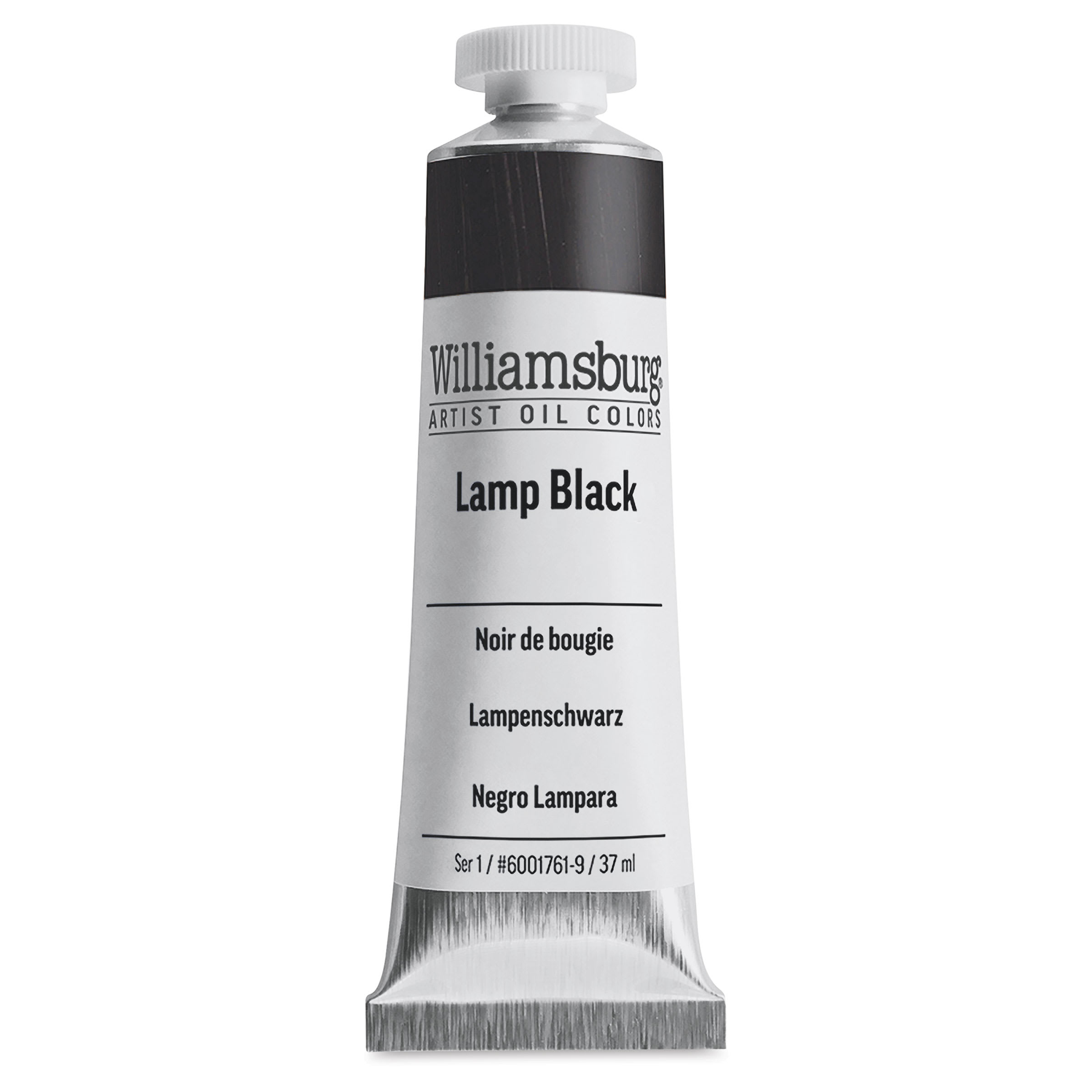
Lamp Black
- Pigment code
- PBk6
- Type
- inorganic
- Chemical name
- carbon
- Chemical formula
- C
- Properties
- Lamp black is a very opaque, heavily staining black pigment that does not have much covering power. It is typically the most opaque black in watercolor form. Though a very pure black, it tends to muddy slightly in mixtures, is one of the slowest drying pigments in oils, and should not be used under other colors.
- Permanence
- Lamp Black is very lightfast and absolutely permanent. It is used in all techniques in permanent painting.
- Toxicity
- Lamp Black is slightly toxic by skin contact and inhalation. It is a possible human carcinogen.
- History
- Lamp Black is a carbon based black traditionally produced by collecting soot (known as lampblack) from oil lamps. It is the black found in Egyptian murals and tomb decorations and was the most popular black for frescoing until the development of Mars Black.
- Description
- Carbon Black, Channel Black, Oil Black, Vegetable Black. Flame Black is an impure version of Lamp Black.
 Blick Art Materials