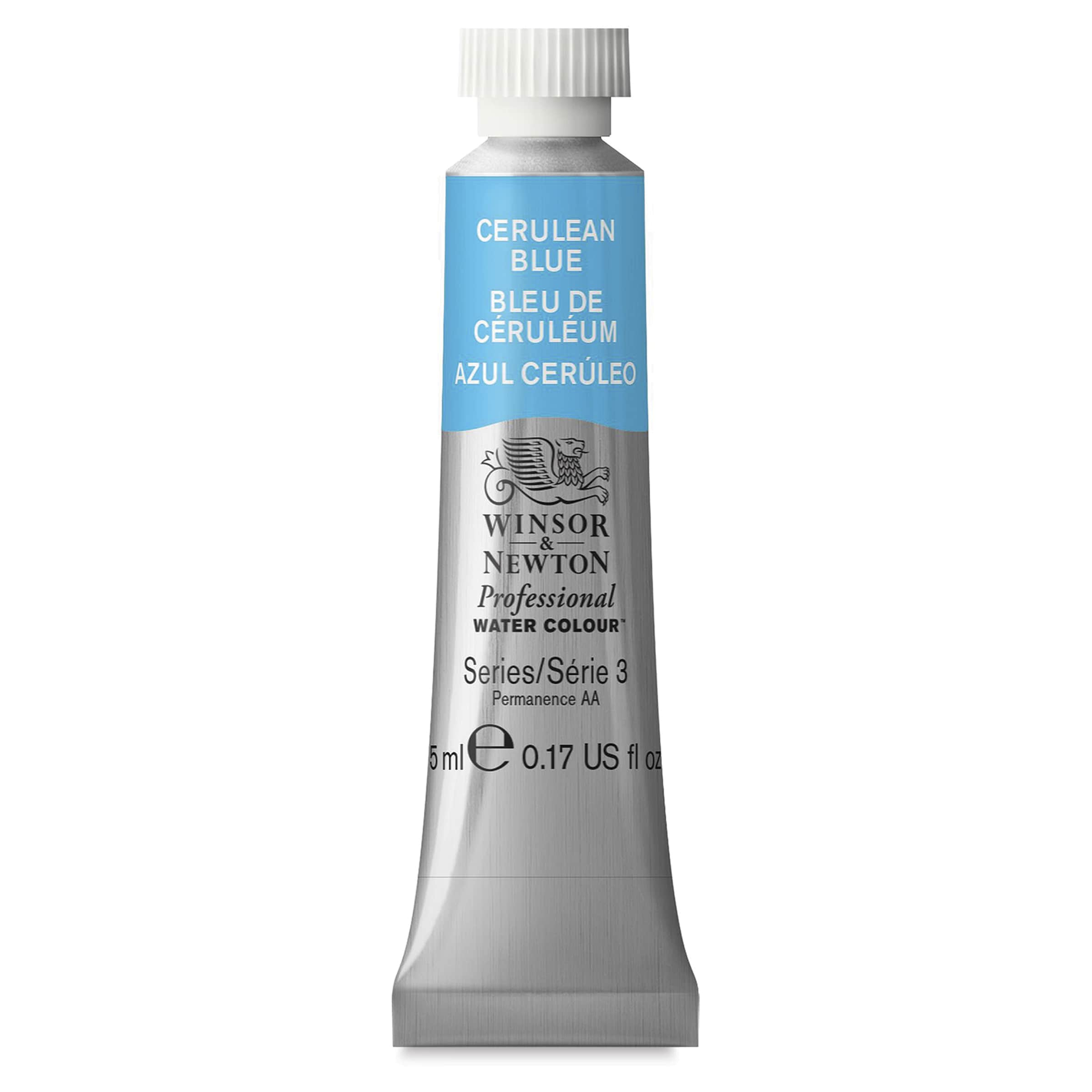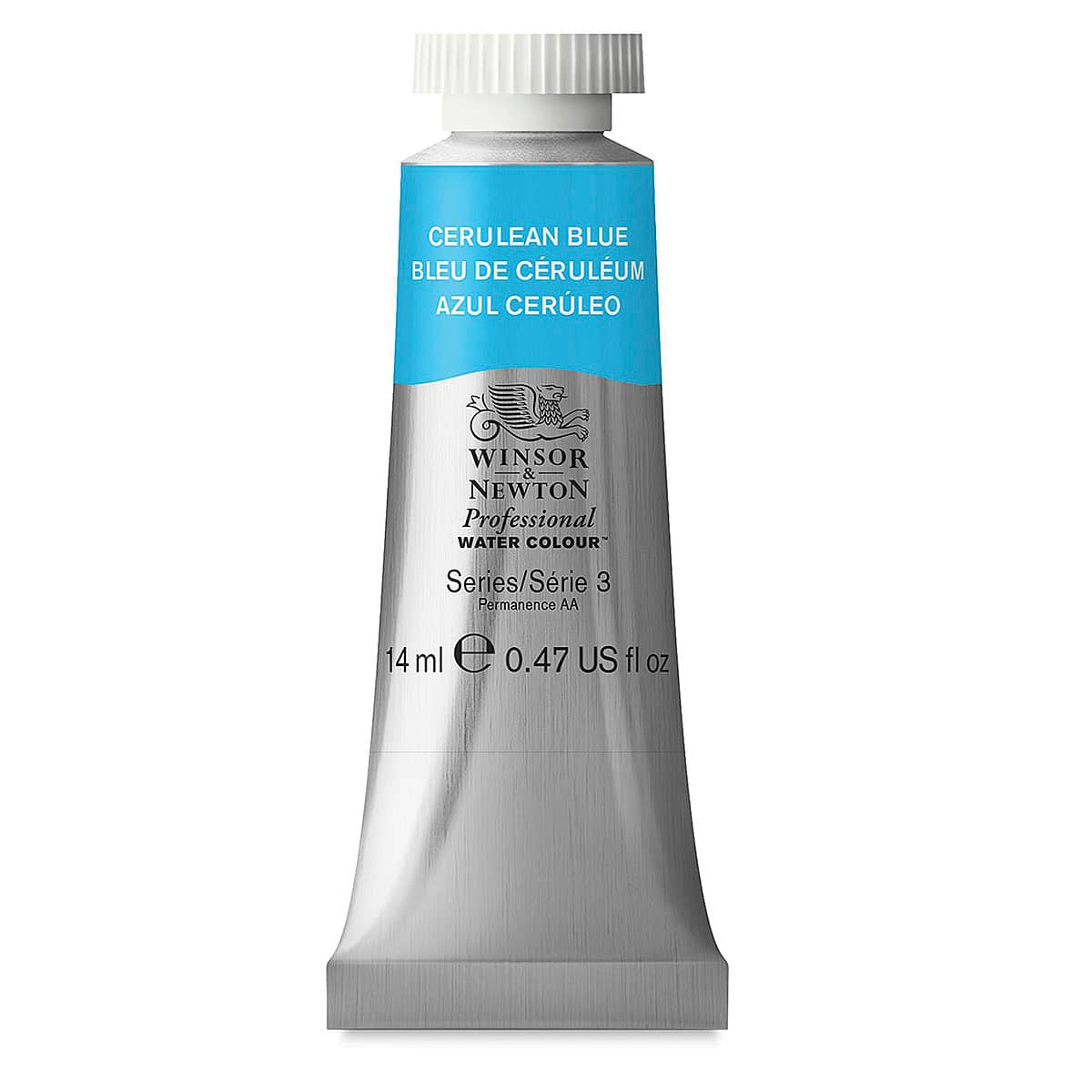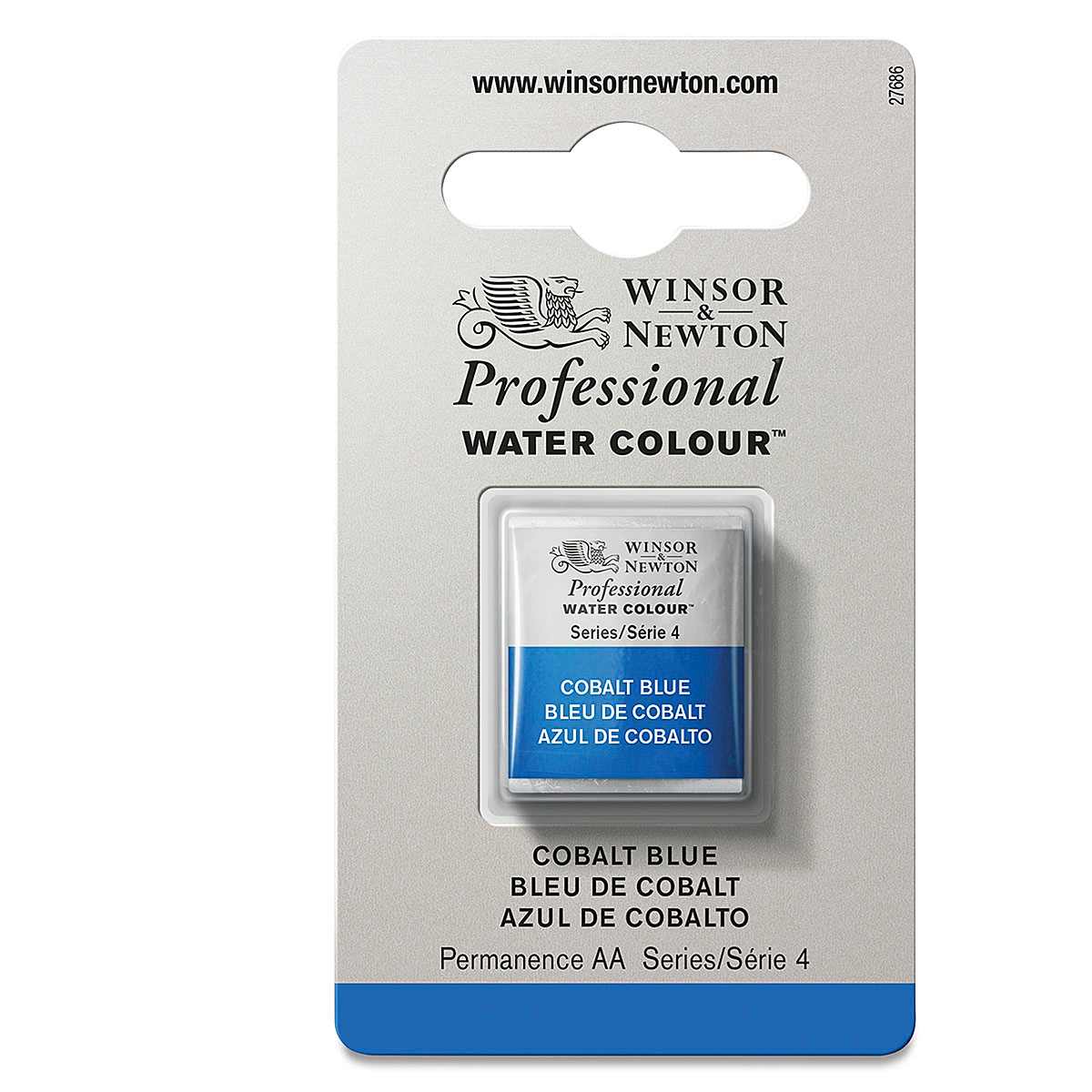
Winsor & Newton Professional Watercolor - Cerulean Blue, Half Pan

Artists' Watercolor

Store price

Listed prices, not live quotes. Check delivery, tax and stock at the shop.

  • Blick Art Materials
    $9.81 USDShop
    Recorded Oct 21, 2026, 8:37 AM UTC

Saving an item to My Stash does not start price monitoring.

Product details
Blick SKU
00319-5160
About this product range
  • The trusted choice of professional watercolorists since 1832
  • Curated, travel-friendly sets in tube or half pan format
  • Majority single-pigment formulations for optimal mixing
  • Lightfast, permanent, and tested for color strength

Perfect for plein air painting, Winsor & Newton Professional Watercolors feature a thoughtfully curated selection of vibrant, luminous colors in either a tube or half-pan format. Each color offers unmatched clarity and depth—and more than half of the range is made of single pigments, ensuring clean, consistent mixing. The colors are carefully formulated for superior dispersion, lightfastness, and tinting strength so your work stays brilliant over time.

Pigment information

General reference notes about pigments can describe other media (such as oil). They do not verify this product’s exact formulation or behavior.

Cerulean Blue

Pigment code
PB35
Type
inorganic
Chemical name
cobalt(II) stannate
Chemical formula
CoO n SnO2
Properties
Cerulean Blue is the standard cool blue, considered the traditional counterpart to Ultramarine, and is often used for painting atmospheric shades. It is quick drying and retains its color well, better than any other blue, in oil paint form. However, it tends to granulate or become chalky in watercolors. It has limited hiding power, is semi-opaque, and is easy to control. Its tinting capacity is low, so it can become lost when mixing.
Permanence
Cerulean Blue has excellent permanence. It is very stable and lightfast.
Toxicity
Cerulean Blue is moderately toxic if inhaled or ingested and slightly toxic if it comes into contact with skin.
History
The name Cerulean Blue comes from the Latin word caelum, meaning sky. This pigment was discovered in 1805 by Andreas Hopfner, but it was not widely available until introduced by Messrs. G. Rowney & Co. in England under the name coeruleum in 1860 for use in aquarelle and oil painting. It was produced by the action of heat on cobalt oxide and other metallic bases.
Description
Bleu Celeste, Caeruleum, Coelin, Coeruleum.

Track this price

New lows for this exact package, across matched retailers.

Loading your account…

Price history

More to explore

Related supplies from the catalog.